




Bluebottle Flies
Calliphora
Blowflies, or Bluebottle Flies, are shiny blue insects that love to buzz around. They help nature by cleaning up waste and are often seen in gardens and parks.
Habitat: Urban areas
The Bluebottle Fly has a distinctive metallic, iridescent blue-green body, often appearing quite bristly. Its large, reddish-brown compound eyes and transparent wings complete its robust appearance, making it easily distinguishable from common house flies.
Category
InsectsRarity
Common
Danger
1/5 · Very low
Snaps
Be the first to snap!
A female bluebottle can lay up to 2,000 eggs in her short lifetime!
Bluebottle maggots are sometimes used by doctors to clean wounds!
Forensic scientists use these flies to tell how long ago someone died!
Their tiny ears are actually on their antennae, helping them hear sounds!
Bluebottle Flies can locate decaying matter miles away with super-sensitive antennae, helping them find food and egg-laying sites.
Bluebottle Flies' larvae (maggots) break down dead animals and decaying organic matter incredibly fast, cleaning up the environment.
Bluebottle Flies can hover, fly backwards, and make sharp turns instantly, using agile wings and advanced flight muscles.
Bluebottle Flies can sense subtle temperature changes, guiding them to warm, fresh carrion for egg laying.
Bluebottle flies mostly feast on decaying organic matter, especially dead animals and sometimes sugary liquids.
Age differences: Larvae (maggots) primarily consume decaying animal flesh, while adults feed on a wider range including nectar, fruit juices, and carrion.
Turdus merula
Adults and larvae provide food for birds.
Bos taurus
Maggots decompose the remains of dead livestock.
Arum maculatum
Attracted by scent, they help pollinate certain flowers.
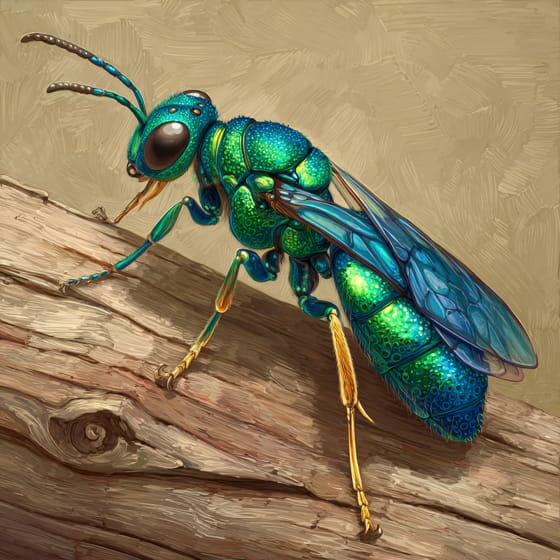
Nasonia vitripennis
Parasitic wasp larvae consume fly pupae.
This trait identifies organisms whose diet includes both plant and animal matter.
Scavengers consume dead organic matter, helping to decompose carcasses and other waste in the ecosystem.
Colorful describes organisms or objects displaying a wide range of bright and distinct colors.
Describes organisms that break down dead organic material, recycling nutrients back into the ecosystem.

Diurnal animals are primarily active during daylight hours, typically resting or sleeping at night.

This trait identifies organisms that exhibit exceptional swiftness in movement for hunting, escape, or travel.

This habitat trait indicates species that can coexist with humans in urban and suburban environments, utilizing man-made structures and green spaces.

Describes organisms that transfer pollen, enabling the fertilization and reproduction of plants.
Danger
1/5 · Very low
Don't touch flies, as they can carry germs. Just watch them from a distance!
The easiest way to identify Bluebottle Flies is to use the Snappit nature identifier app.
12-24 mm
8-12 mm
15-25 days
8 km/h
Bluebottle flies mostly feast on decaying organic matter, especially dead animals and sometimes sugary liquids.
Urban areas
Scavenging and Foraging
Zoom in to split clusters and explore where this object has been snapped.
Recent snaps will appear here as new observations are added.
Take the discovery with you
Snap it with Snappit to identify it, learn what makes it special, and add the discovery to your collection.








.jpg&width=800)



