





Bracted Lousewort
Pedicularis bracteosa
Bracted Lousewort is a pretty flower that grows in the mountains. Its unique shape and bright colors make it stand out in nature, and it loves to grow in rocky places.
Habitat: Mountain regions
The Bracted Lousewort has a sturdy stem topped with dense clusters of purple, pink, or white flowers, each with a distinctive curved upper lip. Prominent green, leaf-like structures called bracts nestle beneath each flower, making it visually distinct from other louseworts.
Category
PlantsRarity
Common
Danger
1/5 · Very low
Snaps
2
Its genus name, 'Pedicularis', comes from a Latin word for 'louse', because people once thought it caused lice in livestock!
Some people say its flowers look like tiny, curious elephant heads peeking out from the stem!
The Bracted Lousewort is a hemi-parasite, meaning it's both a plant that makes its own food and also 'borrows' from neighbors!
You can often find this plant thriving in damp, rocky meadows high up in mountain ranges!
Bracted Lousewort can tap into the roots of nearby plants to steal water and nutrients, helping it thrive where others struggle.
Its uniquely shaped flowers act like a beacon for long-tongued bees, guiding them directly to its nectar and pollen.
Its prominent bracts can shield developing flowers and seeds from harsh weather or grazing animals.
Bombus bifarius
Visits flowers for nectar and pollen.
Poa alpina
Taps into roots for water and nutrients.
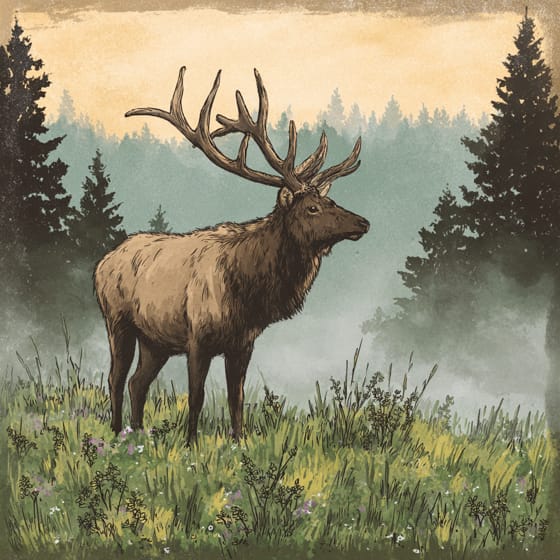
Cervus canadensis
Graze on its foliage.
Flowering plants are any plants that produce flowers as part of their reproductive cycle.
Spring blooming plants produce their flowers during the spring season, often signifying the end of winter and the start of new growth.
Fragrant flowers emit a pleasant aroma, often to attract pollinators or for defense.
Medicinal plants possess chemical compounds that can be used for therapeutic purposes to treat illnesses or maintain health.

Colorful describes organisms or objects displaying a wide range of bright and distinct colors.

Describes plants that are particularly attractive and beneficial to a wide range of pollinating organisms.

This habitat trait identifies species found in mountainous regions, characterized by high elevation, steep slopes, and varying climate zones.

Describes organisms that transfer pollen, enabling the fertilization and reproduction of plants.

Endangered status indicates a species is at a very high risk of extinction in the wild in the near future.
No aliases listed yet.
Danger
1/5 · Very low
Always look but don't pick flowers. They are important for nature!
The easiest way to identify Bracted Lousewort is to use the Snappit nature identifier app.
20-80 cm
1-2 cm
Late spring to late summer
No
None
Perennial
Insect
Zoom in to split clusters and explore where this object has been snapped.

Colorado, US
You might spot Rocky Mountain Marsh-Marigold and American Bistort.
View guide →

Wyoming, US
You might spot Elk, American White Pelican, and Arrowleaf Balsamroot.
View guide →

British Columbia, CA
You might spot Western Columbine and Mountain Lady's-Slipper.
View guide →
Take the discovery with you
Snap it with Snappit to identify it, learn what makes it special, and add the discovery to your collection.








.jpg&width=800)


_001.jpg&width=800)




