

Brown-Spined Pricklypear Complex
opuntia phaeacantha
The Brown-Spined Pricklypear Complex is a sprawling, low-growing cactus species native to the arid and semi-arid regions of North America, particularly the American Southwest and Northern Mexico. Characterized by its flat, fleshy, green pads adorned with formidable brown to reddish-brown spines, this plant is an iconic symbol of desert landscapes. It forms dense, spreading clumps that provide vital shelter and food for a diverse array of desert wildlife. Beyond its rugged survival strategies, this cactus is celebrated for its stunning spring display, when vibrant yellow flowers with red centers bloom to attract a multitude of pollinators. These blossoms later develop into fleshy, purplish-red fruits known as tunas, which have been historically utilized by indigenous peoples for food and dye. The resilience of this species to extreme drought and temperature fluctuations makes it a fascinating subject of study in plant adaptation and desert ecology.
Habitat: Found in dry, open habitats including deserts, grasslands, rocky slopes, and pinyon-juniper woodlands.
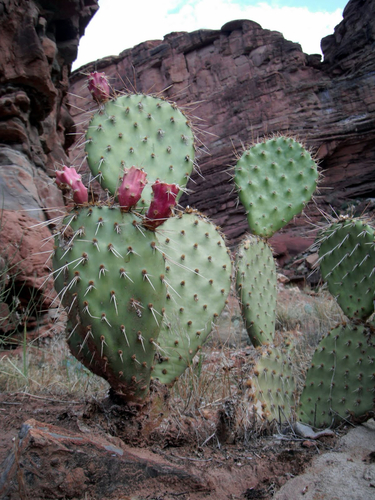
This cactus features flattened, oval-to-obovate green pads that measure between 10 to 20 cm in length. Each pad is dotted with small, round structures called areoles, which sprout one to several long, sharp, dark brown or reddish-brown spines that often point downwards. In spring, it produces large, bowl-shaped flowers that are typically bright yellow, often with a brilliant reddish or orange center. The flowers give way to spineless, pear-shaped fruits that ripen to a deep purplish-red or magenta color.
Category
PlantsRarity
Common
Danger
1/5 · Very low
Snaps
Be the first to snap!
Both the pads (nopales) and the bright magenta fruits (tunas) of this plant are edible and have been staple foods for Indigenous peoples for thousands of years.
The microscopic barbed hairs on the pads, called glochids, are often far more painful and difficult to remove from human skin than the large visible spines.
The reddish-brown spines of this plant actually serve as tiny sunshades, reflecting intense desert sunlight to cool down the cactus pads.
The cactus opens its stomata at night to capture carbon dioxide, minimizing water loss through transpiration during the blazing hot daytime hours.
Its dense arrangement of sharp spines not only deters hungry herbivores but also provides shade to the pad surfaces, reducing wind-driven water evaporation.
In addition to large spines, the areoles contain thousands of tiny, barbed bristles called glochids that easily dislodge into the skin of potential threats, causing persistent irritation.
As a photosynthetic plant, it manufactures its own sugars using sunlight, water, and carbon dioxide, while absorbing essential minerals from dry, sandy soils.

Sylvilagus audubonii
Feeds on the cactus pads and extracts moisture.
Dactylopius coccus
Parasitizes the pads, sucking sap and producing a brilliant red carminic acid defense.
Diadasia rinconis
Pollinates the large yellow flowers during spring blooms.
No trait badges are assigned for this object yet.
No aliases listed yet.
Collections for this object will appear here as more themes are added.
Danger
1/5 · Very low
No special safety notes yet.
Compare leaf arrangement, rosette shape, ribs, spines and flowers. Keep in mind that drought and strong sun can shift a plant's color and shape. Succulent Identifier: upload a photo and compare the visible details.
30-90 cm
2-30 kg
20-50 years
As a photosynthetic plant, it manufactures its own sugars using sunlight, water, and carbon dioxide, while absorbing essential minerals from dry, sandy soils.
Found in dry, open habitats including deserts, grasslands, rocky slopes, and pinyon-juniper woodlands.
Zoom in to split clusters and explore where this object has been snapped.
Recent snaps will appear here as new observations are added.
Take the discovery with you
Snap it with Snappit to identify it, learn what makes it special, and add the discovery to your collection.