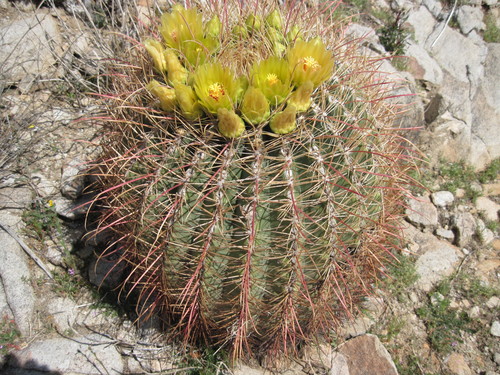


California Barrel Cactus
ferocactus cylindraceus
The California Barrel Cactus (Ferocactus cylindraceus) is a striking and resilient sentinel of the desert southwest, easily recognized by its stout, cylindrical body armed with formidable, curved spines. Growing slowly over centuries, these long-lived succulents act as critical lifelines in their harsh, arid environments, storing vast amounts of water to survive years of intense drought. In spring, they are crowned with a vibrant ring of yellow to orange flowers, which later mature into bright yellow, fleshy fruits that provide essential nourishment to desert wildlife.
Habitat: Found in rocky slopes, gravelly washes, and alluvial fans of the Mojave and Sonoran Deserts, often under intense, direct sunlight.
This cactus is globe-shaped when young, gradually elongating into a stout column that can stand up to 3 meters tall. Its defining feature is a dense network of heavy, rib-hugging spines that are heavily ringed and range in color from bright red or pink to pale yellow and grey. The ribs are deeply pronounced, numbering between 18 and 30, and the plant often leans noticeably toward the south, earning it the nickname 'compass cactus'.
Category
PlantsRarity
Common
Danger
1/5 · Very low
Snaps
1
Its formidable, hook-like spines were traditionally used by Native American tribes as natural fishhooks and sewing needles.
The California Barrel Cactus is often called the 'compass cactus' because mature specimens reliably lean toward the south or southwest to protect their growing tips from sunburn.
While survival lore says you can drink water from a barrel cactus, the fluid inside is actually an extremely bitter, alkaline gel that can cause severe stomach upset.
The deeply ribbed stem allows the cactus to expand rapidly when absorbing water during rare rain events and contract without damage during dry spells.
It grows lopsidedly, leaning toward the south to prevent the intense midday sun from scorching its vulnerable apical meristem.
The dense, overlapping grid of colorful spines acts as a natural sunshade, reducing surface temperature and shielding the plant from harsh desert winds.
As an autotroph, it utilizes CAM photosynthesis to convert sunlight, carbon dioxide, and water into chemical energy while minimizing water loss during hot days.
Ovis canadensis nelsoni
Bighorn sheep occasionally kick open the cactus to eat the moisture-rich pulp when water is scarce.
Diadasia rinconis
These specialized native bees pollinate the vibrant yellow flowers while gathering nectar and pollen.
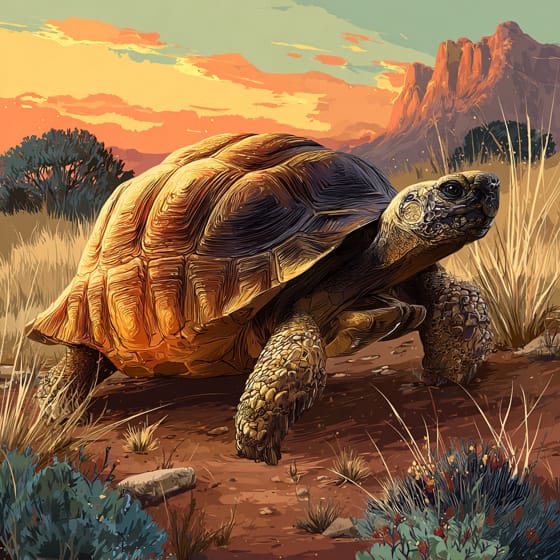
Gopherus agassizii
Desert tortoises consume the fallen yellow fruits and occasional seedlings as a source of hydration and nutrition.
No trait badges are assigned for this object yet.
No aliases listed yet.
Collections for this object will appear here as more themes are added.
Danger
1/5 · Very low
No special safety notes yet.
The easiest way to identify California Barrel Cactus is to use the Snappit nature identifier app.
90-300 cm
20-200 kg
50-100 years
As an autotroph, it utilizes CAM photosynthesis to convert sunlight, carbon dioxide, and water into chemical energy while minimizing water loss during hot days.
Found in rocky slopes, gravelly washes, and alluvial fans of the Mojave and Sonoran Deserts, often under intense, direct sunlight.
Zoom in to split clusters and explore where this object has been snapped.
Take the discovery with you
Snap it with Snappit to identify it, learn what makes it special, and add the discovery to your collection.











.jpg&width=800)



_001.jpg&width=800)




