_G._Bocskay_1562_J._Hoefnagel_illumination_1596_Ms.20_(86.MV.527)_fol._101_Horntail_Caterpillar%2C_Eyed_Hawk-Moth%2C_Beetle%2C_Two-Spot_Ladybird_(Getty_Museum).jpg&width=800)





California Horntail
Urocerus californicus
The California Horntail is a special type of wasp that has a long, horn-like tail. They are helpful insects that lay their eggs in wood, helping to break down dead trees and keep nature healthy.
Habitat: Forests
The California Horntail is a large, sturdy insect, typically black with bright yellow or reddish-orange markings. Females possess a prominent, needle-like ovipositor at their rear, while both sexes have a noticeable short, blunt horn at the tail end. They are often mistaken for large stinging wasps.
Category
InsectsRarity
Common
Danger
1/5 · Very low
Snaps
Be the first to snap!
Adult California Horntails don't eat anything at all, they only live to reproduce!
Larvae can live inside trees for up to three years before they become adults!
The "horn" on its tail is just for balance, it's not a weapon for stinging!
They act like nature's recycling crew, helping to break down dead conifer trees!
California Horntail females can drill into solid wood with their long ovipositor to lay eggs deep inside dead or dying trees.
This insect carries a special fungus to its eggs that helps its larvae soften and digest tough wood fibers.
The California Horntail has bright warning colors like a stinging wasp, which helps scare away predators, but it can't sting!
Their hungry larvae munch on wood, but the adults don't eat anything at all!
Age differences: Larvae bore into and consume wood; adults do not feed during their short lifespan.
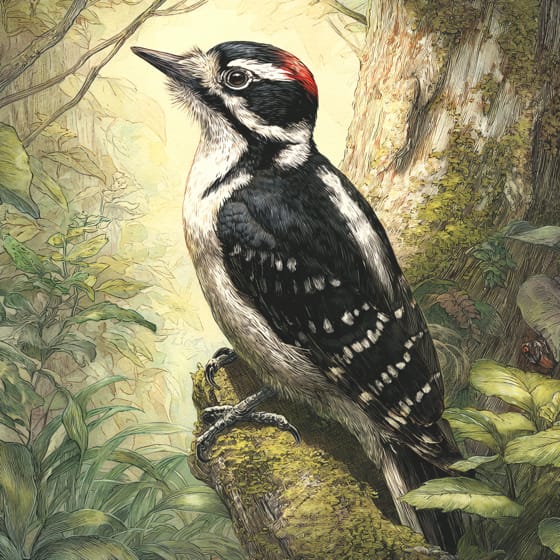
Picoides villosus
Woodpeckers often extract horntail larvae from trees.
Rhyssa persuasoria
This wasp lays eggs on horntail larvae inside wood.
Pinus ponderosa
Larvae feed on the wood of dead or dying pine trees.
Amylostereum areolatum
The horntail carries this fungus to help larvae digest wood.
Solitary animals live alone for most of their lives, only interacting with others for mating or parental care.
Characterized by having one or more hard, permanent, pointed projections on the head.
This trait characterizes organisms whose diet consists entirely or primarily of plant material.
Describes organisms that break down dead organic material, recycling nutrients back into the ecosystem.

Forest habitats are terrestrial environments dominated by dense tree cover, supporting a high diversity of plant and animal life.

Describes organisms that transfer pollen, enabling the fertilization and reproduction of plants.
No aliases listed yet.
Danger
1/5 · Very low
These wasps are friendly and won't hurt you, but it's best to watch them from a distance.
The easiest way to identify California Horntail is to use the Snappit nature identifier app.
30-80 mm
15-40 mm
5-10 days
Their hungry larvae munch on wood, but the adults don't eat anything at all!
Forests
Foraging
6
Zoom in to split clusters and explore where this object has been snapped.
Recent snaps will appear here as new observations are added.
Take the discovery with you
Snap it with Snappit to identify it, learn what makes it special, and add the discovery to your collection.








.jpg&width=800)



