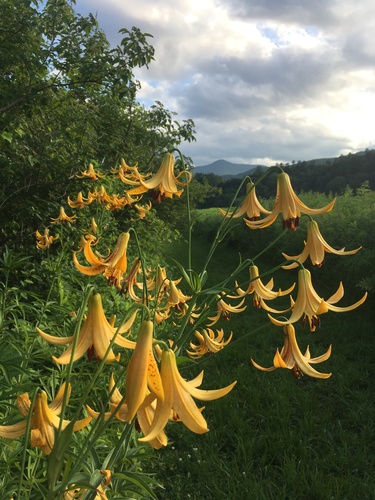


Canada Lily
lilium canadense
The Canada Lily (Lilium canadense), also known as the wild yellow lily, is a stunning wildflower native to eastern North America. Renowned for its elegant, nodding trumpet-shaped blossoms, this perennial herb adds a splash of vibrant color to moist meadows, open woodlands, and wet ditches during the mid-summer months. Historically prized by Native Americans, who boiled its starchy bulbs to prepare nutritious soups, the Canada Lily remains a highly valued species for native pollinators and modern plant enthusiasts alike. Its graceful architecture and bright, hanging bells make it a standout resident of damp temperate ecosystems.
Habitat: Found in moist meadows, wet prairies, swamp margins, and open, damp woodlands.
Standing tall at 60 to 180 cm, the Canada Lily features whorls of lance-shaped leaves arranged at intervals along its smooth, unbranched stem. Its terminal clusters feature dangling, bell-shaped flowers that range in color from golden-yellow to deep orange-red, heavily freckled on the inside with dark purple or brown spots. From each nodding flower, prominent yellow-to-brown anthers hang downward, ready to brush against visiting pollinators. Unlike some other wild lilies, its petals flare outward and curve slightly upward at the tips, rather than curling tightly backward.
Category
PlantsRarity
Common
Danger
1/5 · Very low
Snaps
1
It can take up to five to seven years for a Canada Lily grown from seed to produce its very first flower.
The underground bulbs of the Canada Lily were a traditional food source for Indigenous peoples, who cooked them in soups to obtain a texture similar to squash.
Unlike some other lilies whose petals curve tightly backward, the Canada Lily's petals flare outward and point downward, resembling a delicate, hanging chandelier.
Utilizes specialized roots that contract to pull the bulb deeper into the soil, keeping it protected from freezing winter temperatures and ensuring access to deep soil moisture.
The dark spots inside the petals act as visual guides, directing long-tongued pollinators toward the nectar sources deep within the bloom.
The plant dies back entirely to an underground rhizomatous bulb in the winter, storing critical energy to regenerate rapidly when the spring soil warms.
As a photosynthetic plant, the Canada Lily produces its own food using sunlight, water, and carbon dioxide, supplemented by minerals absorbed from the soil.

Archilochus colubris
Sips nectar from the hanging blooms, transferring pollen on its forehead from plant to plant.
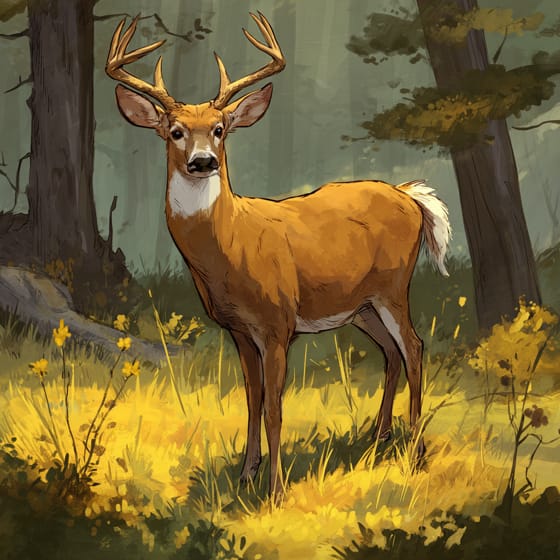
Odocoileus virginianus
Feeds heavily on the nutritious young stems, leaves, and flower buds, often preventing flowering and damaging wild populations.
Lilioceris lilii
Both larvae and adults defoliate the plant, posing a significant threat to local lily populations.
No trait badges are assigned for this object yet.
No aliases listed yet.
Collections for this object will appear here as more themes are added.
Danger
1/5 · Very low
No special safety notes yet.
The easiest way to identify Canada Lily is to use the Snappit nature identifier app.
60-180 cm
5-15 years
As a photosynthetic plant, the Canada Lily produces its own food using sunlight, water, and carbon dioxide, supplemented by minerals absorbed from the soil.
Found in moist meadows, wet prairies, swamp margins, and open, damp woodlands.
Zoom in to split clusters and explore where this object has been snapped.
Take the discovery with you
Snap it with Snappit to identify it, learn what makes it special, and add the discovery to your collection.












.jpg&width=800)



_001.jpg&width=800)




