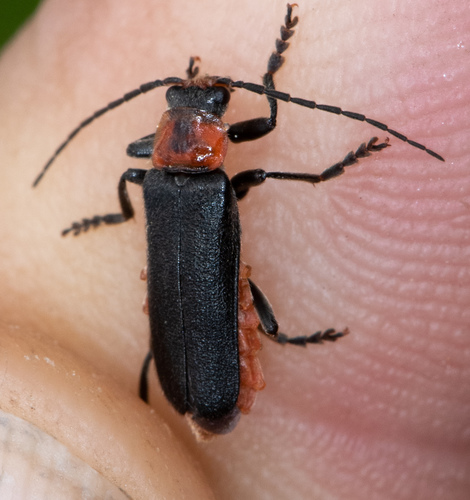





Cantharis oregona
Cantharis oregona
The Cantharis oregona, also known as the Oregon soldier beetle, is a bright orange insect that loves to be in sunny places. They are often seen on flowers, where they help pollinate while looking for food.
Habitat: Grasslands
The Cantharis oregona is a slender, soft-bodied beetle, typically reddish-orange to brown with contrasting black legs, antennae, and often dark markings on its wing covers. Its soft texture and bright colors make it visually distinct from many harder-shelled beetles.
Category
InsectsRarity
Common
Danger
1/5 · Very low
Snaps
Be the first to snap!
Even as tiny larvae, these beetles are fierce predators, hunting other insects underground!
If you find them on flowers, they might be looking for a mate, not just a snack!
Their soft wing covers make them look delicate, but they are surprisingly tough!
They are sometimes called 'Soldier Beetles' because of their protective armored look!
Cantharis oregona has bright colors that warn predators it might taste very bad if they try to eat it!
Cantharis oregona can release yucky chemicals to make predators think twice about taking a bite.
Cantharis oregona hunts and eats small garden pests, helping plants stay healthy and strong.
Cantharis oregona sips nectar, helping flowers make seeds by moving tiny pollen grains.
These beetles eat tiny bugs like aphids and also sip sweet nectar from flowers!
Age differences: Larvae are fierce hunters of small insects, while adult beetles enjoy both bugs and flower nectar.
Aphis gossypii
Adults and larvae prey on these soft-bodied pests.

Leucanthemum vulgare
Visits flowers to feed on nectar and pollen, aiding reproduction.
Turdus migratorius
Birds, including robins, may prey on these beetles.
Trialeurodes vaporariorum
Beetles consume these small, sap-feeding insects.
Solitary animals live alone for most of their lives, only interacting with others for mating or parental care.
Colorful describes organisms or objects displaying a wide range of bright and distinct colors.
Grassland habitats are terrestrial biomes dominated by grasses and herbaceous plants, supporting a variety of grazing animals.
This trait identifies organisms whose diet primarily consists of insects and other small invertebrates.
Describes plants that are particularly attractive and beneficial to a wide range of pollinating organisms.
Diurnal animals are primarily active during daylight hours, typically resting or sleeping at night.
Describes a species whose presence and role have a disproportionately large effect on its environment.
Describes organisms that transfer pollen, enabling the fertilization and reproduction of plants.
Danger
1/5 · Very low
These beetles are not harmful, but it's best to watch them from a distance.
Look for hard wing covers meeting in a line down the back, then compare the antennae, body shape, legs and markings. Metallic colors shift a lot with lighting. Beetle Identifier: upload a photo and compare the visible details.
15-20 mm
7-10 mm
30-60 days
8 km/h
These beetles eat tiny bugs like aphids and also sip sweet nectar from flowers!
Grasslands
Foraging
Zoom in to split clusters and explore where this object has been snapped.
Recent snaps will appear here as new observations are added.
Take the discovery with you
Snap it with Snappit to identify it, learn what makes it special, and add the discovery to your collection.