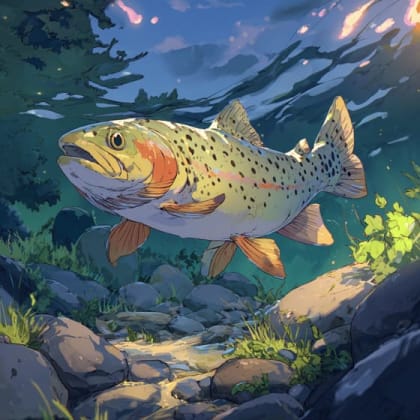
Centropyge loriculus
Centropyge loriculus
The Centropyge loriculus, also known as the Pacific pygmy angelfish, is a small, colorful fish that loves to swim around coral reefs. They are bright and cheerful, making them a favorite in aquariums!
Habitat: Coral reefs
The Centropyge loriculus has a vivid fiery orange-red body adorned with four to five vertical black bars. Its dorsal, anal, and caudal fins often feature stunning iridescent blue edges, making it a true underwater jewel.
Category
FishRarity
Common
Danger
1/5 · Very low
Snaps
Be the first to snap!
Flame Angelfish often live in small groups called harems with one male leader.
Their bright colors also help them blend into the colorful coral reefs they call home!
These tiny fish can actually change their gender from female to male!
They hide within coral branches and rocky nooks to sleep safely at night.
Centropyge loriculus can expertly dart through complex coral structures because of its agile, compressed body.
Centropyge loriculus has special brush-like teeth that help them scrape algae off rocks, keeping the reef clean.
Centropyge loriculus uses its vibrant colors to signal to other fish and establish its territory on the reef.
They primarily graze on algae, helping keep coral reefs healthy and clean for everyone.
Plectropomus leopardus
A common predator on tropical reefs.
Acropora cervicornis
Provides crucial hiding spots and protection.
Chlorodesmis fastigiata
Feeds on this common filamentous algae.
Social animals live in organized groups, cooperating for survival benefits such as foraging, defense, and raising offspring.
Colorful describes organisms or objects displaying a wide range of bright and distinct colors.
This trait characterizes organisms whose diet consists entirely or primarily of plant material.
Diurnal animals are primarily active during daylight hours, typically resting or sleeping at night.

Pertaining to species that are significantly smaller than typical or average for their kind.

Aquatic habitats encompass environments where organisms live predominantly in water, including oceans, rivers, lakes, and wetlands.

Marine habitats encompass all saltwater environments of the Earth's oceans, supporting an immense diversity of aquatic life.
Danger
1/5 · Very low
Always watch fish from a distance and never try to touch them in the water.
The easiest way to identify Centropyge loriculus is to use the Snappit nature identifier app.
6-10 cm
0.01-0.05 kg
5-7 years
They primarily graze on algae, helping keep coral reefs healthy and clean for everyone.
8 km/h
Coral reefs
Foraging
Zoom in to split clusters and explore where this object has been snapped.
Recent snaps will appear here as new observations are added.
Take the discovery with you
Snap it with Snappit to identify it, learn what makes it special, and add the discovery to your collection.