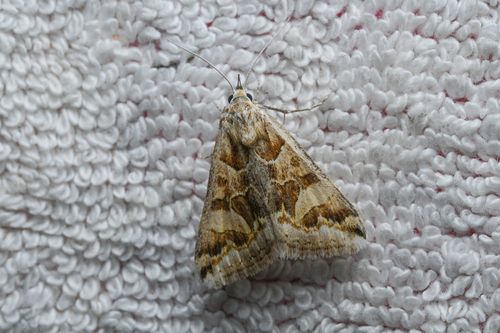


Cerocala Scapulosa
cerocala scapulosa
Cerocala scapulosa is an intriguing species of moth belonging to the family Erebidae, found primarily across the arid and semi-arid regions of Africa. Well-adapted to life in dry shrublands, savannas, and deserts, this resilient nocturnal lepidopteran plays a vital role in its local ecosystem. As an adult, it serves as a pollinator, visiting night-blooming desert flora, while its larval stage feeds on hardy wild shrubs. For nature enthusiasts, spotting one is a rewarding challenge due to its exceptional bark-mimicking camouflage. It remains a fascinating subject of study for entomologists interested in desert adaptation, insect survival mechanisms, and the rich, often overlooked biodiversity of arid landscapes. Its presence is an indicator of healthy, undisturbed dry-scrub habitats where its larval host plants thrive.
Habitat: Typically found in arid savannas, dry shrublands, and desert edges with sparse vegetation across Africa.
This medium-sized moth features forewings exquisitely patterned with mottled shades of grey, brown, and cream, mimicking dry tree bark or lichen. The wingspan typically measures between 3 to 5 centimeters. When at rest, its wings form a flat, triangular roof over its body, completely concealing the hindwings. However, if disturbed, it reveals hindwings marked with contrasting dark brown and yellowish-white bands, creating a startling visual flash. Its thorax is densely furred with greyish scales, and its antennae are fine and threadlike, typical of female moths, or moderately feathered in males.
Category
InsectsRarity
Common
Danger
1/5 · Very low
Snaps
Be the first to snap!
Its cryptic coloration is so effective that it can hide in plain sight on acacia tree bark, matching both the color and texture of local lichens.
Like many moths in the Erebidae family, Cerocala scapulosa has ears on its metathorax that are fine-tuned to hear the echolocation calls of hunting bats.
The genus name 'Cerocala' comes from Greek roots, hinting at 'wax' and 'beautiful', likely referring to the sleek, waxy appearance of some species' markings.
The intricate patterning of its forewings allows the moth to blend seamlessly against rough tree bark and rocks, making it virtually invisible to daytime predators.
When threatened, it suddenly exposes its banded hindwings, creating a sudden flash of pattern that momentarily confuses predators and allows a quick escape.
Equipped with specialized tympanic organs, this moth can detect the echolocation sweeps of insectivorous bats, prompting them to perform evasive diving maneuvers.
Larvae feed on the leaves of woody shrubs and legumes, while adults feed on floral nectar from night-blooming plants.
Age differences: Caterpillars possess chewing mouthparts to consume tough leaves, whereas adults have a coiled proboscis specialized for sipping liquid nectar.
Vachellia karroo
The caterpillars feed on the leaves of this host plant.
Neoromicia capensis
Adult moths are preyed upon by nocturnal insectivorous bats during flight.
Trichonephila senegalensis
Spiders waiting on bark or near lights ambush resting moths.
No trait badges are assigned for this object yet.
No aliases listed yet.
Collections for this object will appear here as more themes are added.
Danger
1/5 · Very low
No special safety notes yet.
Compare resting wing shape, forewing markings, antennae and body build. Small brown moths can hinge on fine details a phone photo can't always catch. Moth Identifier: upload a photo and compare the visible details.
1+ cm
3+ cm
0.0001+ kg
0+ years
15 km/h
Larvae feed on the leaves of woody shrubs and legumes, while adults feed on floral nectar from night-blooming plants.
Typically found in arid savannas, dry shrublands, and desert edges with sparse vegetation across Africa.
Zoom in to split clusters and explore where this object has been snapped.
Recent snaps will appear here as new observations are added.
Take the discovery with you
Snap it with Snappit to identify it, learn what makes it special, and add the discovery to your collection.