

Luna Moth
Upload a moth photo for a likely match, from tiny pantry moths to big porch-light visitors, then check its wings, lines and antennae in Snappit's kid-friendly field guide.
Identify and collect animals with your phone.


Drag a photo here, or choose one below.
JPG, PNG or WebP · Up to 10 MB

Photograph a resting moth in natural light with both wing tips and the head in view. Avoid the strong color cast of yellow porch lights.


Compare the suggested name with what you see in your photo. Then open its field-guide entry for fun facts and look-alikes to rule out.

Browse the field guide here, or save your finds as collectible cards in the Snappit app. Build collections and learn something new together.
Real moth cards from the Snappit field guide, from fuzzy hawk moths to tiny porch-light visitors, with fun facts about the night shift. Tap one to look closer.
A tiny moth in the kitchen calls for different comparisons than a big visitor at the porch light. Start with its resting wing shape, where the lines or dots sit and its body build. Worn wing scales can erase useful markings, making a broad ID more realistic than an exact name.

The first clue is the silhouette. Some moths hold their wings like a roof over the body, some lie flat, and some wrap them into a slim tube. Long, pointed forewings suggest different candidates than broad, triangular ones, but pose alone is only a starting point.

Look for thin lines running across the wing from the front edge to the back edge, small round or kidney-shaped spots, or a dark patch near the tip. Even on brown moths, the number, sharpness and position of these marks often separate look-alike species.

Antennae can be threadlike, finely combed or obviously feathery. Feathery antennae are common in males of some moth groups, while butterflies have a clubbed tip. It's a useful clue, not a perfect one, because a few moths have thickened antennae and photos often hide the detail.

Check whether the thorax, the body section behind the head, looks thick and furry or neat and narrow. A long, tapered abdomen, a compact triangular shape or a stout torpedo body can each point to different moth groups, even when the wing colors are rubbed or dull.
Compare real field-guide examples: Luna Moth · Rosy Maple Moth · Io Moth

The best visible clue is usually the antennae: butterflies have a thickened club at the tip, while most moths have plain threadlike or feathery antennae. Resting posture overlaps more than people expect, and some moths fly by day, so daylight or open wings don't settle it.

Hawk moths have long, pointed forewings and a streamlined, muscular body built for fast flight; some even hover at flowers like hummingbirds. Broader moths look triangular, leaflike or softly rounded at rest. A pointed wing tip helps, but not every narrow-winged moth is a hawk moth.

Clothes moths are small, buff or golden and fairly even in color, with narrow fringed wings and often a tufted head. Pantry moths show more contrast, such as a two-toned or clearly patterned forewing. The moth itself tells you more than the room you found it in or the damage nearby.

A moth on glass is often easy to photograph because it sits still and shows its outline well. Capture the whole insect from above or slightly to one side. In the photo, check the forewing tip, any scalloped outer edge, and whether the wings look flat, tented or tightly wrapped.
Window moths are often brown, gray or tan, so color is a weak shortcut. Compare where the dark dots, wavy cross-lines, pale border or central blotch sit instead. A plain-looking moth can still have a distinctive shape or pattern rhythm that sets it apart from the other common porch and window visitors.

Very small indoor moths can look featureless until the photo is sharp enough to show texture. A plain silky buff wing, a coppery outer half, a fuzzy head tuft or long wing fringes can all matter. Damage to clothes or dry food doesn't identify the moth by itself, so focus first on what the moth looks like.
Worn moths lose scales, the tiny colored flakes that coat the wings, leaving dull patches or see-through areas. Then shape matters more: antennae, body thickness, wing outline and where any surviving spots or lines sit. A rubbed specimen may get a broader result, which is normal when key markings are gone.
A straight-on resting view usually works best. Include both wing tips, the body and the antennae so the overall shape is easy to compare.

Window reflections and harsh flash wash out fine lines. Softer light or a slight angle keeps the wing pattern visible without losing detail.

If you took several shots, compare them and upload the sharpest one. The identifier takes one photo, so pick the view with the most visible pattern and structure.
Most likely it was drawn to your lights at night, or it's using the glass and frame as a sheltered spot to rest by day. A moth on the window doesn't mean you have a moth problem. For an ID, the outline and wing markings tell you far more than where it landed.
Often, yes, if the image is sharp. Brown is everywhere in moths, so look at the details within the brown: thin cross-lines, paired dots, a pale edge, a dark wedge near the tip or an unusual wing shape. Those small marks matter more than the shade.
Not necessarily. Plenty of moths fly by day, and some rest with their wings spread like butterflies. Check the antennae: butterflies have clubbed tips, while most moths have threadlike or feathery ones. Daytime flight is a hint, not a dividing line.
A clear photo can usually tell. Clothes moths are small, plain buff or golden, with narrow wings and a tufted head. Pantry moths like the Indian meal moth have two-toned wings, pale near the body and coppery toward the tips. Where you found it or the damage nearby is a hint, but the moth itself decides it.
Sometimes. Even with scales rubbed off, the body shape, antennae, wing outline and any surviving dots or bands are still useful. Expect a broader result when key pattern areas are missing, and upload your clearest single view.
Quite possibly, since most caterpillars become moths, not butterflies. A caterpillar can look nothing like its adult, but hairs, stripes, a tail horn or body shape still narrow it down. Avoid touching hairy or spiny ones, and check a regional guide to see the expected adult.
Yes. Snappit is a free iPhone and Android app for kids exploring with a grown-up. Snap a moth on the porch or a butterfly in the garden and it suggests a match with short, kid-friendly facts, then turns it into a collectible card with a rarity tier in your family's private collection. No ads, no chat, free IDs every day, and an optional subscription for unlimited snaps.
Each identification uses one photo, so compare your shots and upload the clearest. Keep the wing shape, antennae and markings in view. A sharp, evenly lit image gives more useful clues than a closer one with motion blur.
The Snappit appAges 4+ · No ads
Take what you learn here into Snappit and turn your next walk or day out into a shared adventure.
Save your discoveries as collectible cards in the app, with rarity tiers and themed collections to explore.
Short, friendly facts give young readers something to notice, ask about, and remember. The app is made for ages 4 and up, without ads.
Discover new collection themes, try the daily discovery, and earn badges as you keep exploring together.


Open a place guide to see its species checklist and plan what to look for on your next visit.

South Carolina, US
You might spot Green Cloverworm Moth and Black-Dotted Ruddy Moth.
View guide →

West Virginia, US
You might spot Celery Leaftier Moth and Isabella Tiger Moth.
View guide →
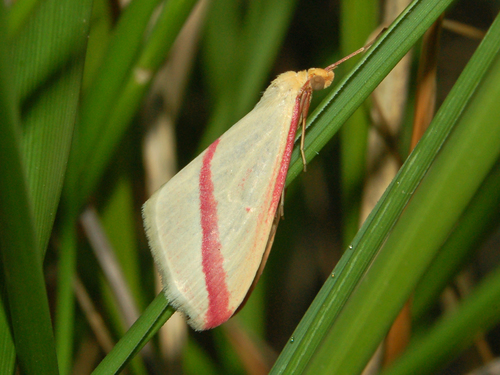
Spain, ES
You might spot Vestal, Morning-Glory Plume Moth, and Old World Webworm.
View guide →