





Cicindela sylvicola
Cicindela sylvicola
The Cicindela sylvicola, also known as the woodland tiger beetle, is a shiny, fast insect that loves to run around in the woods. Its bright colors help it stand out in nature!
Habitat: Forests
The Cicindela sylvicola has a metallic green or bronzed body with a distinctive sheen. Its wing covers feature pale, curved markings (lunules) near the tips, often with a central dot or band. This pattern helps distinguish it from other swift tiger beetles.
Category
InsectsRarity
Common
Danger
1/5 · Very low
Snaps
Be the first to snap!
Adults run so incredibly fast that they can't even see for a moment!
Its speedy larvae ambush prey from underground tunnels they dig themselves!
They have powerful jaws that can snip a small insect in half in a flash!
When the ground gets too hot, this beetle does a funny 'dance' to cool its feet!
Cicindela sylvicola can sprint incredibly fast because of its long, powerful legs that help it chase prey.
Cicindela sylvicola has huge, bulging eyes that help it see tiny movements and spot prey from a distance.
Its larvae can hide perfectly in sandy tunnels because they match the soil, helping them ambush unsuspecting insects.
Cicindela sylvicola has powerful, sharp mandibles that help it grab and crush other insects quickly.
This beetle is a lightning-fast hunter, feasting on small insects it catches with incredible speed!
Age differences: Larvae are ambush predators, living in burrows and snatching prey that pass by, while adults actively chase their food.
Formica rufa
Adults actively hunt ants on the forest floor.
Pterostichus melanarius
A swift predator of smaller ground-dwelling beetles.

Erithacus rubecula
Birds may prey on adult beetles foraging on paths.
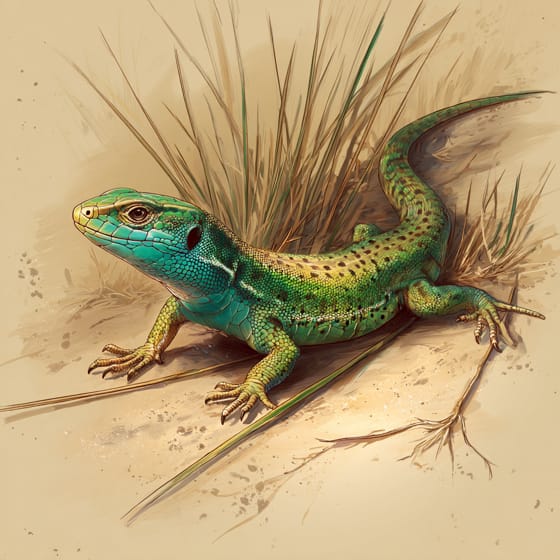
Lacerta agilis
Lizards may catch unsuspecting beetles on sandy ground.
Solitary animals live alone for most of their lives, only interacting with others for mating or parental care.
Colorful describes organisms or objects displaying a wide range of bright and distinct colors.
This trait identifies organisms whose diet primarily consists of insects and other small invertebrates.
Forest habitats are terrestrial environments dominated by dense tree cover, supporting a high diversity of plant and animal life.

This trait identifies organisms whose diet consists entirely or primarily of animal tissue.

Diurnal animals are primarily active during daylight hours, typically resting or sleeping at night.

This trait identifies organisms that exhibit exceptional swiftness in movement for hunting, escape, or travel.
Danger
1/5 · Very low
Be gentle and watch from a distance; insects are delicate and can be scared easily.
The easiest way to identify Cicindela sylvicola is to use the Snappit nature identifier app.
22-30 mm
11-15 mm
730-1095 days
8 km/h
This beetle is a lightning-fast hunter, feasting on small insects it catches with incredible speed!
Forests
Pursuit
Zoom in to split clusters and explore where this object has been snapped.
Recent snaps will appear here as new observations are added.
Take the discovery with you
Snap it with Snappit to identify it, learn what makes it special, and add the discovery to your collection.








.jpg&width=800)


