





Citronella Horse Balm
collinsonia canadensis
Citronella Horse Balm is a tall plant with pretty yellow flowers that smell amazing! It’s great for attracting butterflies and can be used to make soothing balms.
Habitat: Citronella Horse Balm typically grows in moist woodlands and along streams.
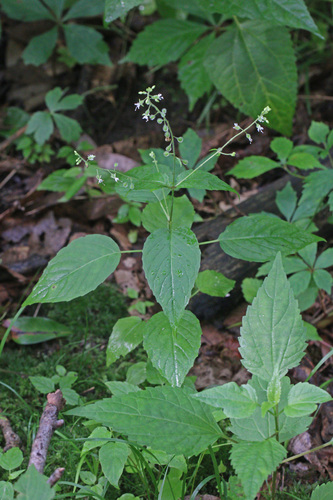
The Citronella Horse Balm has tall, sturdy stems with large, oval, toothed leaves that emit a lemony scent when crushed. Its unusual, pale yellow flowers appear in loose clusters, featuring a distinctive lower lip that makes them stand out.
Category
PlantsRarity
Common
Danger
0/5 · No known danger
Snaps
5
Indigenous people once mashed its fragrant leaves to make soothing poultices.
It's sometimes called 'Richweed' because it thrives in moist, fertile forest floors!
Its old name, 'Stone-root,' comes from its incredibly hard, rock-like root!
The plant’s unique flower shape guides thirsty bees right to its nectar!
Citronella Horse Balm can release a strong, lemony fragrance from its leaves, helping it deter hungry herbivores from taking a bite.
Citronella Horse Balm has special compounds in its tough roots that were traditionally used by people to soothe various ailments.
Citronella Horse Balm displays unique, pale yellow flowers that produce nectar, helping it attract beneficial insect pollinators.

Bombus impatiens
Collects nectar and pollen from its flowers.

Odocoileus virginianus
Young leaves might be occasionally browsed.
Apis mellifera
Visits its flowers for nectar and pollen.
Colorful describes organisms or objects displaying a wide range of bright and distinct colors.
This trait characterizes organisms whose diet consists entirely or primarily of plant material.
Forest habitats are terrestrial environments dominated by dense tree cover, supporting a high diversity of plant and animal life.
Diurnal animals are primarily active during daylight hours, typically resting or sleeping at night.

Describes organisms that transfer pollen, enabling the fertilization and reproduction of plants.
Danger
0/5 · No known danger
No special safety notes yet.
The easiest way to identify Citronella Horse Balm is to use the Snappit nature identifier app.
60-120 cm
30-60 cm
0.5-1 cm
Summer to fall
No
None
Perennial
Zoom in to split clusters and explore where this object has been snapped.

Massachusetts, US
You might spot Mountain Laurel, Azure Bluet, and Partridgeberry.
View guide →

Ohio, US
You might spot Wild Bergamot, Rattlesnake Master, and Eastern Pondhawk.
View guide →

Michigan, US
You might spot Prairie Trillium, Large White Trillium, and Wild Geranium.
View guide →

Ohio, US
You might spot Eastern Newt, Eastern Hemlock, and American Cancer-Root.
View guide →

New York, US
You might spot Eastern Gray Squirrel, Common Mugwort, and American Robin.
View guide →
Virginia, US
You might spot Broadleaf Enchanter's Nightshade and White Avens.
View guide →
Take the discovery with you
Snap it with Snappit to identify it, learn what makes it special, and add the discovery to your collection.








.jpg&width=800)



_001.jpg&width=800)




