





Bitter Melon
Momordica charantia
Bitter melon is a unique green fruit that looks like a bumpy cucumber. It has a very strong taste and is often used in cooking to make tasty dishes.
Habitat: Tropical areas
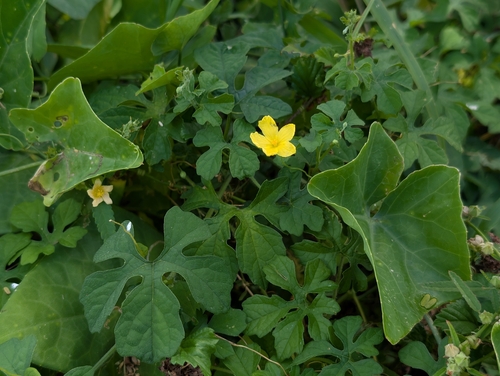
The Bitter Melon has oblong, warty fruit that typically starts green, ripening to a bright yellow or orange. Its leaves are deeply lobed, and it produces small, vibrant yellow flowers, making it visually distinct from smooth-skinned gourds.
Category
PlantsRarity
Common
Danger
1/5 · Very low
Snaps
5
Ancient cultures used bitter melon for thousands of years as both a food and a powerful traditional medicine!
Each bright red seed is covered in a sweet, sticky pulp, tempting animals to spread them widely!
Some people call it 'vegetable insulin' because of its unique compounds that help manage blood sugar!
When the fruit fully ripens, its inside turns red and becomes sweet, while the outside stays bitter!
Bitter Melon has a clever trick: when ripe, its fruit can split open explosively to scatter bright red, sticky seeds far and wide!
Bitter Melon can quickly climb using its tendrils, reaching for sunlight and spreading its vines across trellises or other plants.
Apis mellifera
collects nectar and pollen from flowers
Bactrocera cucurbitae
larvae feed on the developing fruits
Aphis gossypii
sucks sap from leaves and stems

Homo sapiens
cultivates and consumes the fruit
Flowering plants are any plants that produce flowers as part of their reproductive cycle.
Fruit-bearing plants produce fruits, which are the mature ovaries of flowering plants containing seeds.
Medicinal plants possess chemical compounds that can be used for therapeutic purposes to treat illnesses or maintain health.
Edible plants are those parts of a plant that are considered safe for human consumption.

This human use trait indicates species from which spices are derived, used for flavoring, preserving food, or as aromatic agents.
Danger
1/5 · Very low
Always ask an adult before trying new foods, especially fruits like bitter melon.
The easiest way to identify Bitter Melon is to use the Snappit nature identifier app.
200-500 cm
100-300 cm
2-3 cm
Summer to fall
Yes
Mild
Annual
Zoom in to split clusters and explore where this object has been snapped.
Jun 6, 2026
Kawai Nui MarshPhoto attribution
(c) Damien Wallace, some rights reserved (CC BY)
License: CC BY 4.0 ↗
Image may be shown cropped inside the card frame.

Florida, US
You might spot Peters's Rock Agama, Brown Anole, and American Alligator.
View guide →

Hawaii, US
You might spot Koster's Curse and White-Rumped Shama.
View guide →

Hawaii, US
You might spot Red-Crested Cardinal and Zebra Dove.
View guide →

Hawaii, US
You might spot Red-Crested Cardinal and Zebra Dove.
View guide →

Hawaii, US
You might spot Spotted Dove, Zebra Dove, and Java Sparrow.
View guide →
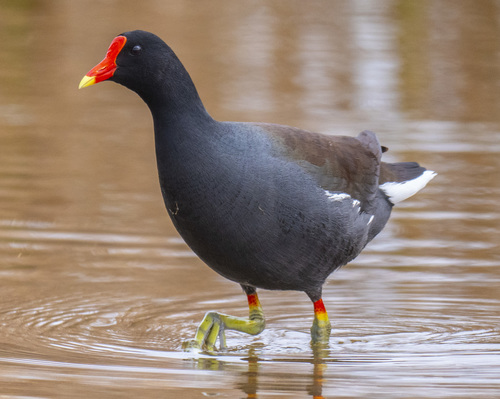
Hawaii, US
You might spot Common Gallinule and Red-Crested Cardinal.
View guide →
Take the discovery with you
Snap it with Snappit to identify it, learn what makes it special, and add the discovery to your collection.








.jpg&width=800)



_001.jpg&width=800)



