

Clethra Family
clethraceae
The Clethra Family, scientifically known as Clethraceae, is a small but captivating family of flowering plants in the order Ericales. Best known for the genus Clethra, these plants are mostly deciduous shrubs or small trees that thrive in damp, acidic environments such as wetlands and forest understories. They are highly appreciated by gardeners and nature lovers alike for their late-summer blooms, which provide a vital food source for pollinators when many other plants have finished flowering. These plants have a rich evolutionary history and are primarily found in temperate and tropical regions of Asia and the Americas. Their ability to tolerate waterlogged soils and colonize disturbed wetland habitats makes them crucial components of their local ecosystems, helping to stabilize banks and support diverse insect communities.
Habitat: Typically found in wet acidic soils, swamps, bogs, and along stream banks in damp woodlands.
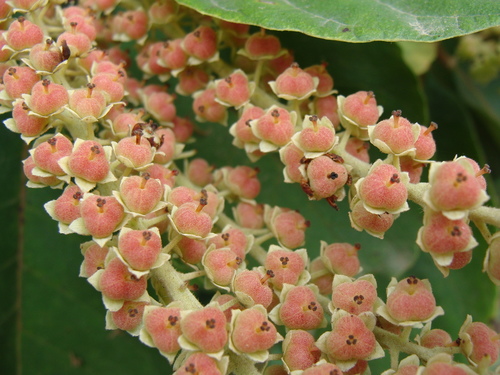
Clethraceae species are typically multi-stemmed shrubs or small trees ranging from 1 to 12 meters in height. They feature simple, alternate leaves with distinctively serrated margins. The most striking visual feature is their flower display: long, finger-like spikes or racemes packed with small, bell-shaped white or occasionally pink flowers. These blossoms possess prominent, dangling stamens. In late autumn, the flowers give way to persistent, brown, three-valved seed capsules that resemble peppercorns, remaining on the plant through the winter.
Category
PlantsRarity
Common
Danger
1/5 · Very low
Snaps
Be the first to snap!
The sweet fragrance of Clethra flowers is so potent that a single shrub can perfume an entire backyard or woodland clearing.
Their common name 'Sweet Pepperbush' comes from the round, dark brown seed capsules that visually resemble peppercorns.
They are highly salt-tolerant, making them one of the few flowering shrubs that can thrive in coastal and maritime gardens.
Unlike many ornamental shrubs that bloom on old wood, Clethra flowers on new growth, meaning late frosts won't ruin its summer flower display.
These plants can thrive in highly acidic, nutrient-poor, and waterlogged soils where most other woody plants would suffer from root rot or nutrient deficiencies.
By blooming in mid-to-late summer, they utilize a unique ecological niche, producing intensely sweet-scented nectar that attracts a massive diversity of pollinators.
Their extensive, fibrous root systems bind wet soils, preventing erosion along stream banks and marshy coastlines.
As photosynthetic plants, Clethraceae species manufacture their own organic compounds using sunlight, water, carbon dioxide, and essential soil minerals.

Danaus plexippus
Provides rich late-season nectar to migrating butterflies.
Apis mellifera
Forages heavily on the abundant flowers for nectar and pollen to make honey.

Odocoileus virginianus
Occasionally browses on the leaves and tender young shoots during the winter.
No trait badges are assigned for this object yet.
Collections for this object will appear here as more themes are added.
Danger
1/5 · Very low
No special safety notes yet.
Start with the whole plant, then compare leaf arrangement, leaf edges, stems and any flowers or fruit. Opposite leaves grow in pairs; alternate leaves come one at a time along the stem. These details tell you far more together than a single green leaf does. Plant Identifier: upload a photo and compare the visible details.
100-1200 cm
20-80 years
As photosynthetic plants, Clethraceae species manufacture their own organic compounds using sunlight, water, carbon dioxide, and essential soil minerals.
Typically found in wet acidic soils, swamps, bogs, and along stream banks in damp woodlands.
Zoom in to split clusters and explore where this object has been snapped.
Recent snaps will appear here as new observations are added.
Take the discovery with you
Snap it with Snappit to identify it, learn what makes it special, and add the discovery to your collection.