





Common Noctule
Nyctalus noctula
The Common Noctule is a big bat that flies at night. It loves to catch insects in the air and can be found in many places, including forests and cities!
Habitat: Forests, Urban areas
The Common Noctule has glossy, reddish-brown fur on its back and paler, yellowish-brown fur underneath. It is a relatively large bat for Europe, with long, narrow wings and a distinctive mushroom-shaped tragus in its ear.
Category
MammalsRarity
Common
Danger
1/5 · Very low
Snaps
Be the first to snap!
Noctule colonies can grow to include over a thousand individual bats!
Some Common Noctules migrate hundreds of kilometers to warmer places for winter!
They prefer roosting in tree hollows that were made by woodpeckers!
You might hear their loud echolocation calls even without special equipment!
Common Noctule can navigate and hunt in total darkness using high-frequency sounds to map out its environment.
Common Noctule has long, narrow wings enabling fast, direct flight to pursue and catch flying insects mid-air.
These speedy fliers hunt down and eat many different types of flying insects high in the night sky.
Noctua pronuba
A favorite flying insect meal.
Melolontha melolontha
Caught mid-air during evening flights.

Strix aluco
Predator near roosts at dawn/dusk.
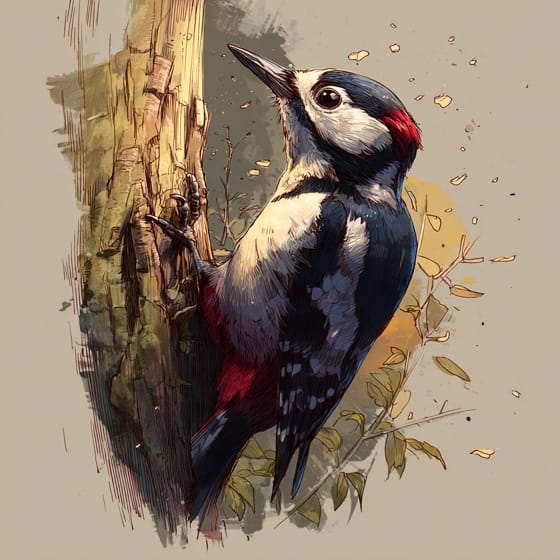
Dendrocopos major
Creates hollows used by roosting bats.
Furry describes animals possessing a dense covering of soft hair or fur.
Social animals live in organized groups, cooperating for survival benefits such as foraging, defense, and raising offspring.
Aerial creatures spend a significant portion of their lives airborne, utilizing flight for various activities such as hunting, migration, or nesting.
This trait identifies organisms whose diet primarily consists of insects and other small invertebrates.

Echolocation is a biological sonar used by animals to navigate, hunt, and communicate by emitting sound waves and interpreting the echoes.

Forest habitats are terrestrial environments dominated by dense tree cover, supporting a high diversity of plant and animal life.

This trait identifies organisms that exhibit exceptional swiftness in movement for hunting, escape, or travel.

This habitat trait indicates species that can coexist with humans in urban and suburban environments, utilizing man-made structures and green spaces.

Nocturnal animals are primarily active during the nighttime hours, typically resting or sleeping during the day.
Danger
1/5 · Very low
Bats are usually not dangerous, but it's best to watch them from a distance and not touch them.
The easiest way to identify Common Noctule is to use the Snappit nature identifier app.
6-8 cm
32-40 cm
0.018-0.04 kg
4-12 years
50 km/h
These speedy fliers hunt down and eat many different types of flying insects high in the night sky.
Forests, Urban areas
Zoom in to split clusters and explore where this object has been snapped.
Recent snaps will appear here as new observations are added.
Take the discovery with you
Snap it with Snappit to identify it, learn what makes it special, and add the discovery to your collection.




.jpg&width=800)


.JPG&width=800)



.jpg&width=800)
