





Aoudad
Ammotragus lervia
Aoudads are strong, wild sheep that live in rocky mountains and deserts. They have big curved horns and a sandy coat that helps them blend in with their surroundings.
Habitat: Mountain regions
The Aoudad is a large, sturdy wild sheep with a sandy to reddish-brown coat that provides excellent camouflage. It has a distinctive, long, shaggy mane of hair on its throat, chest, and front legs. Both males and females possess short, broad, ridged horns that curve gracefully backward.
Category
MammalsRarity
Common
Danger
2/5 · Low
Snaps
3
Aoudad horns can grow over 75 centimeters long, curving backward over their head!
Aoudads use their strong horns to clear snow from rocks to find food.
Baby Aoudads can stand and walk just minutes after being born!
They are sometimes called 'Barbary Sheep' because they live in the Atlas Mountains.
Aoudad can climb incredibly steep cliffs because of their specially adapted hooves, which provide amazing grip on rocky surfaces.
Aoudad can live for long periods without drinking water, getting all the moisture they need from the plants they eat.
Aoudad has sandy-brown fur that helps them perfectly blend into the rocky, arid landscapes, making them hard to spot.
Aoudads are plant-eaters, munching on grasses, shrubs, and leaves found in dry places.
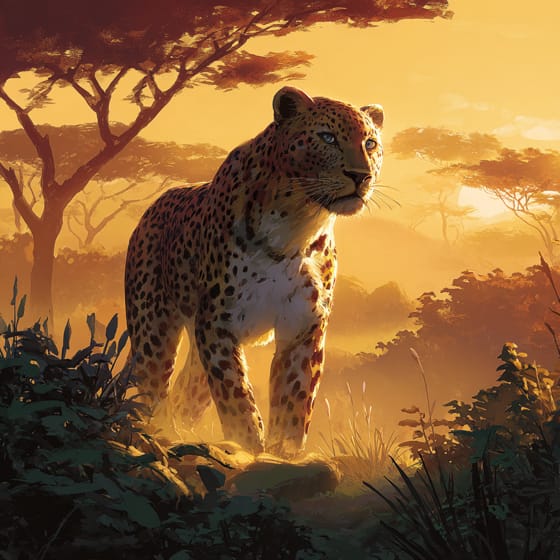
Panthera pardus
Leopards are a natural predator in their native African range.
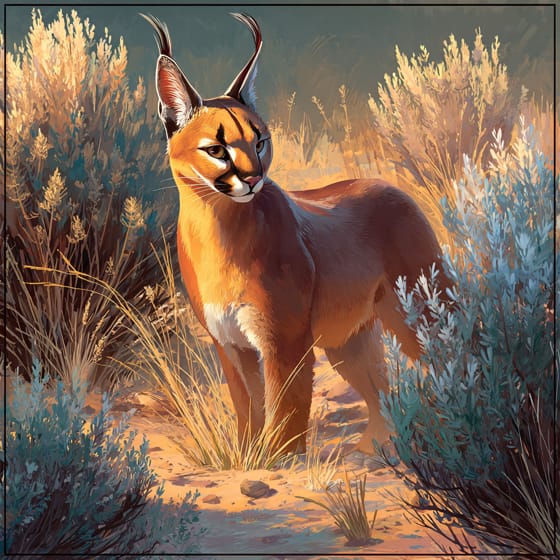
Caracal caracal
Young Aoudads can be prey for swift and powerful caracals.
Hyaena hyaena
Striped Hyenas may scavenge on or hunt Aoudads.
Furry describes animals possessing a dense covering of soft hair or fur.
Social animals live in organized groups, cooperating for survival benefits such as foraging, defense, and raising offspring.
Characterized by having one or more hard, permanent, pointed projections on the head.
Camouflaged describes organisms that possess coloring or patterns that allow them to blend into their environment.

This trait characterizes organisms whose diet consists entirely or primarily of plant material.

Desert habitats are arid regions characterized by extremely low precipitation and often extreme temperatures, supporting specialized flora and fauna.

This habitat trait identifies species found in mountainous regions, characterized by high elevation, steep slopes, and varying climate zones.

Diurnal animals are primarily active during daylight hours, typically resting or sleeping at night.

This trait identifies organisms that exhibit exceptional swiftness in movement for hunting, escape, or travel.
Danger
2/5 · Low
Aoudads are wild animals, so it's best to watch them from a distance and not try to touch them.
The easiest way to identify Aoudad is to use the Snappit nature identifier app.
150-185 cm
30-145 kg
10-20 years
50 km/h
Aoudads are plant-eaters, munching on grasses, shrubs, and leaves found in dry places.
Mountain regions
Grazing
Zoom in to split clusters and explore where this object has been snapped.
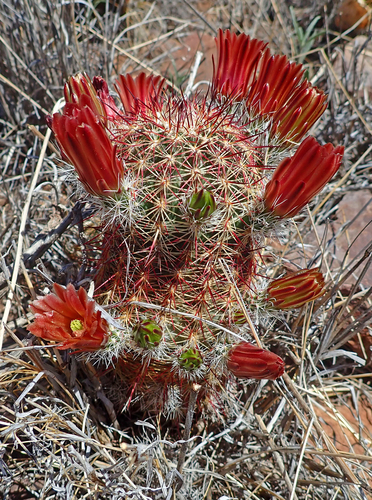
Texas, US
You might spot Texas Hedgehog Cactus, Cactus Wren, and Ornate Tree Lizard.
View guide →

Texas, US
You might spot Greater Earless Lizard and Tree Cholla.
View guide →

New Mexico, US
You might spot Ocotillo, Texas Mountain Laurel, and Agarita.
View guide →
Take the discovery with you
Snap it with Snappit to identify it, learn what makes it special, and add the discovery to your collection.




.jpg&width=800)

.JPG&width=800)


.jpg&width=800)
