.jpg&width=800)





Common Water Monitor
Varanus salvator
The Common Water Monitor is a big lizard that loves to swim! It has a long tail and can be found near rivers and lakes. These lizards are great at catching fish and other tasty treats in the water.
Habitat: Wetlands
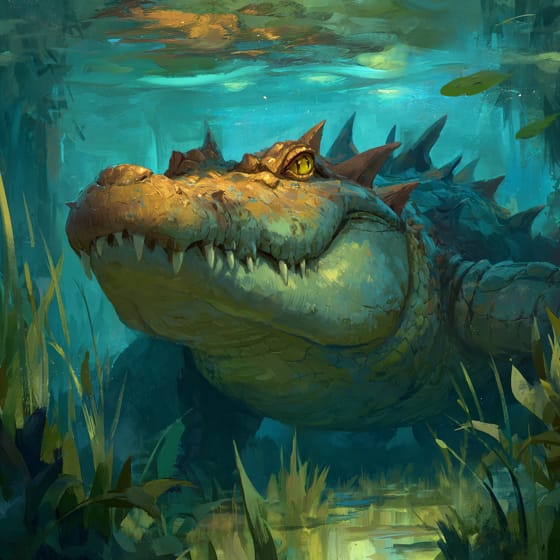
The Common Water Monitor is a large lizard with a long, powerful body, typically dark grey to black with yellow or cream spots. It has a long snout, strong limbs, and a muscular tail, distinguishing it from other terrestrial monitors by its more streamlined, aquatic build.
Category
ReptilesRarity
Common
Danger
3/5 · Moderate
Snaps
Be the first to snap!
Common Water Monitors are excellent at playing dead when they feel threatened!
Some have been observed to eat venomous snakes, showing incredible resilience!
Their blood circulation is super efficient, helping them stay active even in hot weather.
They are among the largest lizards in the world, often mistaken for small crocodiles.
Common Water Monitors can hold their breath for extended periods, which helps them hunt fish and other aquatic prey.
Common Water Monitors have a powerful, whip-like tail that helps them swim, balance, and defend against threats.
Common Water Monitors use their forked tongue to 'smell' the air, helping them locate prey from a distance.
Common Water Monitors have strong claws that help them climb trees to bask in the sun or escape from predators.
These powerful predators eat almost anything they can catch, from fish to birds and even other reptiles!
Characterized by having toes connected by a membrane, typically aiding in swimming.
Solitary animals live alone for most of their lives, only interacting with others for mating or parental care.
Arboreal animals live primarily in trees, utilizing them for shelter, food, and protection from predators.
Piscivorous organisms are animals that primarily subsist on a diet of fish.

An ambush predator hunts by patiently waiting and concealing itself, then launching a sudden attack when unsuspecting prey comes within range.

This habitat trait identifies species found in wetlands, which are areas of land saturated with water, either permanently or seasonally, including marshes, swamps, and bogs.

This trait identifies organisms whose diet consists entirely or primarily of animal tissue.

Diurnal animals are primarily active during daylight hours, typically resting or sleeping at night.

Freshwater habitats include non-saline aquatic environments such as rivers, lakes, ponds, and wetlands, vital for numerous species.

Giant describes organisms or objects of significantly larger size than average for their species or type.
Danger
3/5 · Moderate
Keep a safe distance and watch these lizards from afar, as they can be quick and might bite if scared.
The easiest way to identify Common Water Monitor is to use the Snappit nature identifier app.
150-250 cm
5-20 kg
10-15 years
15 km/h
These powerful predators eat almost anything they can catch, from fish to birds and even other reptiles!
10 km/h
Wetlands
Zoom in to split clusters and explore where this object has been snapped.
Recent snaps will appear here as new observations are added.
Take the discovery with you
Snap it with Snappit to identify it, learn what makes it special, and add the discovery to your collection.