.jpg&width=800)





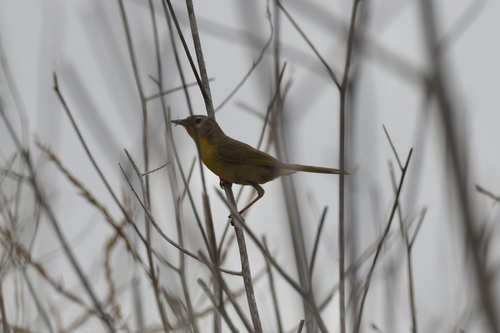
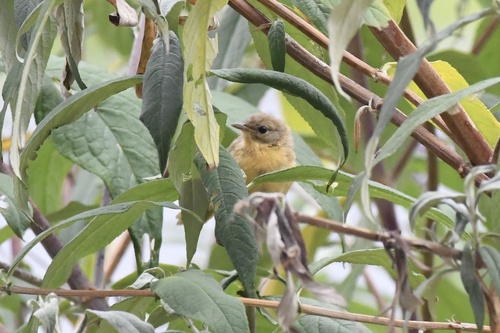
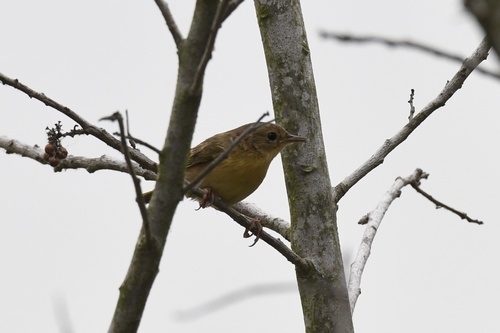
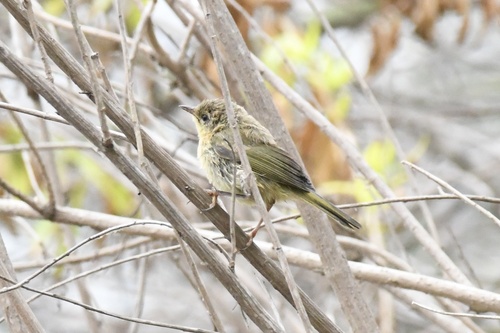
Common Yellowthroat
Geothlypis trichas
The Common Yellowthroat is a small, cheerful bird with a bright yellow belly and a black mask. They love to hop around in bushes and wetlands, singing their sweet songs.
Habitat: Wetlands
The Common Yellowthroat is a small, stocky warbler with olive-green upperparts and bright yellow underparts. Males are easily identified by their striking black 'highwayman's mask' across the eyes, outlined by a crisp white stripe above.
Category
BirdsRarity
Common
Danger
1/5 · Very low
Snaps
66
Despite being common, they are surprisingly hard to spot, often staying hidden in dense plants!
Female yellowthroats are expert architects, building cup-shaped nests low to the ground!
Their song, 'witchity-witchity-witch', is one of North America's most recognizable bird calls!
These tiny birds play a giant role, eating thousands of pesky insects every single year!
Common Yellowthroats can sing their unique 'witchity' song while hidden deep in dense shrubs, making them hard to spot.
Common Yellowthroats can quickly snatch hidden insects from dense foliage, using their keen eyesight and agility to find food.
Common Yellowthroats can migrate thousands of kilometers twice a year, guided by Earth's magnetic field.
These little insectivores are bug-eating machines, helping control pests in their wetland homes!
Papilio machaon
eats caterpillars from a variety of plants

Accipiter striatus
hunted by small raptors while foraging or migrating
Typha latifolia
uses dense wetland plants for nesting and cover
.jpg&width=800)
Molothrus ater
often has its nest taken over by another bird species
Feathered describes animals, primarily birds, possessing a covering of feathers.
Social animals live in organized groups, cooperating for survival benefits such as foraging, defense, and raising offspring.
Singing animals produce complex vocalizations, often for purposes of attracting mates, defending territory, or communicating within their species.
Colorful describes organisms or objects displaying a wide range of bright and distinct colors.

This trait identifies organisms whose diet primarily consists of insects and other small invertebrates.

This habitat trait identifies species found in wetlands, which are areas of land saturated with water, either permanently or seasonally, including marshes, swamps, and bogs.

Diurnal animals are primarily active during daylight hours, typically resting or sleeping at night.
No aliases listed yet.
Danger
1/5 · Very low
Enjoy watching birds from a distance, and don't try to touch them.
The easiest way to identify Common Yellowthroat is to use the Snappit nature identifier app.
11-13 cm
15-19 cm
0.008-0.015 kg
2-8 years
45 km/h
These little insectivores are bug-eating machines, helping control pests in their wetland homes!
Wetlands
Zoom in to split clusters and explore where this object has been snapped.
Jun 6, 2026
Mount EcclesiaPhoto attribution
(c) zr217, some rights reserved (CC BY)
License: CC BY 4.0 ↗
Image may be shown cropped inside the card frame.
Jun 6, 2026
Mount EcclesiaPhoto attribution
(c) zr217, some rights reserved (CC BY)
License: CC BY 4.0 ↗
Image may be shown cropped inside the card frame.
Jun 6, 2026
Mount EcclesiaPhoto attribution
(c) zr217, some rights reserved (CC BY)
License: CC BY 4.0 ↗
Image may be shown cropped inside the card frame.
Jun 6, 2026
Mount EcclesiaPhoto attribution
(c) zr217, some rights reserved (CC BY)
License: CC BY 4.0 ↗
Image may be shown cropped inside the card frame.
Jun 6, 2026
Harvard Shaker Village Historic DistrictPhoto attribution
(c) Lythronax246, some rights reserved (CC BY)
License: CC BY 4.0 ↗
Image may be shown cropped inside the card frame.

Pennsylvania, US
You might spot American Robin, Red-Winged Blackbird, and Lesser Celandine.
View guide →

Rhode Island, US
You might spot Rugosa Rose and American Herring Gull.
View guide →

New York, US
You might spot White Snakeroot, Rock Pigeon, and Eastern Gray Squirrel.
View guide →

Pennsylvania, US
You might spot Eastern Tiger Swallowtail and Slowpoke Moth.
View guide →

New York, US
You might spot American White Waterlily, Buttonbush, and Common Milkweed.
View guide →

US
You might spot Monarch, Ipsilon Dart Moth, and Canada Goose.
View guide →
Take the discovery with you
Snap it with Snappit to identify it, learn what makes it special, and add the discovery to your collection.




.jpg&width=800)








