





coralroot
Cardamine bulbifera
Coralroot is a special plant that grows in shady places like forests. It has pretty flowers and unique roots that look like coral, which is how it got its name!
Habitat: Forests
The coralroot bittercress has delicate clusters of white to pale lilac flowers, often with dark veins, atop a slender green stem. Its pinnate leaves feature small, dark, bead-like bulbils in their axils, making it visually distinct from other woodland plants.
Category
PlantsRarity
Common
Danger
1/5 · Very low
Snaps
Be the first to snap!
Its small flowers are a favorite snack for hungry deer and other woodland creatures!
This plant is a wild cousin of your garden mustard and radish, tasting a bit spicy!
Tiny black 'plant-babies' grow right on its stem, ready to drop off and become new plants!
When you touch its seed pods, they can burst open, flinging tiny seeds far away!
Coralroot can clone itself using tiny dark bulbils that drop off its stem, helping it spread quickly in its woodland home.
Coralroot bursts into life early in spring to soak up sunlight before tree leaves fully open, giving it a head start.
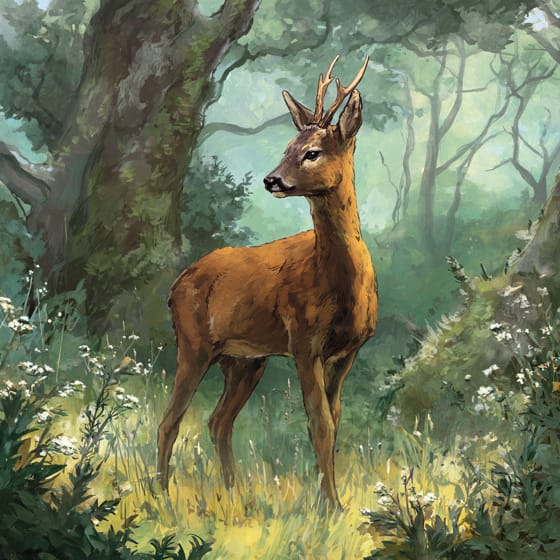
Capreolus capreolus
Commonly grazed by browsing deer.
Apis mellifera
Visits flowers to collect nectar and pollen.

Arion ater
Slugs sometimes munch on its leaves.
Pieris rapae
Its leaves are sometimes a meal for caterpillar larvae.
This trait describes a symbiotic relationship between a fungus and the roots of a plant, benefiting both organisms.
Flowering plants are any plants that produce flowers as part of their reproductive cycle.
Biennial plants complete their life cycle over two growing seasons, typically forming foliage in the first year and flowering/seeding in the second.
Shade tolerant plants are adapted to grow and thrive in areas with low light levels, requiring less direct sunlight.

Describes a relationship between two different species where they live in close association, often benefiting one or both.

Describes organisms that break down dead organic material, recycling nutrients back into the ecosystem.

Forest habitats are terrestrial environments dominated by dense tree cover, supporting a high diversity of plant and animal life.

Describes organisms that transfer pollen, enabling the fertilization and reproduction of plants.

Endangered status indicates a species is at a very high risk of extinction in the wild in the near future.
Danger
1/5 · Very low
Don't touch plants unless you know they are safe. Always ask an adult before exploring.
The easiest way to identify coralroot is to use the Snappit nature identifier app.
20-60 cm
10-20 cm
1-2 cm
Spring to Early Summer
Yes
None
Perennial
Zoom in to split clusters and explore where this object has been snapped.
Recent snaps will appear here as new observations are added.
Take the discovery with you
Snap it with Snappit to identify it, learn what makes it special, and add the discovery to your collection.







.jpg&width=800)



_001.jpg&width=800)



