





Cucumber Root
Medeola virginiana
Cucumber root is a special plant that grows in the woods. It has a unique, tasty root that some people like to eat. The leaves are long and green, making it look very pretty in nature.
Habitat: Forests
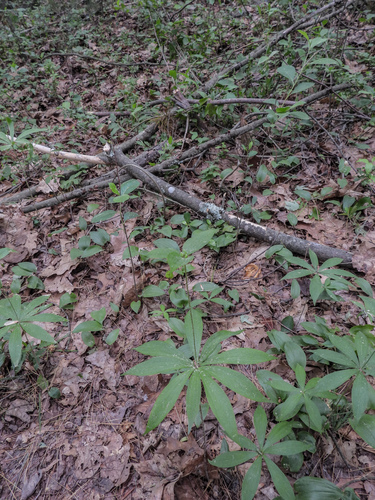
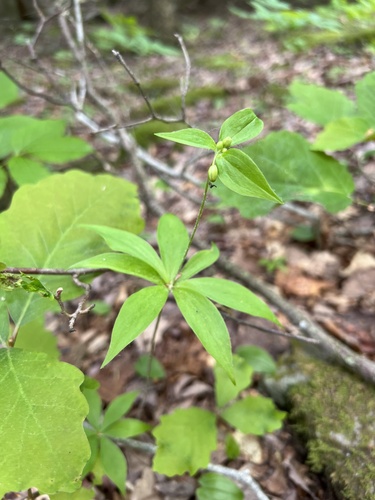
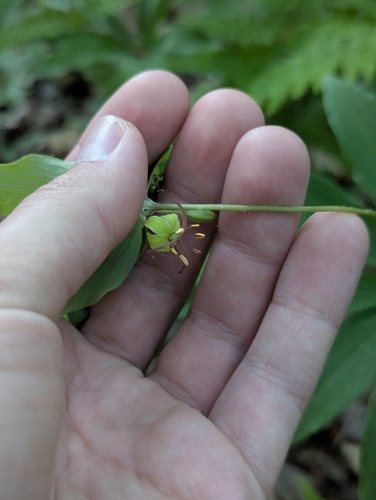
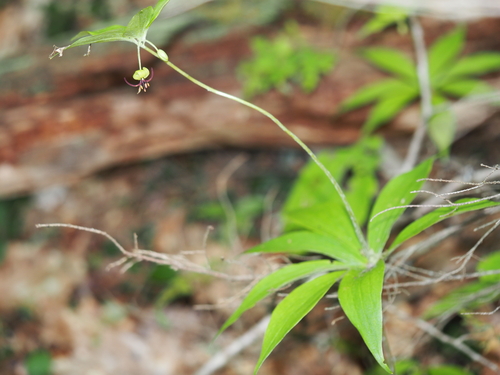
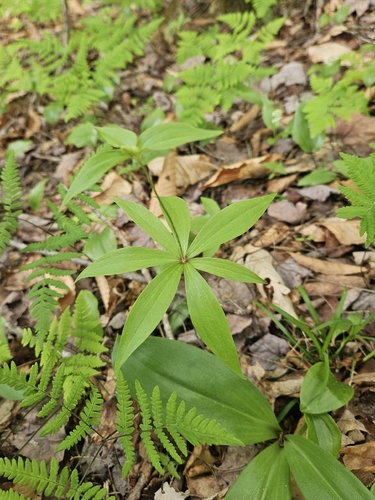
The Cucumber Root has a slender, upright stem and distinct whorled leaves arranged in two tiers. Its lower whorl holds 5-9 broad, elliptical leaves, while the upper tier contains 3-5 smaller, narrower ones. Small, greenish-yellow flowers are followed by dark blue-purple berries.
Category
PlantsRarity
Common
Danger
1/5 · Very low
Snaps
59
Cucumber Root has a surprise! It changes color to deep red in the fall!
Its root actually tastes a bit like cucumber, which is how it got its name!
Native Americans once used its starchy roots as a potato-like food.
This plant's leaves grow in two perfect circles, one above the other!
Cucumber Root has an edible tuberous root that helps it store energy and survive winter.
Cucumber Root has two distinct whorls of leaves that help it efficiently capture sunlight in the shaded forest understory.
Cucumber Root produces dark blue-purple berries that attract birds, helping disperse its seeds far and wide.
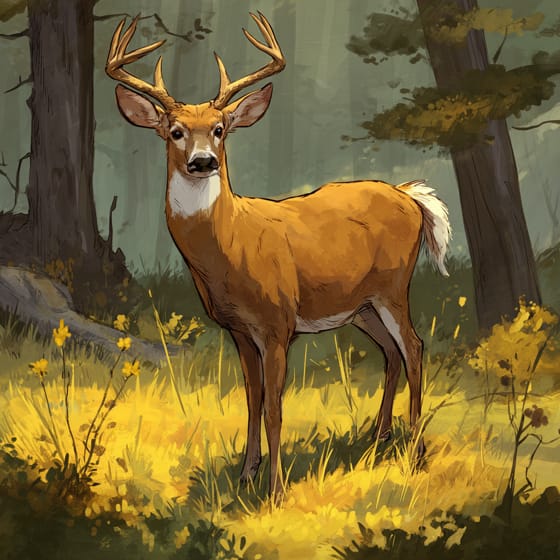
Odocoileus virginianus
browses on its leaves
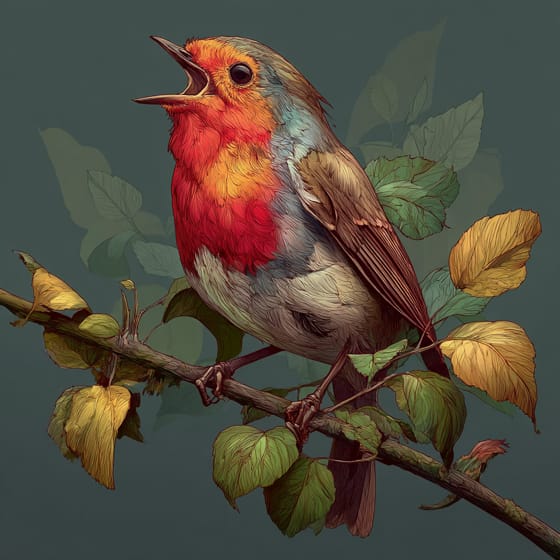
Turdus migratorius
eats its blue-purple berries
Bombus impatiens
visits its small flowers
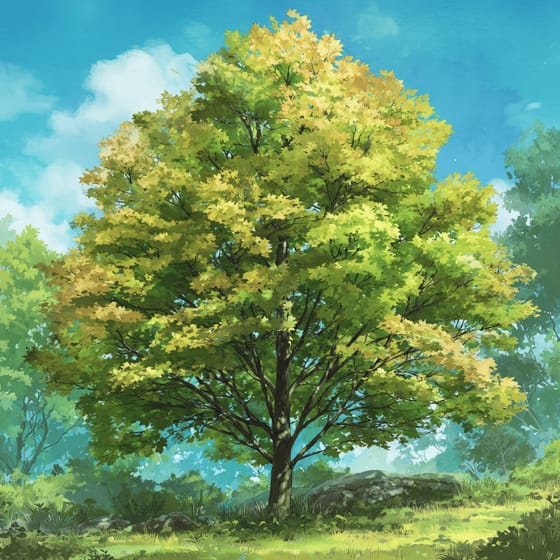
Acer saccharum
grows in its shade
Aromatic plants produce and emit fragrant volatile organic compounds, often for defense or to attract pollinators.
Deciduous plants periodically shed all their leaves, typically during autumn or dry seasons.
Flowering plants are any plants that produce flowers as part of their reproductive cycle.
Shade tolerant plants are adapted to grow and thrive in areas with low light levels, requiring less direct sunlight.

Edible plants are those parts of a plant that are considered safe for human consumption.

Forest habitats are terrestrial environments dominated by dense tree cover, supporting a high diversity of plant and animal life.
No aliases listed yet.
Danger
1/5 · Very low
Always ask an adult before touching or eating any wild plants.
The easiest way to identify Cucumber Root is to use the Snappit nature identifier app.
30-70 cm
15-30 cm
1-2 cm
May-July
Yes
None
Perennial
Zoom in to split clusters and explore where this object has been snapped.
Jun 2, 2026
Lyman School for BoysPhoto attribution
no rights reserved
License: CC0 1.0 ↗
Image may be shown cropped inside the card frame.
Jun 1, 2026
High PointPhoto attribution
no rights reserved
License: CC0 1.0 ↗
Image may be shown cropped inside the card frame.
May 30, 2026
East Granby Historic DistrictPhoto attribution
no rights reserved
License: CC0 1.0 ↗
Image may be shown cropped inside the card frame.
May 28, 2026
Days Ferry Historic DistrictPhoto attribution
(c) Clay Gibbons, some rights reserved (CC BY)
License: CC BY 4.0 ↗
Image may be shown cropped inside the card frame.
May 28, 2026
Plainfield Village Historic DistrictPhoto attribution
(c) Charlie Wanzer, some rights reserved (CC BY)
License: CC BY 4.0 ↗
Image may be shown cropped inside the card frame.

New York, US
You might spot Sundial Lupine, Spotted Horsemint, and New Jersey Tea.
View guide →

Pennsylvania, US
You might spot Mountain Laurel, Ghost Pipe, and Sweetfern.
View guide →

Connecticut, US
You might spot Bold Jumping Spider and American Tuliptree.
View guide →

Vermont, US
You might spot Asian Bittersweet, Alder Buckthorn, and Eastern Newt.
View guide →

Maryland, US
You might spot American Cancer-Root and Rue Anemone.
View guide →
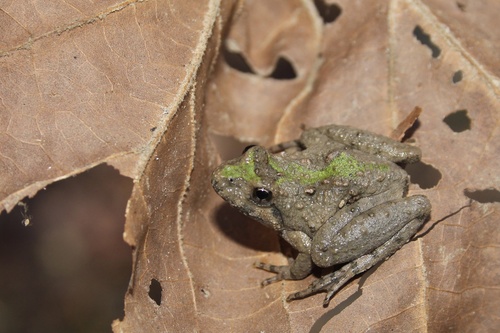
Maryland, US
You might spot Northern Cricket Frog and Common Whitetail.
View guide →
Take the discovery with you
Snap it with Snappit to identify it, learn what makes it special, and add the discovery to your collection.






.jpg&width=800)



_001.jpg&width=800)


