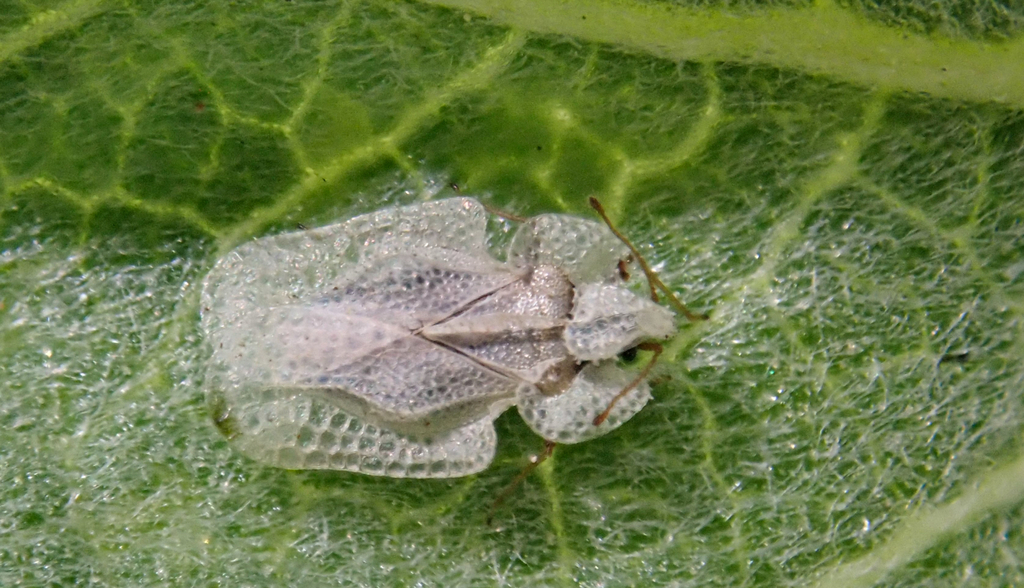





Corythucha immaculata
Corythucha immaculata
The Corythucha immaculata, also known as the white lace bug, is a small insect that loves to munch on plants. It has a unique lace-like pattern on its wings that makes it look special!
Habitat: Urban areas
The Corythucha immaculata is a tiny, pale insect with delicate, flattened, lace-like wings that extend beyond its body. Its transparent wings often have faint, irregular darker markings, resembling frosted glass. This unique 'lace' appearance helps it blend with plant textures.
Category
InsectsRarity
Common
Danger
1/5 · Very low
Snaps
Be the first to snap!
Wow! Lace bugs leave tiny black 'tar spots' on leaves from their droppings!
Wow! Some lace bugs 'tap' on leaves to communicate with each other!
Wow! Their wings are so see-through, you can almost read through them!
Wow! They can live their entire lives on just one plant leaf!
Corythucha immaculata can drink plant sap using its straw-like mouthparts because of its specialized rostrum that helps them access nutrients.
Corythucha immaculata has unique lace-like wings that helps them blend perfectly with leaf undersides, avoiding hungry predators.
Corythucha immaculata can glue its eggs to leaf surfaces because of a special adhesive that helps them stay hidden and safe.
These tiny bugs are plant sap connoisseurs, feasting on the nutritious juices found in leaves.
Hippodamia convergens
Predators of lace bug nymphs and adults.
Chrysoperla carnea
Lacewing larvae voraciously consume lace bugs.
Platanus occidentalis
Feeds on the sap of its leaves.
Tilia americana
Obtains nutrients by feeding on this tree.
Anagrus atomus
Tiny wasps lay eggs inside lace bug eggs.
Solitary animals live alone for most of their lives, only interacting with others for mating or parental care.
Colorful describes organisms or objects displaying a wide range of bright and distinct colors.
This trait characterizes organisms whose diet consists entirely or primarily of plant material.
Diurnal animals are primarily active during daylight hours, typically resting or sleeping at night.
Pertaining to species that are significantly smaller than typical or average for their kind.
This habitat trait indicates species that can coexist with humans in urban and suburban environments, utilizing man-made structures and green spaces.
Describes organisms that transfer pollen, enabling the fertilization and reproduction of plants.
Danger
1/5 · Very low
These bugs are harmless, but it's best to look and not touch them.
Look for six legs, antennae, three body sections and the shape of the wings. Beetles have hardened front wings; flies have just one working pair. Tiny insects may need a close view before their group is clear. Insect Identifier: upload a photo and compare the visible details.
3-4 mm
30-60 days
These tiny bugs are plant sap connoisseurs, feasting on the nutritious juices found in leaves.
Urban areas
Foraging
6
Zoom in to split clusters and explore where this object has been snapped.
Recent snaps will appear here as new observations are added.
Take the discovery with you
Snap it with Snappit to identify it, learn what makes it special, and add the discovery to your collection.