





Forest Tent Caterpillar Moth
Malacosoma disstria
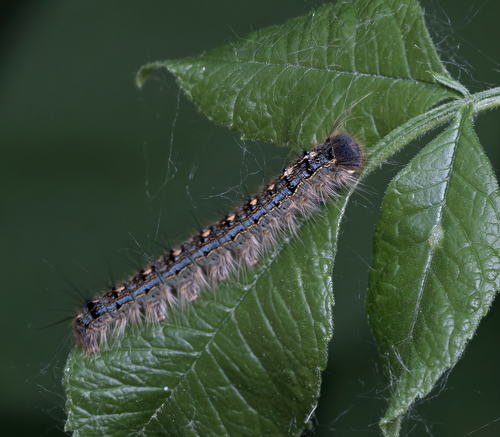
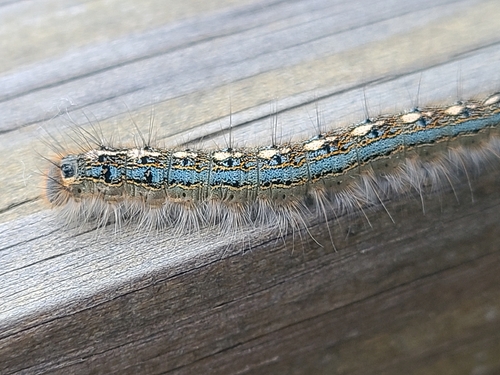
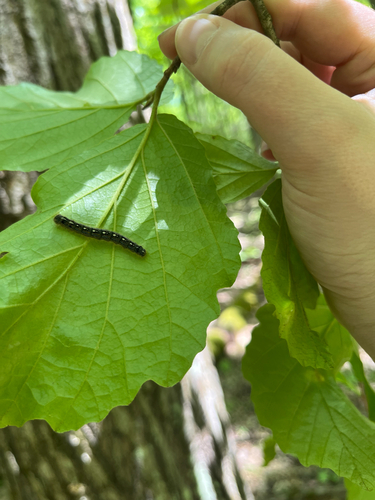
The Forest Tent Caterpillar Moth is a fluffy, brown moth that loves to fly around in the woods. It starts its life as a caterpillar, munching on leaves before transforming into a beautiful moth!
Habitat: Forests
The Forest Tent Caterpillar Moth is typically dull yellowish-tan to brownish, often with a darker diagonal band across its forewings. Males are usually smaller and darker than females. Unlike many other moths, its wings lack prominent spots or complex patterns, making it appear quite plain.
Category
InsectsRarity
Common
Danger
1/5 · Very low
Snaps
69
Adult moths have no working mouthparts; they live only days, focused solely on finding a mate.
Despite their name, Forest Tent Caterpillars spin silk mats on branches, not large communal tents!
During outbreaks, millions of caterpillars can strip entire forests bare of leaves in just weeks!
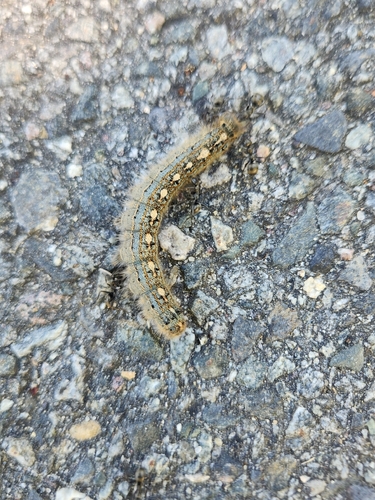
Massive caterpillar marches across roads during outbreaks can make surfaces slippery, like ice!
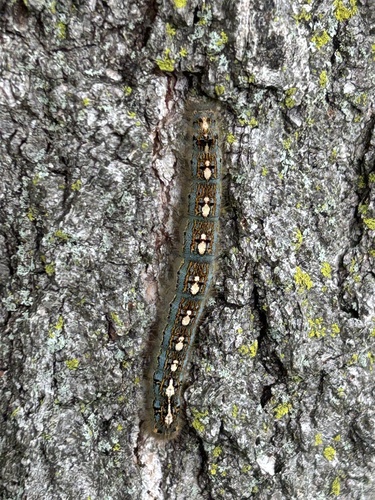
Forest Tent Caterpillar Moth can blend seamlessly with tree bark because of its mottled brown and gray wings that mimic its surroundings.
The moth can find mates in the dark because females release powerful chemical signals called pheromones that males detect from afar.
Females can protect their future offspring by laying eggs in a durable, waterproof mass covered with a protective cement-like substance.
Its eggs can survive freezing winters because they are laid in a tough, insulated case on tree branches, waiting to hatch in spring.
As caterpillars, they feast on tree leaves; adult moths famously do not eat at all!
Age differences: Larvae (caterpillars) are voracious leaf-eaters, while adult moths do not feed.

Acer saccharum
Larvae consume its leaves, sometimes causing defoliation during outbreaks.

Populus tremuloides
A primary food source for the caterpillars, especially in northern regions.
.jpg&width=800)
Coccyzus americanus
This bird is one of the few avian predators that readily eats hairy caterpillars.
Sarcophaga aldrichi
Larvae of this parasitic fly infest and consume the caterpillar's pupae.
Furry describes animals possessing a dense covering of soft hair or fur.
Social animals live in organized groups, cooperating for survival benefits such as foraging, defense, and raising offspring.
Camouflaged describes organisms that possess coloring or patterns that allow them to blend into their environment.
This trait characterizes organisms whose diet consists entirely or primarily of plant material.

Forest habitats are terrestrial environments dominated by dense tree cover, supporting a high diversity of plant and animal life.

Diurnal animals are primarily active during daylight hours, typically resting or sleeping at night.

Describes organisms that transfer pollen, enabling the fertilization and reproduction of plants.
No aliases listed yet.
Danger
1/5 · Very low
It's best to watch these moths from a distance and not touch them.
The easiest way to identify Forest Tent Caterpillar Moth is to use the Snappit nature identifier app.
25-45 mm
15-25 mm
5-10 days
10-25 km/h
As caterpillars, they feast on tree leaves; adult moths famously do not eat at all!
Forests
Foraging
Zoom in to split clusters and explore where this object has been snapped.
Jun 16, 2026
Parc de l'île Saint-QuentinPhoto attribution
(c) Christian Back, some rights reserved (CC BY)
License: CC BY 4.0 ↗
Image may be shown cropped inside the card frame.
Jun 6, 2026
City Hall Park Historic DistrictPhoto attribution
(c) Declan McCabe, some rights reserved (CC BY)
License: CC BY 4.0 ↗
Image may be shown cropped inside the card frame.
Jun 2, 2026
Lyme Common Historic DistrictPhoto attribution
(c) Megan Massa, some rights reserved (CC BY)
License: CC BY 4.0 ↗
Image may be shown cropped inside the card frame.
Jun 2, 2026
Binghamton Zoo at Ross ParkPhoto attribution
(c) Christina S. Baer, some rights reserved (CC BY)
License: CC BY 4.0 ↗
Image may be shown cropped inside the card frame.

South Carolina, US
You might spot American Alligator, Anole, and Great Blue Heron.
View guide →

Connecticut, US
You might spot Striped Wintergreen and Common Eastern Bumble Bee.
View guide →

Alabama, US
You might spot American Beautyberry, White-Tailed Deer, and Peppervine.
View guide →

New York, US
You might spot Common Eastern Bumble Bee and Ground-Ivy.
View guide →

Arkansas, US
You might spot Pear-Shaped Puffball and American Beautyberry.
View guide →

Connecticut, US
You might spot Striped Wintergreen and Common Eastern Bumble Bee.
View guide →
Take the discovery with you
Snap it with Snappit to identify it, learn what makes it special, and add the discovery to your collection.






.jpg&width=800)



