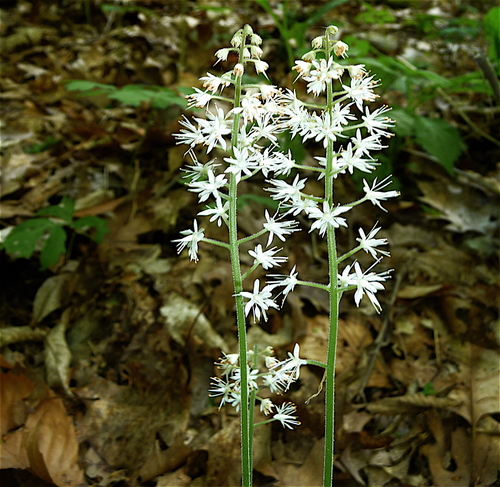


Creeping Foamflower
tiarella stolonifera
The Creeping Foamflower (Tiarella stolonifera) is a delightful herbaceous perennial native to the shaded, deciduous forests of eastern North America. Renowned for its rapid ability to carpet the forest floor, it forms lush, continuous mats of foliage connected by creeping above-ground runners, known as stolons. Come springtime, these dense colonies transform into a magical woodland display as they send up delicate wands crowned with frothy, white-to-pink blossoms. Beyond its ethereal beauty in the wild, the Creeping Foamflower has become a beloved staple in shade gardens, praised for its low-maintenance nature, stunning foliage, and critical role in supporting early-season pollinators when few other woodland plants are in bloom.
Habitat: Found in moist, shaded deciduous forests, often spreading across rich woodland floors and stream banks.
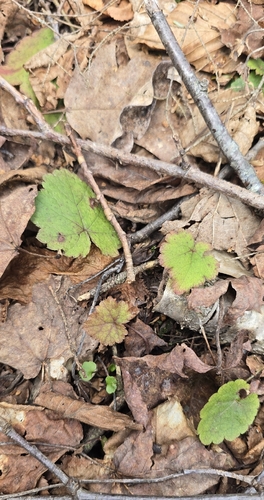
Creeping Foamflower features distinctive basal foliage with deeply lobed, maple-like or heart-shaped leaves, which often display striking burgundy or dark maroon patches along their central veins. In early to mid-spring, the plant produces slender, leafless stalks reaching 15 to 30 centimeters tall. Each stalk bears an airy, cylindrical raceme packed with tiny, star-shaped white or pale pink flowers. The blooms boast exceptionally long, slender stamens that project outward, giving the entire flower cluster a delicate, 'foamy' or bottlebrush appearance. In the cooler autumn months, the lush green leaves often transition to rich shades of bronze or reddish-purple.
Category
PlantsRarity
Common
Danger
1/5 · Very low
Snaps
6
Botanists have successfully cross-bred Foamflowers (Tiarella) with their close relatives, Coral Bells (Heuchera), to create a popular hybrid ornamental genus called 'Heucherella'.
The common name 'Foamflower' perfectly describes the blossoms, as the unusually long, protruding stamens give the flower spikes a frothy, foam-like appearance.
The genus name 'Tiarella' is derived from the Greek word 'tiara', playfully referring to the unique, turban-like shape of its tiny seed pods.
Produces long, creeping runners (stolons) that root at the nodes, allowing it to rapidly colonize forest floors and outcompete weeds.
Highly adapted to deep shade, it utilizes the limited, dappled sunlight of closed-canopy deciduous forests to thrive where other plants cannot.
The dark maroon pigmentation along its leaf veins contains anthocyanins, which can deter herbivores and protect leaf tissues from environmental and light stress.
As a photosynthetic plant, it produces its own energy by converting sunlight, water, and carbon dioxide into carbohydrates.
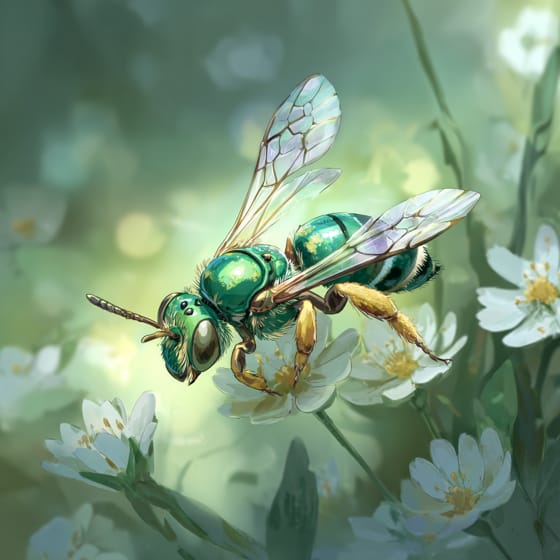
Lasioglossum spp.
Sweat bees rely on the early spring nectar and pollen provided by Foamflower blooms.
Toxomerus geminatus
Hoverflies frequently visit the early spring flowers to feed on nectar, heavily aiding in pollination.
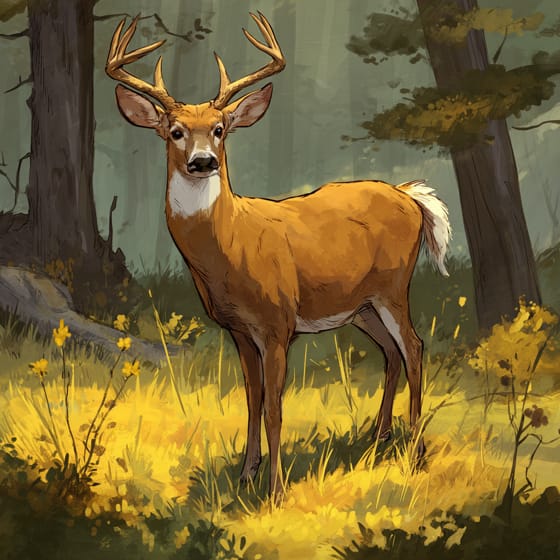
Odocoileus virginianus
Deer occasionally browse on the foliage when preferred food sources are scarce, though Foamflower is generally considered deer-resistant.
No trait badges are assigned for this object yet.
No aliases listed yet.
Collections for this object will appear here as more themes are added.
Danger
1/5 · Very low
No special safety notes yet.
The easiest way to identify Creeping Foamflower is to use the Snappit nature identifier app.
15-30 cm
5-15 years
As a photosynthetic plant, it produces its own energy by converting sunlight, water, and carbon dioxide into carbohydrates.
Found in moist, shaded deciduous forests, often spreading across rich woodland floors and stream banks.
Photosynthesis
Zoom in to split clusters and explore where this object has been snapped.
Apr 11, 2026
New Boston Village Historic DistrictPhoto attribution
(c) Jonas Katona, some rights reserved (CC BY)
License: CC BY 4.0 ↗
Image may be shown cropped inside the card frame.

New York, US
You might spot Allegheny Mountain Dusky Salamander.
View guide →

Massachusetts, US
You might spot Eastern Newt, Ghost Pipe, and Partridgeberry.
View guide →

Vermont, US
You might spot Northern Cardinal, Wood Frog, and White-Breasted Nuthatch.
View guide →

New York, US
You might spot Pine Grosbeak, Hydrangea Leaftier Moth, and Brown Trout.
View guide →

Massachusetts, US
You might spot Eastern Newt, Red Trillium, and Hobblebush.
View guide →

Vermont, US
You might spot Eastern Newt and Common Eastern Bumble Bee.
View guide →
Take the discovery with you
Snap it with Snappit to identify it, learn what makes it special, and add the discovery to your collection.











.jpg&width=800)



_001.jpg&width=800)




