

Cross Orbweaver
araneus diadematus
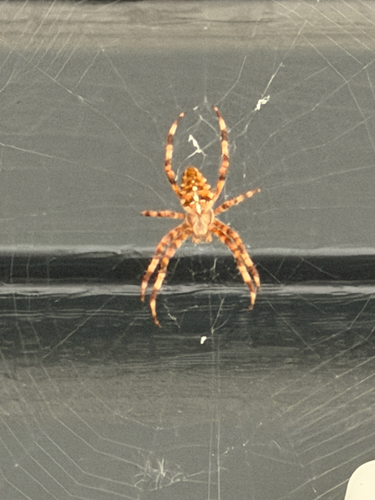
The Cross Orbweaver, scientifically known as Araneus diadematus, is a highly recognizable and iconic spider found throughout the Northern Hemisphere. Familiar to many as the classic garden spider, this widespread arachnid weaves intricate, orb-shaped webs that glisten beautifully in morning dew. Unlike many fearsome-looking spiders, the Cross Orbweaver is a docile and beneficial predator, acting as natural pest control by catching flies, mosquitoes, and wasps. Throughout late summer and autumn, they become a ubiquitous sight in gardens, meadows, and woodland edges. Females, which are significantly larger than males, are often seen resting head-down in the center of their large webs, waiting patiently for vibrations to signal a meal. Though their venom is highly effective against small insects, they are essentially harmless to humans, preferring to flee or drop to the ground rather than bite.
Habitat: Found in meadows and woodland edges, often spinning intricate webs across shrubs, hedgerows, and tall grasses.
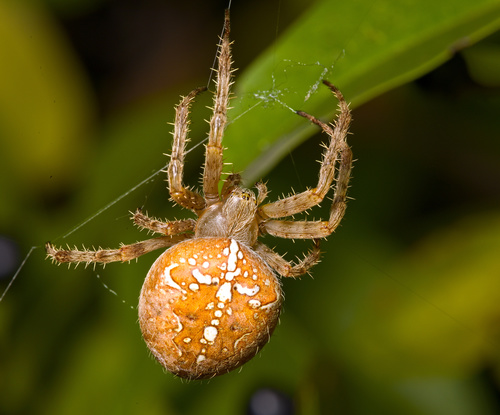
Araneus diadematus is most easily identified by the distinct, pale cross-shaped marking on its bulbous abdomen, formed by a series of white or light-yellow spots. Their base coloration varies widely, ranging from pale yellow-orange to deep reddish-brown or dark grey, depending on the individual and their environment. The females are robust, measuring between 1 to 2 centimeters in body length, while the males are noticeably smaller and slimmer, reaching only around 1 centimeter. Their legs are long, spiny, and often banded with alternating dark and light rings, helping them camouflage against bark and foliage while waiting for prey.
Category
InvertebrateRarity
Common
Danger
1/5 · Very low
Snaps
3
In 1973, two Cross Orbweavers named Anita and Arabella were sent into space on the Skylab 3 mission to see if spiders could spin webs in zero gravity.
Male Cross Orbweavers must cautiously pluck the strings of a female's web to announce their presence as a suitor; if they make the wrong move, they risk becoming her next meal.
The famous cross marking on its back is formed by cells filled with guanine, a byproduct of protein metabolism that the spider uses for coloration rather than excreting.
When disturbed, the Cross Orbweaver will rapidly shake its web up and down, a defense mechanism designed to blur its outline and confuse predators.
The spider often consumes its own web daily to recycle the proteins, spinning a fresh, pristine web each morning to ensure maximum stickiness.
They have highly specialized sensory hairs on their legs that can detect the exact location and size of struggling prey caught in the web through minute vibrations.
Spiderlings travel great distances by spinning a single thread of silk that catches the wind, a process called ballooning, allowing them to colonize new areas.
They are opportunistic predators that feed on flying insects that inadvertently fly into their sticky orb webs.
Age differences: Spiderlings eat very small insects like aphids and fruit flies, while adult females take on much larger prey like wasps and bees.
Tromatobia ornata
Parasitoid wasps often lay their eggs in or on the spider's egg sacs.
Cyanistes caeruleus
Eaten by various insectivorous birds.
Vespula vulgaris
Prey commonly caught in the spider's web.
No trait badges are assigned for this object yet.
No aliases listed yet.
Collections for this object will appear here as more themes are added.
Danger
1/5 · Very low
No special safety notes yet.
The easiest way to identify Cross Orbweaver is to use the Snappit nature identifier app.
1-2 cm
0.0001-0.002 kg
1 years
They are opportunistic predators that feed on flying insects that inadvertently fly into their sticky orb webs.
Found in meadows and woodland edges, often spinning intricate webs across shrubs, hedgerows, and tall grasses.
Ambush Web Trapping
300-800
Zoom in to split clusters and explore where this object has been snapped.
May 28, 2026
Lower Cushman DamPhoto attribution
no rights reserved
License: CC0 1.0 ↗
Image may be shown cropped inside the card frame.

Washington, US
You might spot Barrow's Goldeneye and Pacific Banana Slug.
View guide →

Washington, US
You might spot Rock Pigeon, American Crow, and Olympic Gull.
View guide →

Oregon, US
You might spot Duck, Wood Duck, and Douglas Fir.
View guide →

Washington, US
You might spot Duck, Western Sword Fern, and Rock Pigeon.
View guide →

Washington, US
You might spot Rock Pigeon, Pigeon Guillemot, and American Crow.
View guide →

Oregon, US
You might spot Tree-Of-Heaven, Duck, and Canada Goose.
View guide →
Take the discovery with you
Snap it with Snappit to identify it, learn what makes it special, and add the discovery to your collection.