

Davis' Knotweed
koenigia davisiae
Davis' Knotweed (Koenigia davisiae) is a resilient, low-growing perennial herb native to the high-elevation regions of the western United States. Thriving in the harsh, rocky environments of the Cascade Range and the Sierra Nevada, this alpine specialist has adapted beautifully to life on shifting talus slopes and sterile volcanic pumice. It forms sprawling, leafy mats that stabilize loose mountain soils, making it an ecological anchor in fragile alpine ecosystems. What makes this plant particularly captivating is its striking seasonal transformation; throughout the summer it maintains a low profile with yellowish-green leaves, but as the autumn chill sets in, the entire plant blazes into shades of brilliant orange, red, and purple, painting the high-altitude landscapes in fiery hues.
Habitat: Found on high-elevation alpine scree, rocky talus slopes, and volcanic pumice fields, typically between 1,500 and 3,300 meters in elevation.
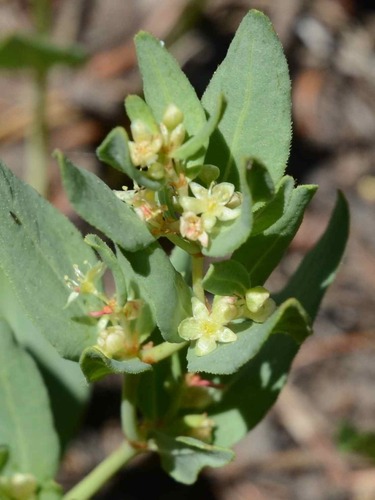
Davis' Knotweed typically grows in sprawling, multi-branched clumps that reach 10 to 40 centimeters in height. Its fleshy, oval-shaped leaves are yellowish-green to bright green, with smooth or slightly hairy margins, and are arranged alternately along thick, fleshy stems. The flowers are tiny, clusters of inconspicuous yellowish-green, cream, or purplish-white blossoms nestled in the leaf axils. In late summer and autumn, the entire plant undergoes a dramatic color shift, turning a vibrant, fiery orange-red that stands out vividly against grey volcanic gravels and granite scree.
Category
PlantsRarity
Common
Danger
1/5 · Very low
Snaps
2
By holding down loose, sandy gravels on steep mountain ridges, this plant acts as a natural erosion-control agent in fragile subalpine zones.
It thrives in some of the most barren environments in North America, including the stark volcanic ash fields around Mount Shasta and Mount Lassen.
The species is named in honor of Nancy Jane Davis, a 19th-century American botanist and educator who contributed significantly to early collections of western flora.
Exhibits extreme tolerance to nutrient-poor, porous volcanic ash and shifting soils where few other plants can establish roots.
Accumulates red pigments in autumn, protecting its cellular machinery from intense high-altitude ultraviolet radiation and freezing temperatures.
Develops a thick, woody taproot that penetrates deep into unstable talus slopes to anchor the plant and access subterranean moisture.
As a photosynthetic plant, Davis' Knotweed produces its own energy using sunlight, water, and carbon dioxide, while absorbing essential minerals through its root system.
Ochotona princeps
Provides a crucial autumn food source, with its foliage gathered and dried for winter haypiles by alpine rodents.
Bombus occidentalis
Flowers are pollinated by high-altitude bees seeking nectar in the sparse alpine environment.
Lycaena cupreus
Serves as a host plant and food source for the caterpillars of high-altitude butterflies.
No trait badges are assigned for this object yet.
No aliases listed yet.
Collections for this object will appear here as more themes are added.
Danger
1/5 · Very low
No special safety notes yet.
The easiest way to identify Davis' Knotweed is to use the Snappit nature identifier app.
10-40 cm
5-25 years
As a photosynthetic plant, Davis' Knotweed produces its own energy using sunlight, water, and carbon dioxide, while absorbing essential minerals through its root system.
Found on high-elevation alpine scree, rocky talus slopes, and volcanic pumice fields, typically between 1,500 and 3,300 meters in elevation.
Zoom in to split clusters and explore where this object has been snapped.

Oregon, US
You might spot White Pasqueflower and Clark's Nutcracker.
View guide →

California, US
You might spot Purple Mountain-Heath, Mountain Hemlock, and Satin Lupine.
View guide →

Oregon, US
You might spot Clark's Nutcracker.
View guide →

Washington, US
You might spot Cascade Golden-Mantled Ground Squirrel.
View guide →

Washington, US
You might spot Cascade Golden-Mantled Ground Squirrel.
View guide →
Take the discovery with you
Snap it with Snappit to identify it, learn what makes it special, and add the discovery to your collection.











.jpg&width=800)



_001.jpg&width=800)




