.jpg&width=800)





large-leaved aster
Eurybia macrophylla
The large-leaved aster is a beautiful plant with big, green leaves and pretty purple flowers. It blooms in late summer and is a favorite for butterflies and bees!
Habitat: Forests
The large-leaved aster has distinctively broad, heart-shaped basal leaves that can be wider than a dinner plate, forming a ground cover. Taller stems bear smaller, oval leaves and clusters of numerous daisy-like flowers. Its blooms are typically white to pale lavender with bright yellow centers.
Category
PlantsRarity
Common
Danger
1/5 · Very low
Snaps
3
It creates a beautiful, leafy carpet in shady forest spots.
Its huge basal leaves can be wider than a dinner plate!
Its late-season flowers offer a vital feast for migrating butterflies.
This plant spreads using underground stems like secret tunnels.
Large-leaved aster can spread widely using underground stems (rhizomes) to form dense, lush colonies across the forest floor.
Large-leaved aster has large basal leaves that efficiently capture scarce sunlight, helping it thrive in dappled shade.
Large-leaved aster provides abundant nectar and pollen in late summer and fall, a crucial food source for migrating insects.

Bombus impatiens
Gathers nectar and pollen from its late blooms.
Apis mellifera
Collects vital late-season food from the flowers.
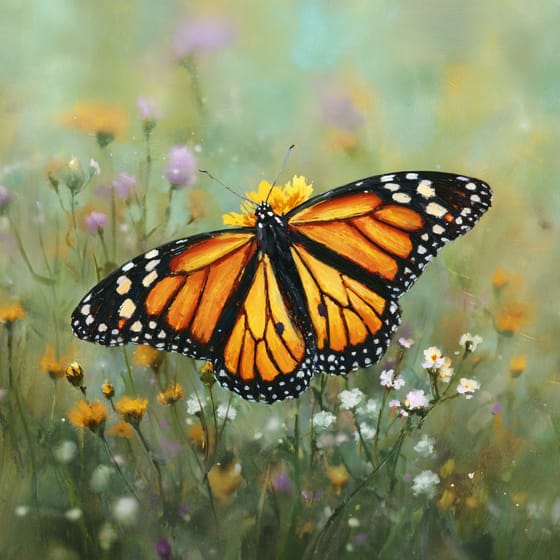
Danaus plexippus
Feeds on nectar, fueling its incredible migration.

Odocoileus virginianus
Browses on its leaves and tender stems.
Deciduous plants periodically shed all their leaves, typically during autumn or dry seasons.
Flowering plants are any plants that produce flowers as part of their reproductive cycle.
Shade tolerant plants are adapted to grow and thrive in areas with low light levels, requiring less direct sunlight.
Summer blooming plants produce their flowers during the summer season, often providing vibrant color when many other plants have finished.

Broadleaf trees are angiosperms characterized by flat, wide leaves that are typically shed annually in temperate climates.

Fragrant flowers emit a pleasant aroma, often to attract pollinators or for defense.

Describes plants that are particularly attractive and beneficial to a wide range of pollinating organisms.

Forest habitats are terrestrial environments dominated by dense tree cover, supporting a high diversity of plant and animal life.
No aliases listed yet.
Danger
1/5 · Very low
Always look but don't touch plants unless you know they are safe.
The easiest way to identify large-leaved aster is to use the Snappit nature identifier app.
30-120 cm
60-200 cm
1-2 cm
Late summer to fall
Yes
None
Perennial
Zoom in to split clusters and explore where this object has been snapped.
Take the discovery with you
Snap it with Snappit to identify it, learn what makes it special, and add the discovery to your collection.








.jpg&width=800)

_001.jpg&width=800)



