
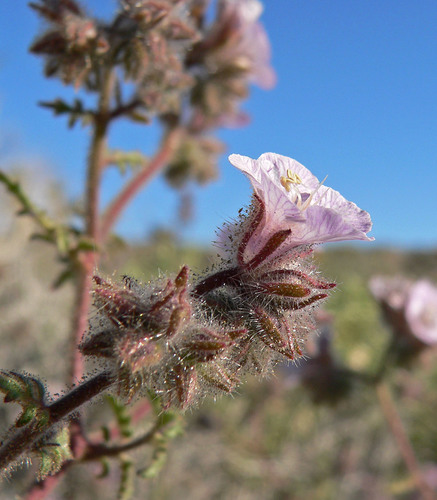


Death Valley Phacelia
phacelia vallis-mortae
The Death Valley Phacelia (Phacelia vallis-mortae), often called Death Valley scorpionweed, is a striking desert wildflower native to the southwestern United States. Thriving in the harsh, arid environments of the Mojave and Great Basin deserts, this annual herb brings vibrant life to barren landscapes during the spring. It is characterized by its brilliant lavender-purple, bell-shaped flowers and deeply lobed leaves covered in fine hairs. This resilient plant is an essential component of the desert ecosystem, providing vital early-season resources for native pollinators. Despite its delicate appearance, Death Valley Phacelia is built for survival. It has developed a specialized life cycle that allows it to persist through years of drought as dormant seeds, only to erupt into bloom when rare rains arrive. Its unique beauty and hardy nature make it a highly sought-after sighting for desert hikers and botanists during superbloom events.
Habitat: Found in sandy or gravelly washes, desert flats, and rocky slopes, often sheltered beneath desert shrubs within creosote bush and pinyon-juniper communities.
This annual herb grows erectly from 15 to 100 centimeters tall, featuring branching stems covered in stiff, bristly hairs and sticky glands. Its leaves are deeply divided into several oblong lobes, appearing dusty green. The most defining feature is the inflorescence: a coiled, scorpion-tail-like cluster of lavender to pale blue, funnel-shaped flowers, each about 1 to 1.5 centimeters long, displaying prominent stamens that extend beyond the petals.
Category
PlantsRarity
Common
Danger
1/5 · Very low
Snaps
Be the first to snap!
It is commonly called 'scorpionweed' because the tightly coiled flower clusters curve backward in a shape resembling a scorpion's stinger.
Its seeds have a tough outer coating that requires specific environmental triggers, like abrasion from sandy flash floods, to initiate germination.
Like poison oak, the glandular hairs on its leaves secrete an oil that can cause a severe, itchy skin rash in sensitive individuals.
Seeds can lie dormant in dry soil for years, germinating and blooming rapidly only after sufficient winter rains.
Unrolls its flower spikes sequentially like a scorpion's tail to extend the blooming period and maximize pollination opportunities.
Produces glandular hairs containing irritating oils that prevent desert herbivores from grazing on its leaves.
As a photosynthetic plant, Death Valley Phacelia utilizes sunlight, carbon dioxide, and water to synthesize its own sugars.
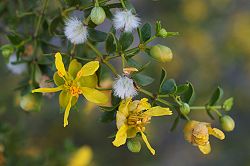
Larrea tridentata
Grows under the canopy of this shrub which acts as a nurse plant, providing shade and wind protection.
Apis mellifera
Provides crucial nectar and pollen to native desert bees during the spring bloom.
Ovis canadensis nelsoni
Occasionally browsed by desert herbivores during dry spells despite the plant's irritating hairs.
No trait badges are assigned for this object yet.
No aliases listed yet.
Collections for this object will appear here as more themes are added.
Danger
1/5 · Very low
No special safety notes yet.
Start with the whole plant, then compare leaf arrangement, leaf edges, stems and any flowers or fruit. Opposite leaves grow in pairs; alternate leaves come one at a time along the stem. These details tell you far more together than a single green leaf does. Plant Identifier: upload a photo and compare the visible details.
15-100 cm
0.01-0.1 kg
1 years
As a photosynthetic plant, Death Valley Phacelia utilizes sunlight, carbon dioxide, and water to synthesize its own sugars.
Found in sandy or gravelly washes, desert flats, and rocky slopes, often sheltered beneath desert shrubs within creosote bush and pinyon-juniper communities.
Zoom in to split clusters and explore where this object has been snapped.
Recent snaps will appear here as new observations are added.
Take the discovery with you
Snap it with Snappit to identify it, learn what makes it special, and add the discovery to your collection.


















