





Creosote Bush
Larrea tridentata
The Creosote Bush is a hardy plant that can survive in very dry places. It has small, shiny leaves and can grow tall, making it special in the desert landscape.
Habitat: Desert
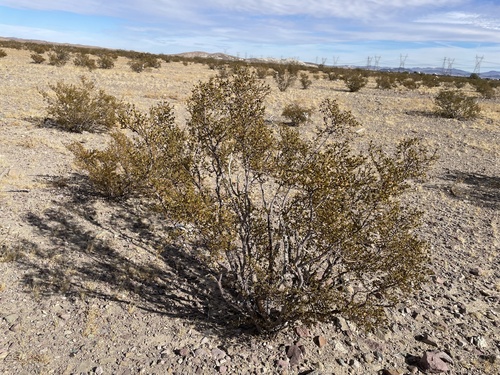
The Creosote Bush is a woody shrub with many slender stems and small, waxy, green leaves. It produces tiny, five-petaled yellow flowers and fuzzy, white, spherical seed capsules that make it stand out against the desert landscape.
Category
PlantsRarity
Common
Danger
1/5 · Very low
Snaps
38
Its leaves release a unique, tar-like smell, especially strong and pungent after desert rain.
One creosote bush colony in California is over 11,000 years old, making it one of Earth's most ancient living things!
The sticky seeds are often carried away by desert ants, who store them in their underground nests.
This tough plant grows so well, it’s often the only large shrub for miles in harsh desert environments.
The Creosote Bush can release special chemicals into the soil that prevent other plants from growing too close to it.
Its roots can grow incredibly deep into the ground, helping the bush find precious water far beneath the desert surface.
Apis mellifera
collects nectar and pollen
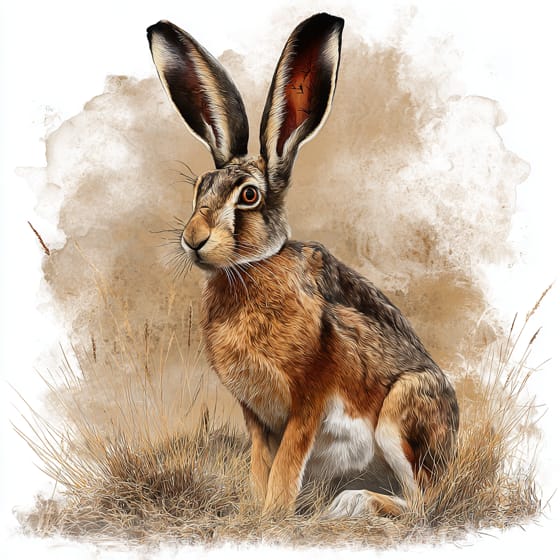
Lepus californicus
browses on its leaves
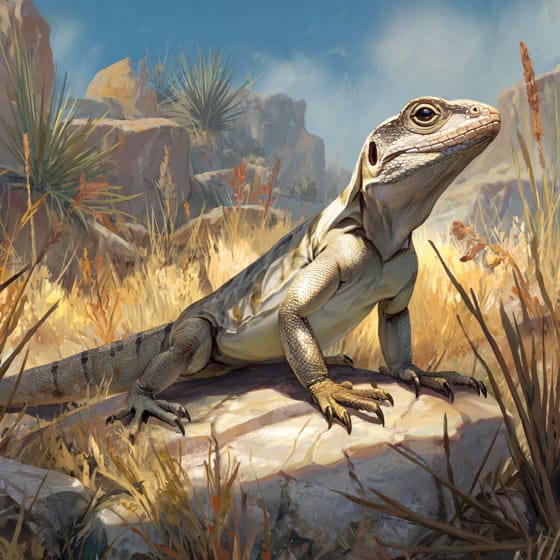
Dipsosaurus dorsalis
rests in its shade
Dipodomys merriami
collects its seeds for food
Aromatic plants produce and emit fragrant volatile organic compounds, often for defense or to attract pollinators.
A shrub is a woody plant smaller than a tree, typically with multiple stems branching from or near the ground.
Evergreen plants retain their foliage throughout the year, never shedding all their leaves at once.
Drought-tolerant plants can survive and flourish in conditions with limited water availability.

Describes plants that are particularly attractive and beneficial to a wide range of pollinating organisms.

Desert habitats are arid regions characterized by extremely low precipitation and often extreme temperatures, supporting specialized flora and fauna.

This trait characterizes organisms with an exceptionally long lifespan compared to others of their kind.

Describes a species whose presence and role have a disproportionately large effect on its environment.
No aliases listed yet.
Danger
1/5 · Very low
Don't touch the plant too much, as its leaves can be sticky.
The easiest way to identify Creosote Bush is to use the Snappit nature identifier app.
100-300 cm
100-300 cm
1-2 cm
Year-round
No
Mild
Perennial
Zoom in to split clusters and explore where this object has been snapped.
Nov 24, 2024
Calico Early Man SitePhoto attribution
no rights reserved
License: CC0 1.0 ↗
Image may be shown cropped inside the card frame.

Arizona, US
You might spot Northern Cardinal, Engelmann's Hedgehog Cactus, and Queen.
View guide →

Texas, US
You might spot Texas Rainbow Cactus, Ocotillo, and Greater Earless Lizard.
View guide →

California, US
You might spot Desert Holly, Western Joshua Tree, and Creosote Bush.
View guide →

Nevada, US
You might spot Engelmann's Hedgehog Cactus.
View guide →

California, US
You might spot Frémont's Phacelia and Devil's Spineflower.
View guide →

Arizona, US
You might spot Saguaro and Graham's Nipple Cactus.
View guide →
Take the discovery with you
Snap it with Snappit to identify it, learn what makes it special, and add the discovery to your collection.









.jpg&width=800)



_001.jpg&width=800)


