





garlic mustard
Alliaria petiolata
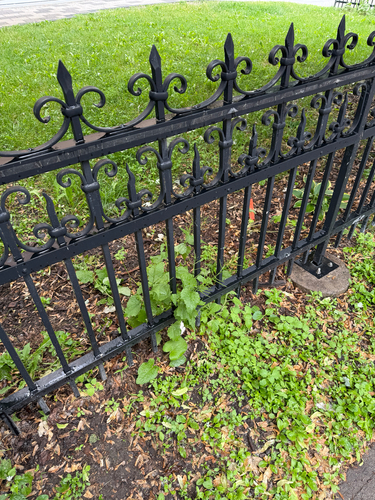
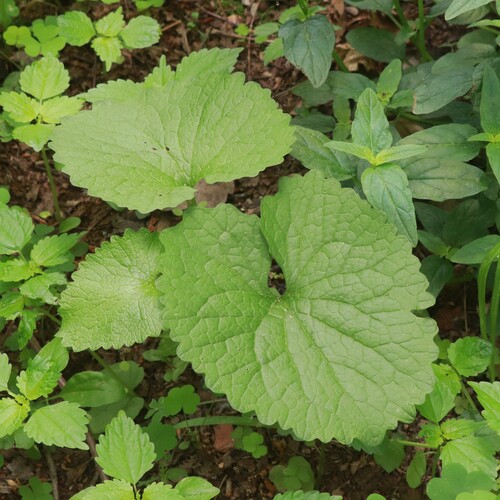
Garlic mustard is a leafy plant that smells like garlic when you crush its leaves! It grows in shady places and can be found in many parks and gardens.
Habitat: Forests
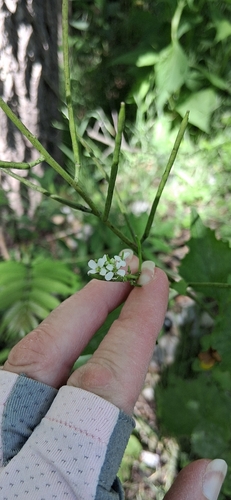
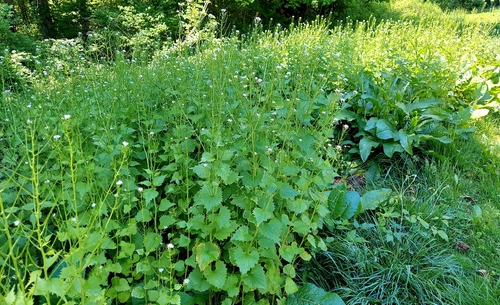
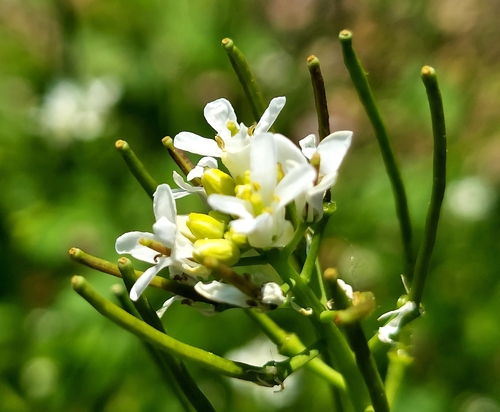
The garlic mustard has heart-shaped, scalloped basal leaves that form a rosette, later developing into upright stems with triangular, toothed leaves. It blooms with clusters of small, four-petaled white flowers at the stem tips. Its seed pods are long and slender.
Category
PlantsRarity
Common
Danger
1/5 · Very low
Snaps
118
Even though it's small, it can take over whole sections of shaded forests!
Garlic mustard can actually change the soil, making it tough for some forest fungi.
Its roots can smell like horseradish when pulled fresh from the ground!
Some people call it "poor man's mustard" because of its spicy taste.
Garlic mustard can release special chemicals from its roots that make it harder for other plants to grow nearby, helping it dominate an area.
This plant can sprout and grow leaves much earlier in spring than many native plants, grabbing sunlight and nutrients before others wake up.
Garlic mustard can produce thousands of seeds from just one plant, which can stay alive in the soil for years, waiting to sprout.
Apis mellifera
Provides early spring nectar for many insects.
Pieris rapae
Its caterpillars sometimes munch on garlic mustard leaves.
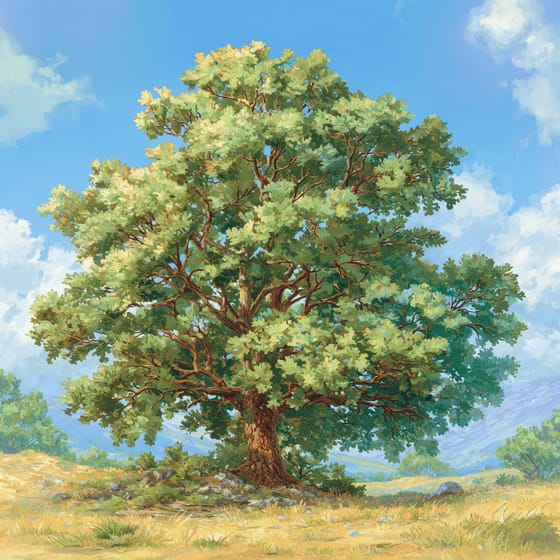
Quercus alba
Its chemicals can harm the fungi oaks rely on for nutrients.
Aromatic plants produce and emit fragrant volatile organic compounds, often for defense or to attract pollinators.
Flowering plants are any plants that produce flowers as part of their reproductive cycle.
Biennial plants complete their life cycle over two growing seasons, typically forming foliage in the first year and flowering/seeding in the second.
Shade tolerant plants are adapted to grow and thrive in areas with low light levels, requiring less direct sunlight.

Spring blooming plants produce their flowers during the spring season, often signifying the end of winter and the start of new growth.

Fragrant flowers emit a pleasant aroma, often to attract pollinators or for defense.

Edible plants are those parts of a plant that are considered safe for human consumption.

Describes plants that are particularly attractive and beneficial to a wide range of pollinating organisms.

Rapid growing plants exhibit accelerated growth rates, quickly increasing in size and biomass within a short period.

Forest habitats are terrestrial environments dominated by dense tree cover, supporting a high diversity of plant and animal life.

Invasive species are non-native organisms that cause harm to the environment, economy, or human health.
Danger
1/5 · Very low
Always ask an adult before touching or eating any plants.
The easiest way to identify garlic mustard is to use the Snappit nature identifier app.
30-90 cm
30-60 cm
0.5-1 cm
Spring
Yes
None
Biennial
Zoom in to split clusters and explore where this object has been snapped.
Jun 17, 2026
Parc Jean-DrapeauPhoto attribution
(c) Patrice Dupont, some rights reserved (CC BY)
License: CC BY 4.0 ↗
Image may be shown cropped inside the card frame.
Jun 6, 2026
East Windsor Hill Historic DistrictPhoto attribution
(c) Mark Apgar, some rights reserved (CC BY)
License: CC BY 4.0 ↗
Image may be shown cropped inside the card frame.
Jun 3, 2026
Newbern Historic DistrictPhoto attribution
no rights reserved
License: CC0 1.0 ↗
Image may be shown cropped inside the card frame.
May 18, 2026
Glastonbury Historic DistrictPhoto attribution
(c) florawhite, some rights reserved (CC BY)
License: CC BY 4.0 ↗
Image may be shown cropped inside the card frame.
May 18, 2026
Glastonbury Historic DistrictPhoto attribution
(c) florawhite, some rights reserved (CC BY)
License: CC BY 4.0 ↗
Image may be shown cropped inside the card frame.

Massachusetts, US
You might spot Eastern Cottontail and American Robin.
View guide →

Rhode Island, US
You might spot Common Eastern Bumble Bee and Osprey.
View guide →
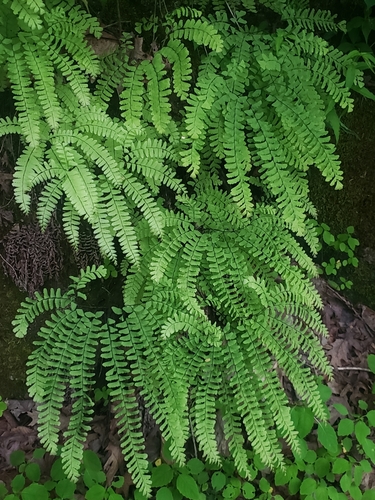
Iowa, US
You might spot Northern Maidenhair Fern and Wood Nettle.
View guide →

New York, US
You might spot American Robin, Pond Slider, and Northern Cardinal.
View guide →

Iowa, US
You might spot Common Eastern Bumble Bee and Eastern Cottontail.
View guide →

Ohio, US
You might spot Widow Skimmer, Eastern Pondhawk, and Bee.
View guide →
Take the discovery with you
Snap it with Snappit to identify it, learn what makes it special, and add the discovery to your collection.







.jpg&width=800)

_001.jpg&width=800)


