



Dendroleon speciosus
Dendroleon speciosus
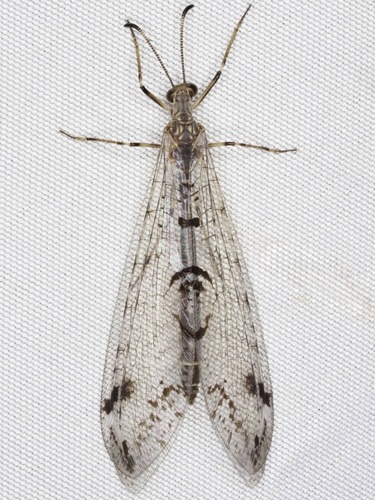
The Dendroleon speciosus, also known as the beautiful lacewing, is a tiny insect with delicate, lace-like wings. They are helpful because they eat pests like aphids, making gardens healthier and happier!
Habitat: Forests
The Dendroleon speciosus is a large insect with a robust body and long, clubbed antennae. Its transparent, intricately veined wings display dark markings and a yellowish tint, creating a mottled brown and black pattern that helps it blend with tree bark.
Category
InsectsRarity
Common
Danger
1/5 · Very low
Snaps
Be the first to snap!
Adult antlions are often mistaken for dragonflies, but they have unique club-tipped antennae.
Adult antlions look like delicate lacewings but are often much larger and sturdier.
The larvae, called doodlebugs, can live for years before transforming into winged adults!
Unlike most insects, larval antlions don't poop! They store waste until they become adults.
Dendroleon speciosus larvae can hide perfectly under tree bark or leaf litter, ambushing unsuspecting insects with powerful jaws.
Dendroleon speciosus larvae have large, hollow, sickle-shaped jaws that inject venom and digestive enzymes into their prey.
Adult Dendroleon speciosus has mottled brown wings and body that helps them perfectly camouflage against tree bark during the day.
Larvae are ambush predators of insects; adults might eat small insects or nectar.
Age differences: Larvae are strict ambush predators, while adults may supplement their diet with nectar or pollen.
Formica rufa
Larvae ambush these ants hiding in their forest habitat.

Parus major
Insectivorous birds commonly prey on adult antlions.
Araniella cucurbitina
Orb weaver spiders can trap adult antlions in their webs.
Solitary animals live alone for most of their lives, only interacting with others for mating or parental care.
Camouflaged describes organisms that possess coloring or patterns that allow them to blend into their environment.
Colorful describes organisms or objects displaying a wide range of bright and distinct colors.
This trait identifies organisms whose diet primarily consists of insects and other small invertebrates.
Forest habitats are terrestrial environments dominated by dense tree cover, supporting a high diversity of plant and animal life.
Describes a species whose presence and role have a disproportionately large effect on its environment.
Pertaining to species that are significantly smaller than typical or average for their kind.
Nocturnal animals are primarily active during the nighttime hours, typically resting or sleeping during the day.
Describes organisms that transfer pollen, enabling the fertilization and reproduction of plants.
No aliases listed yet.
Danger
1/5 · Very low
These insects are harmless, but it's best to look and not touch them.
Look for six legs, antennae, three body sections and the shape of the wings. Beetles have hardened front wings; flies have just one working pair. Tiny insects may need a close view before their group is clear. Insect Identifier: upload a photo and compare the visible details.
50-70 mm
20-30 mm
365-1095 days
5-10 km/h
Larvae are ambush predators of insects; adults might eat small insects or nectar.
Forests
Ambush
Zoom in to split clusters and explore where this object has been snapped.
Recent snaps will appear here as new observations are added.
Take the discovery with you
Snap it with Snappit to identify it, learn what makes it special, and add the discovery to your collection.