.jpeg&width=800)





Mud Fiddler Crab
minuca pugnax
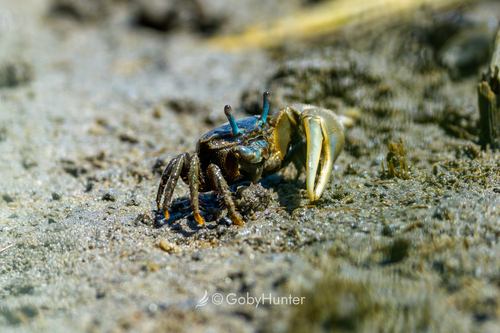
The Mud Fiddler Crab is a small, colorful crab that loves to dance in the mud! With its big claw, it waves hello to other crabs and catches yummy snacks.
Habitat: They live in coastal marshes and muddy shorelines.
The Mud Fiddler Crab has a square-shaped body, typically olive-brown to dark gray, with large, stalked eyes. Males are easily identified by one oversized, brightly colored claw, much larger than the other smaller feeding claw. Its carapace can sometimes show faint patterns or spots.
Category
InvertebrateRarity
Common
Danger
1/5 · Very low
Snaps
4
Fiddler crabs get their name because males look like they're playing a fiddle.
Hundreds of tiny male fiddler crabs can wave their giant claws all at once!
If a male loses its big claw, the other small claw grows huge to replace it!
They can "hold their breath" by trapping water in their gill chambers!
Mud Fiddler Crab can wave its enormous claw to signal to other crabs, attracting mates and warning off rivals with impressive displays.
Mud Fiddler Crab can dig intricate burrows deep into the mud, providing a safe home from predators and scorching sun.
Mud Fiddler Crab has long eyestalks that can quickly retract into grooves, protecting its vision from danger and debris.
Mud Fiddler Crab can skillfully scoop mud with its small claw, filtering out tiny bits of food with specialized mouthparts.
They are nature's tiny clean-up crew, eating microscopic bits of food from the mud.
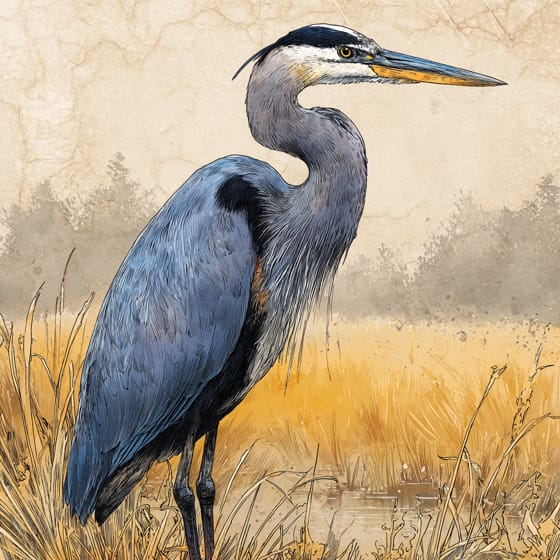
Ardea herodias
A wading bird that preys on crabs.

Fundulus heteroclitus
A small fish found in salt marshes.

Procyon lotor
Mammals that forage for crabs at low tide.
Spartina alterniflora
Crabs live among its roots for protection.
Social animals live in organized groups, cooperating for survival benefits such as foraging, defense, and raising offspring.
Burrowing animals dig tunnels and chambers in the ground, using these subterranean structures for shelter, hunting, or breeding.
Colorful describes organisms or objects displaying a wide range of bright and distinct colors.
This trait identifies organisms whose diet consists entirely or primarily of animal tissue.

Marine habitats encompass all saltwater environments of the Earth's oceans, supporting an immense diversity of aquatic life.
Danger
1/5 · Very low
Be careful near the water, and don't touch the crabs without permission!
The easiest way to identify Mud Fiddler Crab is to use the Snappit nature identifier app.
2 cm
7 g
2 years
They are nature's tiny clean-up crew, eating microscopic bits of food from the mud.
They live in coastal marshes and muddy shorelines.
Foraging
10
Zoom in to split clusters and explore where this object has been snapped.
Jun 2, 2026
Stone Harbor Bird SanctuaryPhoto attribution
(c) GobyHunter, some rights reserved (CC BY)
License: CC BY 4.0 ↗
Image may be shown cropped inside the card frame.
Massachusetts, US
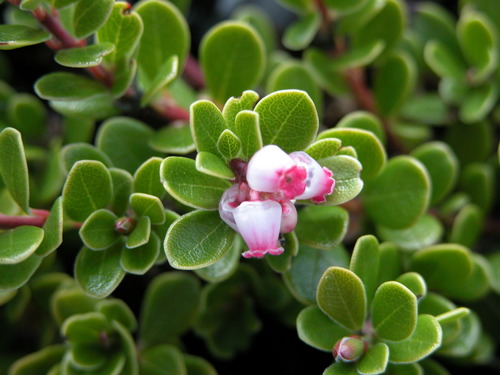
You might spot Bearberry, Mud Fiddler Crab, and Pitch Pine.
View guide →

US
You might spot Atlantic Horseshoe Crab and American Oystercatcher.
View guide →
Connecticut, US
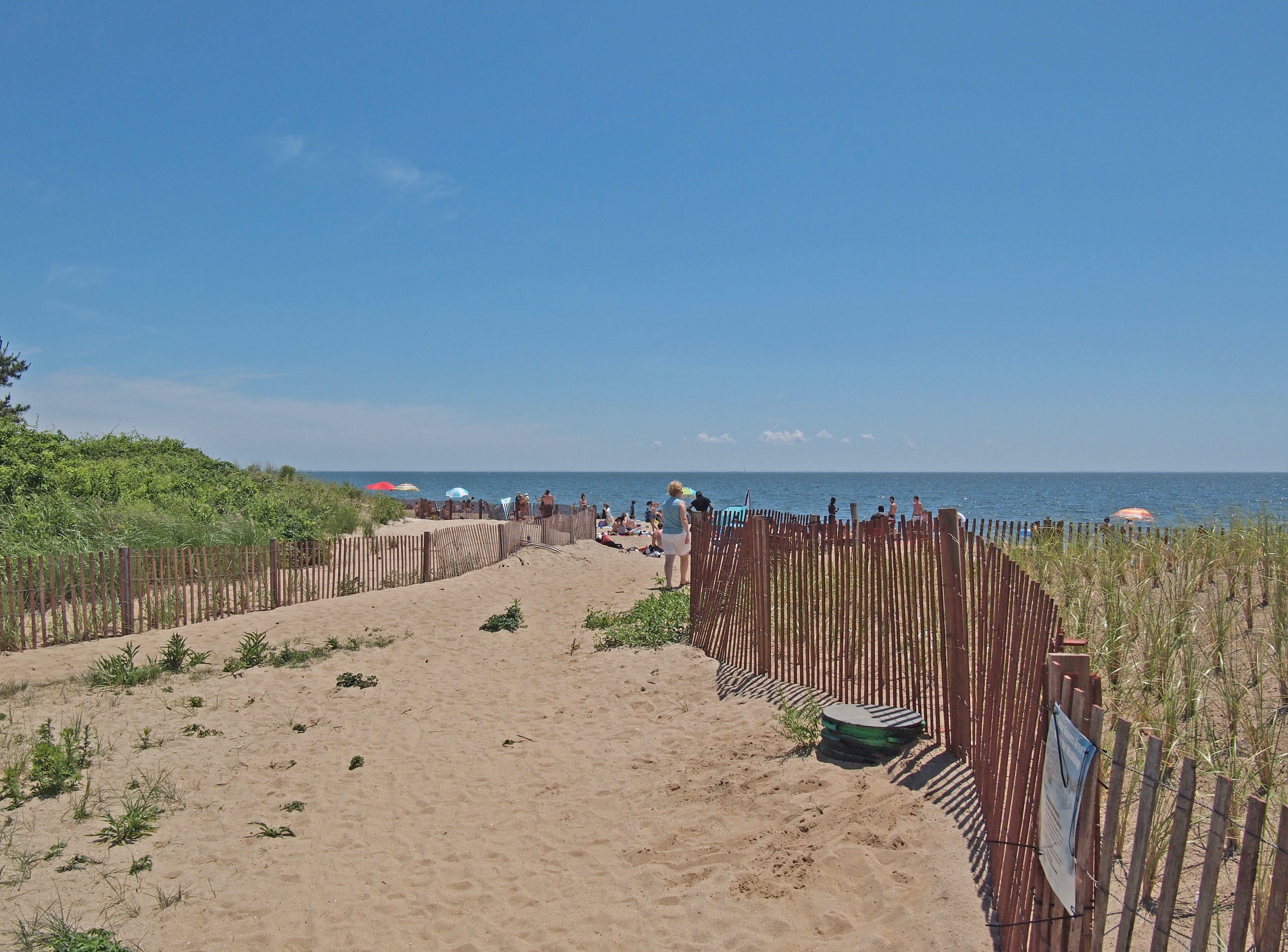
You might spot Rugosa Rose, American Herring Gull, and Osprey.
View guide →
Take the discovery with you
Snap it with Snappit to identify it, learn what makes it special, and add the discovery to your collection.