.jpg&width=800)





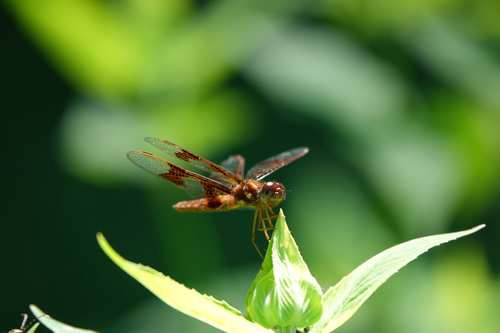
Eastern Amberwing
Perithemis tenera
The Eastern Amberwing is a small dragonfly with bright orange wings. They love to flutter around ponds and wetlands, showing off their beautiful colors in the sunlight.
Habitat: Wetlands
The Eastern Amberwing male has striking, entirely amber-orange wings and a reddish-orange body. Females possess clear wings with amber patches at the base and a brown spot near the tip, alongside a yellowish body. Its distinct wing coloration makes it easily identifiable near water.
Category
InsectsRarity
Common
Danger
1/5 · Very low
Snaps
29
Its babies live underwater for up to a year, breathing with gills!
Males sometimes pretend to be females to sneak past other dominant males!
The female Eastern Amberwing lays her tiny eggs by simply tapping the water!
These small dragonflies can fly backward, sideways, or even hover perfectly still!
Eastern Amberwings can spot tiny flying prey from a distance because of their large, multifaceted compound eyes.
Eastern Amberwings can fly in any direction, including backward, because of their independently operating four wings that help them dodge.
The Eastern Amberwing can warm up quickly by basking in the sun because of its dark body and broad wings that absorb heat.
Eastern Amberwing larvae can breathe underwater because of specialized gills, allowing them to live hidden in aquatic environments.
As an adult, this dragonfly is an insectivore, expertly catching small flying insects like mosquitoes and flies.
Age differences: Nymphs hunt aquatic invertebrates and larvae, while adults exclusively prey on flying insects.
Aedes aegypti
eats these common blood-feeding insects
Musca domestica
captures and consumes these flying insects
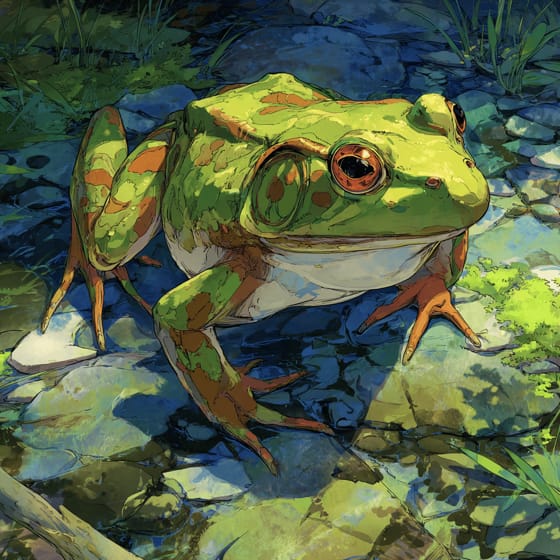
Rana catesbeiana
adults can be prey for larger amphibians
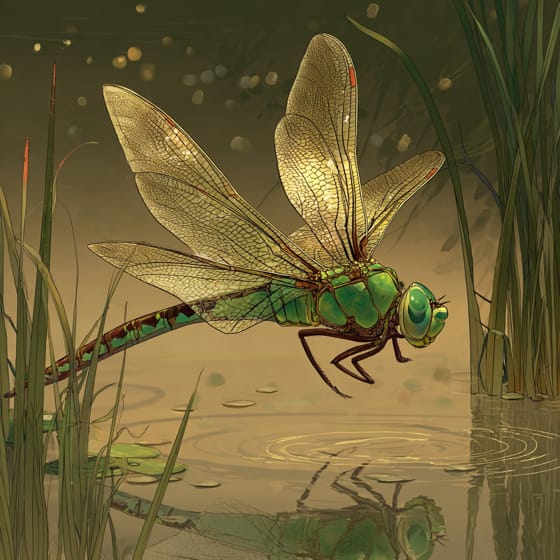
Anax junius
larger dragonflies may prey on them
Colorful describes organisms or objects displaying a wide range of bright and distinct colors.
This trait identifies organisms whose diet primarily consists of insects and other small invertebrates.
Describes plants that are particularly attractive and beneficial to a wide range of pollinating organisms.
This habitat trait identifies species found in wetlands, which are areas of land saturated with water, either permanently or seasonally, including marshes, swamps, and bogs.

Diurnal animals are primarily active during daylight hours, typically resting or sleeping at night.

Freshwater habitats include non-saline aquatic environments such as rivers, lakes, ponds, and wetlands, vital for numerous species.

Pertaining to species that are significantly smaller than typical or average for their kind.

This trait identifies organisms that exhibit exceptional swiftness in movement for hunting, escape, or travel.

Describes organisms that transfer pollen, enabling the fertilization and reproduction of plants.
No aliases listed yet.
Danger
1/5 · Very low
Dragonflies are friendly and won't hurt you, but it's best to watch them from a distance.
The easiest way to identify Eastern Amberwing is to use the Snappit nature identifier app.
40-50 mm
19-28 mm
28-42 days
18 km/h
As an adult, this dragonfly is an insectivore, expertly catching small flying insects like mosquitoes and flies.
Wetlands
Pursuit
Zoom in to split clusters and explore where this object has been snapped.
May 29, 2026
Gloucester Downtown Historic DistrictPhoto attribution
(c) V. Ross Johnson, some rights reserved (CC BY-SA)
License: CC BY-SA 4.0 ↗
Image may be shown cropped inside the card frame.

Florida, US
You might spot Anole, Eastern Box Turtle, and Golden Silk Spider.
View guide →

Florida, US
You might spot Atala, Monarch, and Brown Anole.
View guide →

Florida, US
You might spot American Beautyberry and Brown Anole.
View guide →

Virginia, US
You might spot Eastern Tiger Swallowtail, Fowler's Toad, and Monarch.
View guide →

New Mexico, US
You might spot White-Winged Dove and Silverleaf Nightshade.
View guide →

Missouri, US
You might spot Eastern Carpenter Bee, Duck, and American Robin.
View guide →
Take the discovery with you
Snap it with Snappit to identify it, learn what makes it special, and add the discovery to your collection.








.jpg&width=800)



