
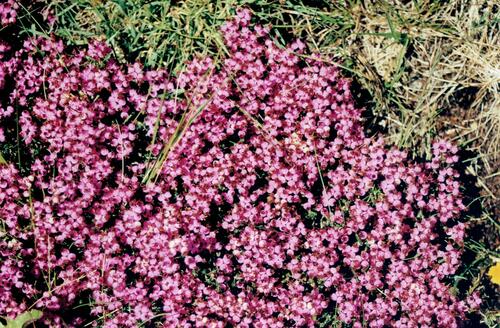


Erica Umbellata
erica umbellata
Erica umbellata, commonly known as dwarf Spanish heath or urze-molar, is a charming, low-growing evergreen shrub native to the sun-drenched hillsides of the western Iberian Peninsula and northwest Africa. Belonging to the heather family (Ericaceae), this resilient plant is celebrated for its spectacular floral displays. From late winter through summer, it blankets dry, rocky slopes and open pine forests with vibrant carpets of bright pink to deep magenta blossoms. This species plays a critical ecological role in its native Mediterranean-Atlantic habitats, stabilizing poor, acidic soils and preventing erosion on degraded slopes. It is also a vital resource for early-season pollinators, providing crucial nectar when few other plants are in bloom.
Habitat: Found in dry, open heathlands, shrublands, and sunny pine forests with acidic, sandy, or stony soils.
This dwarf shrub typically grows between 10 to 90 centimeters tall, forming dense, sprawling mounds. It features tiny, needle-like leaves that are dark green, narrow, and arranged in whorls along woody, reddish stems. Its most striking feature is the clusters of bell- or urn-shaped flowers, which range from bright pink to deep purple-pink. These blossoms are clustered at the ends of branches in umbrella-like configurations, with prominent dark brownish-red anthers that peek out from the base of the petals to create a beautiful contrast.
Category
PlantsRarity
Common
Danger
1/5 · Very low
Snaps
Be the first to snap!
It is a key indicator species for highly acidic, silica-rich soils in the Mediterranean basin.
The nectar of this plant is highly prized by beekeepers, contributing to the rich, dark, and robust profile of Iberian heather honey.
The specific epithet 'umbellata' refers to the umbrella-like umbrella shape of its flower clusters.
Its seeds have tough outer coats that withstand wildfires, allowing them to germinate rapidly in the nutrient-rich ash left behind.
The tiny, needle-like leaves have a reduced surface area and a waxy cuticle layer to minimize water loss during dry summers.
It partners with specialized ericoid mycorrhizal fungi to absorb nutrients from highly acidic, nutrient-deficient soils.
As a photosynthetic plant, it synthesizes its own energy from sunlight, water, and carbon dioxide while absorbing essential minerals through its roots.
Apis mellifera
Provides early-season nectar and pollen to support hive health in exchange for pollination.
Oidiodendron maius
Symbiotic root fungus that helps the plant access phosphorus in highly acidic soils.
Capra pyrenaica
Occasionally browses on the young shoots of the shrub in mountain heath habitats.
No trait badges are assigned for this object yet.
No aliases listed yet.
Collections for this object will appear here as more themes are added.
Danger
1/5 · Very low
No special safety notes yet.
Start with the whole plant, then compare leaf arrangement, leaf edges, stems and any flowers or fruit. Opposite leaves grow in pairs; alternate leaves come one at a time along the stem. These details tell you far more together than a single green leaf does. Plant Identifier: upload a photo and compare the visible details.
10-90 cm
0.1-2 kg
5-25 years
As a photosynthetic plant, it synthesizes its own energy from sunlight, water, and carbon dioxide while absorbing essential minerals through its roots.
Found in dry, open heathlands, shrublands, and sunny pine forests with acidic, sandy, or stony soils.
Zoom in to split clusters and explore where this object has been snapped.
Recent snaps will appear here as new observations are added.
Take the discovery with you
Snap it with Snappit to identify it, learn what makes it special, and add the discovery to your collection.


















