





fourpetal St. Johnswort
Hypericum tetrapetalum
Fourpetal St. Johnswort is a bright yellow flower that blooms in the summer. Its petals are shaped like little stars, and it can often be found in sunny spots.
Habitat: Grasslands
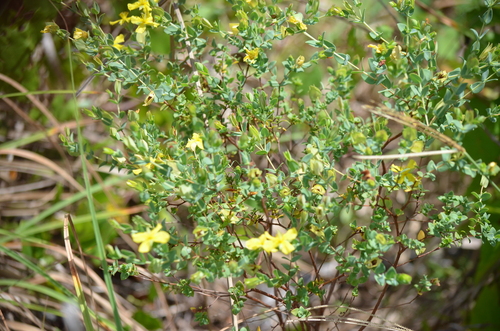
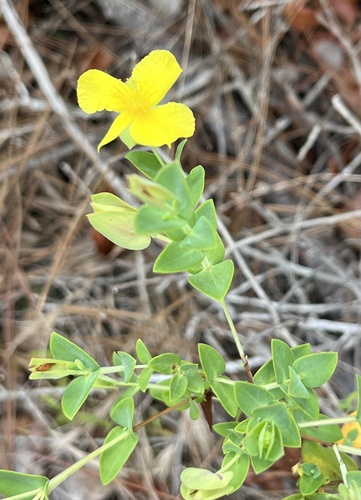
The fourpetal St. Johnswort is a charming perennial herb with bright yellow flowers, each typically featuring four prominent petals. Its green leaves often have tiny, translucent dots and sometimes black glands, making it distinct. It stands out in sunny, damp areas.
Category
PlantsRarity
Common
Danger
1/5 · Very low
Snaps
2
Its scientific name, 'Hypericum', means 'above the picture' because it was once hung to ward off spirits.
Look closely at its leaves; they often have tiny translucent dots, making them look 'perforated'!
Rubbing its petals or leaves can release a surprising reddish-purple liquid!
This plant loves growing in wet, boggy soils so much it's sometimes called 'bog St. Johnswort'!
The fourpetal St. Johnswort has special compounds that can make herbivores sensitive to sunlight, helping it defend against being eaten.
This plant has roots adapted to thrive in wet, boggy soils, allowing it to grow where many other plants can't survive.
Its vibrant yellow flowers reflect UV light, creating a strong signal that helps attract bees and other insects for pollination.
Apis mellifera
Collects pollen and nectar from its bright flowers.
Bombus impatiens
Visits flowers to gather pollen and nectar.
Epistrophe eligans
Feeds on nectar, helping to spread pollen.
Flowering plants are any plants that produce flowers as part of their reproductive cycle.
Summer blooming plants produce their flowers during the summer season, often providing vibrant color when many other plants have finished.
Fragrant flowers emit a pleasant aroma, often to attract pollinators or for defense.
Medicinal plants possess chemical compounds that can be used for therapeutic purposes to treat illnesses or maintain health.

Colorful describes organisms or objects displaying a wide range of bright and distinct colors.

Grassland habitats are terrestrial biomes dominated by grasses and herbaceous plants, supporting a variety of grazing animals.

Describes plants that are particularly attractive and beneficial to a wide range of pollinating organisms.
No aliases listed yet.
Danger
1/5 · Very low
Always look but don't touch flowers unless a grown-up says it's okay.
The easiest way to identify fourpetal St. Johnswort is to use the Snappit nature identifier app.
10-50 cm
15-60 cm
1-2.5 cm
Summer
No
Mild
Perennial
Zoom in to split clusters and explore where this object has been snapped.
May 22, 2026
Butterfly WorldPhoto attribution
(c) Josiah Londerée, some rights reserved (CC BY)
License: CC BY 4.0 ↗
Image may be shown cropped inside the card frame.
May 9, 2026
Matanzas State ForestPhoto attribution
(c) Pam Kleinsasser, some rights reserved (CC BY)
License: CC BY 4.0 ↗
Image may be shown cropped inside the card frame.
Take the discovery with you
Snap it with Snappit to identify it, learn what makes it special, and add the discovery to your collection.









.jpg&width=800)


_001.jpg&width=800)




