

Felty Germander
teucrium capitatum
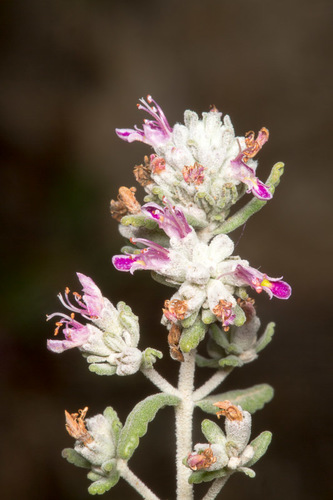
The Felty Germander (Teucrium capitatum) is a resilient, low-growing woody perennial plant native to the sun-drenched landscapes of the Mediterranean basin. Belonging to the mint family (Lamiaceae), this tough dwarf shrub is highly admired for its ability to thrive under the harshest drought conditions where other plants wither. Its most distinguishing feature is the pale, woolly coating that envelops its stems and leaves, giving the plant a silvery-white, felt-like appearance. In late spring and summer, it produces small, dense, spherical clusters of cream, yellow, or pale pink flowers that attract a busy array of wild pollinators. Deeply integrated into Mediterranean cultural history, this aromatic herb has long been harvested for traditional herbal remedies, teas, and digestive tonics. Whether gracing rocky hillsides or dry rock gardens, the Felty Germander represents the ultimate survivalist of arid landscapes.
Habitat: Thrives in dry, sunny, and rocky garrigue, limestone hillsides, and coastal scrub of the Mediterranean basin.
This low-growing, highly branched shrub typically stands between 10 and 40 centimeters tall, forming compact, rounded cushions of silver-gray foliage. The tiny, opposite leaves are narrow with heavily rolled edges and are densely shrouded in a thick coat of white, woolly hairs. During the flowering season from May to July, the plant develops spherical, terminal heads of tightly packed, tubular flowers that lack an upper lip. These flowers vary in color from pale cream and soft yellow to faint pink or lavender, rising slightly above the felty leaves and releasing a pleasant, medicinal fragrance when brushed.
Category
PlantsRarity
Common
Danger
1/5 · Very low
Snaps
Be the first to snap!
Historically used in traditional Mediterranean herbal medicine, it is renowned for its alleged anti-inflammatory and digestive properties.
The common name 'felty' comes from the dense, woolly layer of white hairs covering its leaves and stems, which feels like soft felt to the touch.
The genus name Teucrium is dedicated to King Teucer, a legendary Trojan figure in Greek mythology who was said to have used germanders for medicinal purposes.
The plant is covered in a dense layer of white, felty hairs that reflect intense sunlight and trap moisture close to the leaf surface, dramatically reducing water loss.
Produces a rich blend of essential oils and bitter compounds in its leaves, deterring most mammalian herbivores and protecting it from insect pests.
Can enter a semi-dormant state during scorching Mediterranean summers, shedding non-essential leaves and prioritizing resources in its deep root system to survive extreme dry spells.
As a photosynthetic plant, the Felty Germander manufactures its own food using sunlight, carbon dioxide, water, and minerals absorbed through its roots.
Apis mellifera
Visits the small flowers for nectar and acts as a primary pollinator.
Capra pyrenaica
Occasionally browses on the foliage during periods of drought.

Salvia rosmarinus
Competes for water and soil nutrients in dry rocky garrigue habitats.
No trait badges are assigned for this object yet.
No aliases listed yet.
Collections for this object will appear here as more themes are added.
Danger
1/5 · Very low
No special safety notes yet.
Start with the whole plant, then compare leaf arrangement, leaf edges, stems and any flowers or fruit. Opposite leaves grow in pairs; alternate leaves come one at a time along the stem. These details tell you far more together than a single green leaf does. Plant Identifier: upload a photo and compare the visible details.
10-40 cm
0.05-0.3 kg
3-10 years
As a photosynthetic plant, the Felty Germander manufactures its own food using sunlight, carbon dioxide, water, and minerals absorbed through its roots.
Thrives in dry, sunny, and rocky garrigue, limestone hillsides, and coastal scrub of the Mediterranean basin.
14-28 days
Zoom in to split clusters and explore where this object has been snapped.
Recent snaps will appear here as new observations are added.
Take the discovery with you
Snap it with Snappit to identify it, learn what makes it special, and add the discovery to your collection.