





aspen bluebells
Mertensia arizonica
Aspen bluebells are lovely blue flowers that bloom in spring. They grow in clusters and look like little bells hanging from the stems. These flowers are a beautiful sight in nature!
Habitat: Mountain regions
The aspen bluebells has bright, true-blue bell-shaped flowers that hang in graceful clusters. Its smooth, oblong leaves are typically a pale green, sometimes showing a whitish tint. The stems are often reddish, providing a striking contrast to the vibrant blooms.
Category
PlantsRarity
Common
Danger
1/5 · Very low
Snaps
Be the first to snap!
Its blue flowers can sometimes appear pink or purple before fully opening!
Native Americans historically used bluebell plants for traditional medicine and food.
The 'bluebells' name comes from the flowers' charming bell-like shape!
They are often found growing alongside aspen trees, giving them their common name!
Aspen bluebells can thrive in chilly mountain air because their tissues are adapted to cold temperatures for survival.
Aspen bluebells have deep bell-shaped flowers that attract long-tongued bees and hummingbirds for pollination.
Aspen bluebells has a robust root system that helps it store energy and regrow fresh each spring.
Bombus bifarius
collects nectar and pollen from flowers

Archilochus alexandri
drinks nectar from tubular flowers
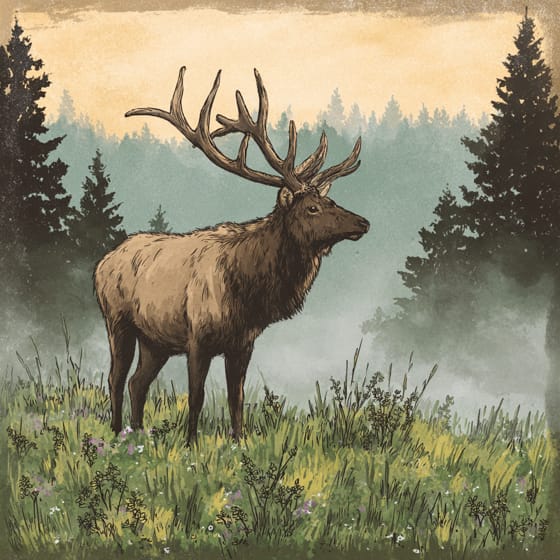
Cervus canadensis
browses on leaves and shoots in spring
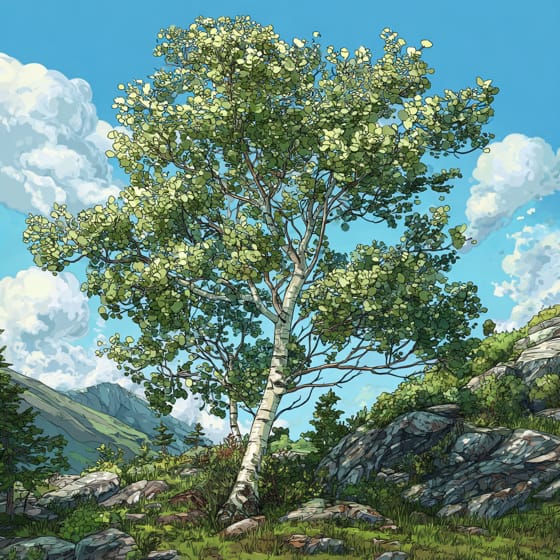
Populus tremuloides
often grows in the shade of these trees
Bell-shaped flowers possess petals fused or arranged to form a cup-like or campanulate structure resembling a bell.
Flowering plants are any plants that produce flowers as part of their reproductive cycle.
Cluster flowers are inflorescences where individual flowers are arranged closely together on a common stem.
Shade tolerant plants are adapted to grow and thrive in areas with low light levels, requiring less direct sunlight.

Spring blooming plants produce their flowers during the spring season, often signifying the end of winter and the start of new growth.

Fragrant flowers emit a pleasant aroma, often to attract pollinators or for defense.

Colorful describes organisms or objects displaying a wide range of bright and distinct colors.

Describes plants that are particularly attractive and beneficial to a wide range of pollinating organisms.

This habitat trait identifies species found in mountainous regions, characterized by high elevation, steep slopes, and varying climate zones.

Forest habitats are terrestrial environments dominated by dense tree cover, supporting a high diversity of plant and animal life.
No aliases listed yet.
Danger
1/5 · Very low
Always look but don't touch flowers in nature to help protect them.
The easiest way to identify aspen bluebells is to use the Snappit nature identifier app.
15-40 cm
10-20 cm
1-2 cm
Spring to early summer
No
None
Perennial
Zoom in to split clusters and explore where this object has been snapped.
Recent snaps will appear here as new observations are added.
Take the discovery with you
Snap it with Snappit to identify it, learn what makes it special, and add the discovery to your collection.






.jpg&width=800)


_001.jpg&width=800)



