.jpg&width=800)





Florida Predatory Stink Bug
Euthyrhynchus floridanus
The Florida Predatory Stink Bug is a cool insect that helps keep gardens healthy by eating other bugs. It has a unique shape and can make a stinky smell when it feels scared!
Habitat: Urban areas
The Florida Predatory Stink Bug has a striking appearance with a black body adorned with vivid red, orange, or yellow markings, especially on its shoulders and abdomen. It's distinct from herbivorous stink bugs by its more robust build and prominent, sharp shoulder spines.
Category
InsectsRarity
Common
Danger
1/5 · Very low
Snaps
2
Its nymphs, or young bugs, often hunt together in groups, like a tiny wolf pack!
Their bright colors warn predators: 'I taste bad, stay away!'
This bug injects a paralyzing venom into its prey before sucking it dry!
Unlike many stink bugs, this one hunts other insects, making it a garden hero!
Florida Predatory Stink Bug can stab prey with its strong, needle-like mouthpart because it helps them suck out the insect's juices.
Florida Predatory Stink Bug can release a foul-smelling liquid when scared, which helps them deter predators.
Florida Predatory Stink Bug can patiently wait for prey to pass by, which helps them catch unsuspecting insects.
A tiny predator that helps gardens by eating plant-damaging insects.
Age differences: Nymphs often hunt in groups and tackle smaller prey; adults are more solitary and target larger insects.
Spodoptera frugiperda
Feeds on this agricultural pest.
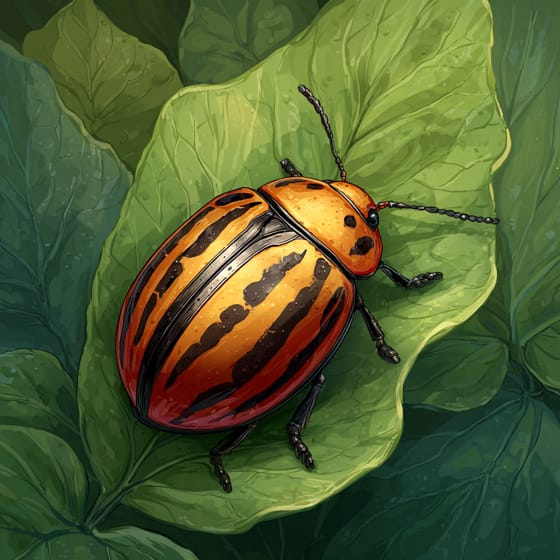
Leptinotarsa decemlineata
Preys on larvae and adults.
Trichoplusia ni
Helps control this garden pest.
Solitary animals live alone for most of their lives, only interacting with others for mating or parental care.
Camouflaged describes organisms that possess coloring or patterns that allow them to blend into their environment.
This trait identifies organisms whose diet primarily consists of insects and other small invertebrates.
An ambush predator hunts by patiently waiting and concealing itself, then launching a sudden attack when unsuspecting prey comes within range.

This trait identifies organisms whose diet consists entirely or primarily of animal tissue.

This habitat trait indicates species that can coexist with humans in urban and suburban environments, utilizing man-made structures and green spaces.

Describes organisms that transfer pollen, enabling the fertilization and reproduction of plants.
No aliases listed yet.
Danger
1/5 · Very low
Don't touch bugs unless you know they are safe; some can bite or sting.
The easiest way to identify Florida Predatory Stink Bug is to use the Snappit nature identifier app.
10-15 mm
30-90 days
A tiny predator that helps gardens by eating plant-damaging insects.
Urban areas
Ambush
6
Zoom in to split clusters and explore where this object has been snapped.

Georgia, US
You might spot Asian Lady Beetle, Anole, and Joro Spider.
View guide →

Alabama, US
You might spot Gulf Fritillary, American Sweetgum, and Pearl Crescent.
View guide →

Alabama, US
You might spot Pearl Crescent and Oriental False Hawksbeard.
View guide →
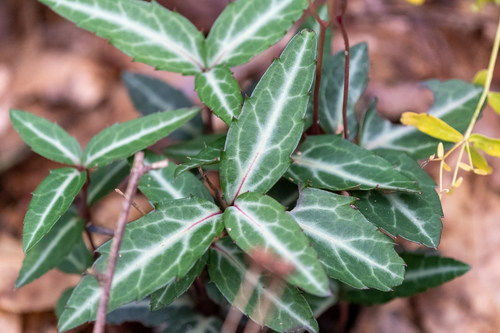
Virginia, US
You might spot Striped Wintergreen, Christmas Fern, and Autumn Olive.
View guide →
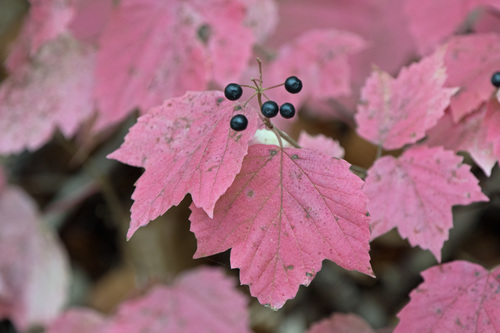
Virginia, US
You might spot Mapleleaf Viburnum, Japanese Holly, and Common Bonnet.
View guide →
Take the discovery with you
Snap it with Snappit to identify it, learn what makes it special, and add the discovery to your collection.









.jpg&width=800)




