





Forked Fungus Beetle
Bolitotherus cornutus
The Forked Fungus Beetle is a small insect that loves to munch on mushrooms! It has unique forked horns that make it look very special. These beetles are often found in damp, wooded areas.
Habitat: Forests
The Forked Fungus Beetle has a rugged, dark brown to black body covered in a bumpy texture. Males are distinct with two prominent, forward-pointing 'horns' on their head, resembling tiny antlers. Its overall shape is oval and flattened.
Category
InsectsRarity
Common
Danger
1/5 · Very low
Snaps
Be the first to snap!
A male beetle's impressive horns can be almost as long as its entire body!
Their larvae tunnel deep inside mushrooms and fungi for weeks, munching away!
These beetles can live for over a year, spending most of it hidden within a fungus!
When threatened, these beetles often play dead, freezing perfectly still until danger passes!
Forked Fungus Beetle males can use their distinctive 'horns' to wrestle rival males, showing off their strength.
Forked Fungus Beetle can expertly locate wood-decaying fungi by smell, helping them find food and shelter.
Forked Fungus Beetle has a tough, bumpy exoskeleton that helps them blend in and protects them from predators.
These beetles munch on various fungi and mushrooms found on dead or decaying wood.
Age differences: Larvae and adults both feed on fungi, with larvae living entirely within the fungal host.
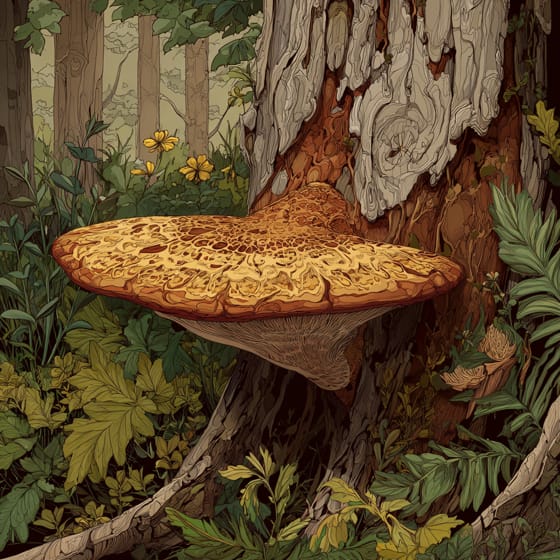
Polyporus squamosus
They feed on the fruiting bodies of this shelf fungus.
Ganoderma applanatum
Both larvae and adults consume its hard woody tissues.
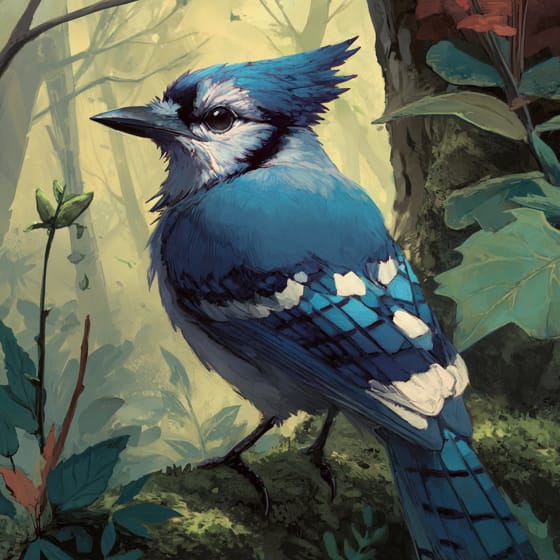
Cyanocitta cristata
Jays can spot these beetles on bark and snatch them up.

Peromyscus leucopus
These small mammals will prey on beetles they discover.
Social animals live in organized groups, cooperating for survival benefits such as foraging, defense, and raising offspring.
Solitary animals live alone for most of their lives, only interacting with others for mating or parental care.
Characterized by having one or more hard, permanent, pointed projections on the head.
This trait characterizes organisms whose diet consists entirely or primarily of plant material.

Describes plants that are particularly attractive and beneficial to a wide range of pollinating organisms.

Describes organisms that break down dead organic material, recycling nutrients back into the ecosystem.

Forest habitats are terrestrial environments dominated by dense tree cover, supporting a high diversity of plant and animal life.

Pertaining to species that are significantly smaller than typical or average for their kind.
No aliases listed yet.
Danger
1/5 · Very low
It's best to look at beetles from a distance and not touch them.
The easiest way to identify Forked Fungus Beetle is to use the Snappit nature identifier app.
10-22 mm
5-11 mm
90-270 days
These beetles munch on various fungi and mushrooms found on dead or decaying wood.
Forests
Foraging
6
Zoom in to split clusters and explore where this object has been snapped.
Recent snaps will appear here as new observations are added.
Take the discovery with you
Snap it with Snappit to identify it, learn what makes it special, and add the discovery to your collection.








.jpg&width=800)



