


Galax
galax urceolata
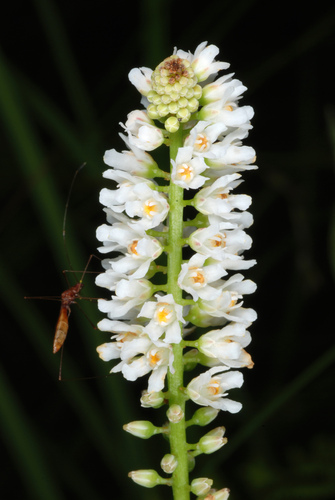
Galax (Galax urceolata), also known as beetleweed or wandflower, is a delightful evergreen perennial herb native to the moist, acidic forest floors of the southeastern United States. Thriving under the dense canopy of rhododendrons and mountain laurels, this plant forms beautiful, glossy carpets of heart-shaped leaves. What makes Galax truly captivating is its seasonal metamorphosis and unique reproductive strategy. In late spring, it sends up slender, leafless stalks topped with spikes of tiny, white flowers that contrast beautifully with its shiny green foliage. Historically, Galax has held a significant place in Appalachian culture and the global floral trade. Its tough, leathery leaves are incredibly durable, remaining fresh long after being cut. This resilience has made it a staple in floral arrangements worldwide, creating a unique forest-based harvesting economy in its native mountain regions.
Habitat: Found in moist, acidic, and shaded forest floors, particularly under the dense canopies of rhododendron and pine-oak woods in the Appalachian region.
Galax is easily identified by its glossy, leathery, heart-shaped (cordate) to rounded leaves that grow on individual petioles directly from the rhizome. The leaves feature prominently veined surfaces and finely serrate (toothed) margins, measuring about 5 to 15 centimeters in diameter. While vibrant green during the spring and summer, the foliage transitions to deep bronze, burgundy, or rich reddish-brown hues during the winter. In June and July, the plant produces distinctive, narrow, leafless flower stalks (wands) reaching 15 to 45 centimeters in height, densely packed with minuscule, five-petaled white flowers.
Category
PlantsRarity
Common
Danger
1/5 · Very low
Snaps
Be the first to snap!
Because of their outstanding longevity, cut Galax leaves are shipped globally and can last for weeks or even months in cold storage.
Galax is a monotypic genus, meaning Galax urceolata is the sole species belonging to the genus Galax.
The town of Galax, Virginia, is named after this plant, which grows abundantly in the surrounding Blue Ridge Mountains.
Galax leaves accumulate red anthocyanin pigments during the cold winter months, protecting the plant's photosynthetic machinery from harsh light when the deciduous forest canopy is bare.
The flowers emit a strong, musk-like or skunk-like odor that acts as a specialized chemical signal to attract flies, beetles, and small bees for pollination.
The plant thrives in highly acidic, nutrient-poor soils, utilizing specialized mycorrhizal fungi associations to efficiently absorb scarce nutrients.
As an autotrophic plant, Galax generates its own energy through photosynthesis, converting sunlight, water, and carbon dioxide into sugars while absorbing essential soil minerals.

Odocoileus virginianus
Provides critical winter forage for deer when other deciduous plants have lost their foliage.
Rhododendron maximum
Grows in close association, benefiting from the shaded, acidic, and organic-rich soil environment created by its canopy.
Bombus impatiens
Visits the dense flower spikes to gather pollen and nectar, facilitating plant reproduction.
No trait badges are assigned for this object yet.
No aliases listed yet.
Collections for this object will appear here as more themes are added.
Danger
1/5 · Very low
No special safety notes yet.
Start with the whole plant, then compare leaf arrangement, leaf edges, stems and any flowers or fruit. Opposite leaves grow in pairs; alternate leaves come one at a time along the stem. These details tell you far more together than a single green leaf does. Plant Identifier: upload a photo and compare the visible details.
15-45 cm
5-20 years
As an autotrophic plant, Galax generates its own energy through photosynthesis, converting sunlight, water, and carbon dioxide into sugars while absorbing essential soil minerals.
Found in moist, acidic, and shaded forest floors, particularly under the dense canopies of rhododendron and pine-oak woods in the Appalachian region.
Photosynthesis
Zoom in to split clusters and explore where this object has been snapped.
Recent snaps will appear here as new observations are added.

North Carolina, US
You might spot Galax, Mountain Laurel, and Downy Rattlesnake Plantain.
View guide →

North Carolina, US
You might spot Striped Wintergreen, Pink Lady's Slipper, and Galax.
View guide →

Tennessee, US
You might spot Pipevine Swallowtail, Fraser's Sedge, and Partridgeberry.
View guide →

North Carolina, US
You might spot Virginia Heartleaf, Dwarf Crested Iris, and Galax.
View guide →

Georgia, US
You might spot Mountain Laurel, Galax, and Carolina Sweetshrub.
View guide →
Take the discovery with you
Snap it with Snappit to identify it, learn what makes it special, and add the discovery to your collection.

















