




Gerrini
gerrini
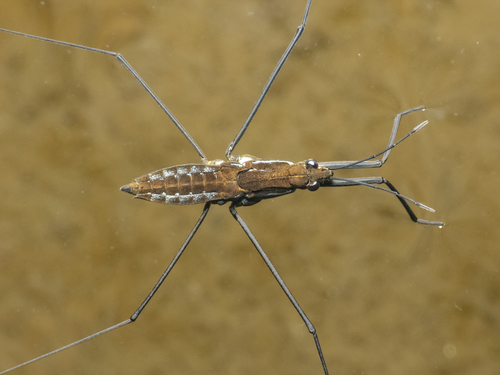
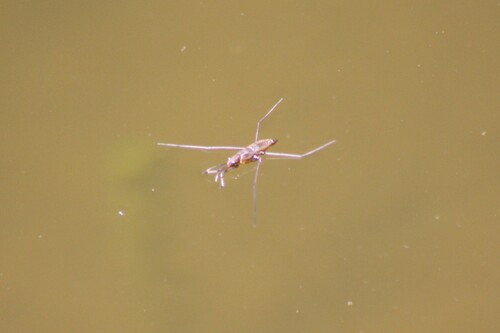
Gerrini, commonly known as water striders or pond skaters, are fascinating semi-aquatic insects famous for their effortless ability to walk on water. They belong to the family Gerridae and spend their entire lives gliding across the surface tension of freshwater ecosystems. By distributing their weight across elongated legs, they navigate calm waters with remarkable speed and agility, acting as crucial indicators of water quality and ecological health.
Habitat: Found on the surface of calm freshwater environments like ponds, slow-moving streams, and marshes.
These slender insects typically feature dark brown, charcoal, or black bodies measuring between 1 and 2 centimeters in length. They are characterized by extremely long, thread-like middle and hind legs that act as paddles and rudders, while their shorter front legs are held forward to seize prey. Their bodies are covered with microscopic, water-repellent hairs that give them a slightly silvery sheen under bright sunlight.
Category
InsectsRarity
Common
Danger
1/5 · Very low
Snaps
2
Some species of water striders are wingless, while others can grow wings to fly and colonize new ponds if their home dries up.
The dimples their legs press into the water's surface tension act like lenses, magnifying sunlight and creating large circular shadows on the bottom of shallow pools.
Their legs are covered in thousands of microsetae, which trap air to repel water and act as tiny flotation devices.
Microscopic hydrophobic hairs on their legs trap air pockets, allowing them to glide effortlessly across the surface of the water without sinking.
Highly sensitive leg receptors detect ripples and vibrations on the water surface to locate struggling prey or nearby predators.
Equipped with a sharp proboscis used to pierce captured prey and inject digestive enzymes, allowing them to suck out the liquefied insides.
They primarily feed on small insects that fall onto the water's surface, as well as aquatic insect larvae that dwell just below.
Age differences: Nymphs feed on smaller planktonic organisms and tiny insects, while adults can tackle larger terrestrial insects.
Lithobates clamitans
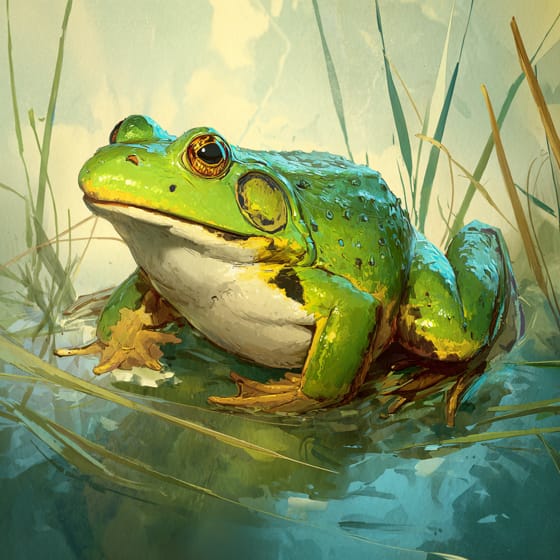
Gerrini are eaten by green frogs waiting near the edges of ponds.
Culex pipiens
They hunt mosquito larvae that breathe near the water's surface.
Lepomis macrochirus
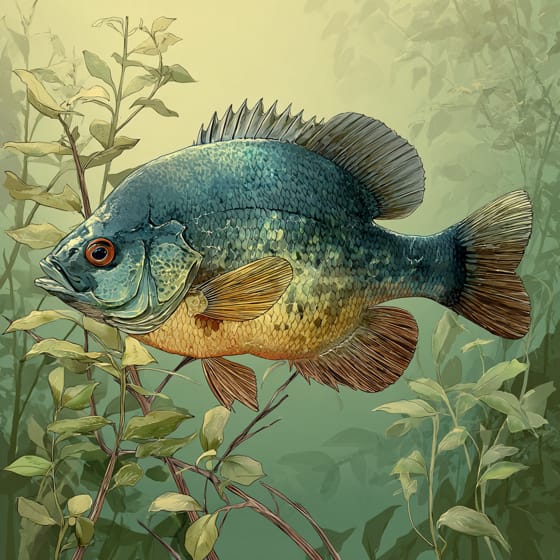
Bluegills and other surface-feeding fish frequently prey upon water striders.
Social animals live in organized groups, cooperating for survival benefits such as foraging, defense, and raising offspring.
Camouflaged describes organisms that possess coloring or patterns that allow them to blend into their environment.
Colorful describes organisms or objects displaying a wide range of bright and distinct colors.
This trait characterizes organisms whose diet consists entirely or primarily of plant material.

Describes plants that are particularly attractive and beneficial to a wide range of pollinating organisms.

Diurnal animals are primarily active during daylight hours, typically resting or sleeping at night.

Pertaining to species that are significantly smaller than typical or average for their kind.

This habitat trait indicates species that can coexist with humans in urban and suburban environments, utilizing man-made structures and green spaces.

Describes organisms that transfer pollen, enabling the fertilization and reproduction of plants.
No aliases listed yet.
Collections for this object will appear here as more themes are added.
Danger
1/5 · Very low
No special safety notes yet.
The easiest way to identify Gerrini is to use the Snappit nature identifier app.
1-2 cm
1-3 cm
0.00001-0.0001 kg
1 years
3 km/h
They primarily feed on small insects that fall onto the water's surface, as well as aquatic insect larvae that dwell just below.
Found on the surface of calm freshwater environments like ponds, slow-moving streams, and marshes.
Zoom in to split clusters and explore where this object has been snapped.
Jun 19, 2026
Bloedel ReservePhoto attribution
no rights reserved
License: CC0 1.0 ↗
Image may be shown cropped inside the card frame.
Take the discovery with you
Snap it with Snappit to identify it, learn what makes it special, and add the discovery to your collection.







.jpg&width=800)



