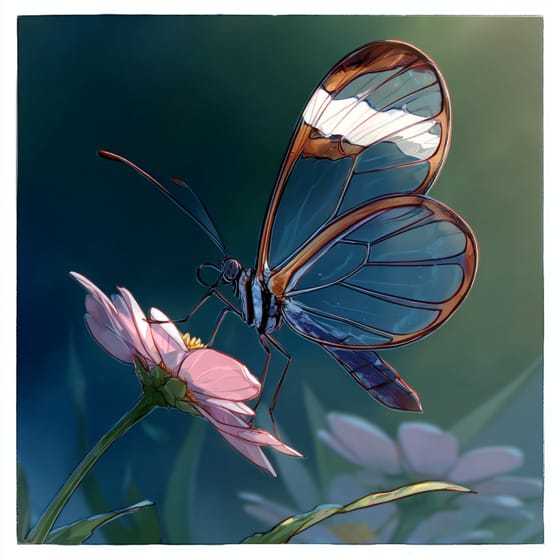





Glasswing Butterfly
Greta oto
The Glasswing Butterfly has transparent wings that look like glass! This helps them stay safe from birds.
Habitat: Tropical forests
The Glasswing Butterfly has stunning, almost completely transparent wings that reveal the world behind them. Its wing edges are outlined in dark brown, sometimes with splashes of orange or red near the tips. This unique transparency makes it incredibly difficult to spot in nature, offering superb camouflage.
Category
InsectsRarity
Rare
Danger
2/5 · Low
Snaps
Be the first to snap!
Males have special hairs to release scents for attracting mates.
Their wings are see-through because they lack most colored scales!
These butterflies are important pollinators in tropical forests.
They sometimes drink tears from turtles or caimans for salt!
Glasswing Butterflies have clear wings because they lack most scales, allowing them to disappear against backgrounds and hide from predators.
Glasswing Butterflies can absorb toxins from plants, making them taste bad to predators and providing a chemical defense.
Glasswing Butterflies have a long, tube-like proboscis that helps them reach sweet nectar deep inside flowers.
It sips sweet nectar from flowers and gathers special nutrients from toxic plants for protection.
Age differences: Larvae primarily eat Cestrum plant leaves, while adults feed on nectar and other plant liquids.

Cestrum nocturnum
Larvae munch on its leaves to grow big and get toxins.
.jpg&width=800)
Lantana camara
Drinks its nectar and helps these flowers make seeds.
Turdus grayi
Gets snatched by these birds if they aren't careful.
Wildlife encompasses all undomesticated animal and plant life existing in their natural habitats.
Camouflaged describes organisms that possess coloring or patterns that allow them to blend into their environment.
This trait characterizes organisms whose diet consists entirely or primarily of plant material.
This habitat trait refers to species found in tropical rainforests, characterized by high annual rainfall, high biodiversity, and dense tree cover.

Diurnal animals are primarily active during daylight hours, typically resting or sleeping at night.

Describes a species whose presence and role have a disproportionately large effect on its environment.

Describes organisms that transfer pollen, enabling the fertilization and reproduction of plants.
Danger
2/5 · Low
Do not touch or pick up. Some insects sting or bite. Ask an adult for help.
The easiest way to identify Glasswing Butterfly is to use the Snappit nature identifier app.
55-60 mm
28-30 mm
30-45 days
It sips sweet nectar from flowers and gathers special nutrients from toxic plants for protection.
Tropical forests
Foraging
6
Zoom in to split clusters and explore where this object has been snapped.
Recent snaps will appear here as new observations are added.
Take the discovery with you
Snap it with Snappit to identify it, learn what makes it special, and add the discovery to your collection.








.jpg&width=800)



