






Glowworm beetle
Phengodidae
Glowworm beetles (family Phengodidae), also called railroad worms, are soft-bodied beetles found almost only in the Americas. Their larvae and wingless, larva-shaped adult females glow from pairs of lights along the body, while the small winged males have feathery antennae. Railroad worms of the genus Phrixothrix also carry a red light on the head: the only true red light known from a land animal.
Also known as Railroad worm, Phengodid beetle
Rarity: Common
11 pairs steady side lights
628 nm reddest beetle light
2 hollow, sickle-shaped jaws
24 lights on a PhrixothrixStill debated
12 segments in each male antenna
3 vs 12 antenna segments, female vs male
15 in 100 reactions give off red light
53 eggs laid by one female
Tap a pin on the model or a part below.
628 nm deep red light
11 pairs lights along the body
Hollow sickle-shaped jaws
12 segments in a male antenna
< ½ wing covers vs wings
15–65 mm full-grown larva
Three forms of a glowworm beetle, plus the European glow-worm for comparison. Pick one to repaint the model.
Glowworm beetles say a lot with light and posture. Here is what scientists think each signal means.
Photos from Wikimedia Commons. Some of them can repaint the 3D model.
Measured by scientists in the field and in the lab.
The word glowworm causes a lot of mix-ups. Test what you know.
0 of 8 answered
They are insects. A glowworm beetle is the larva, or the larva-shaped adult female, of a beetle in the family Phengodidae.[4]
The name covers at least three unrelated groups: glowworm beetles of the Americas (Phengodidae), the European glow-worm, which is a firefly (Lampyris noctiluca), and the New Zealand glowworm, which is the larva of a fungus gnat, a kind of fly (Arachnocampa luminosa).[4, 18, 21, 22]
They glow steadily. Females often glow nonstop while curled around their eggs, and males of some groups glow all their adult life.[4]
Phrixothrix hirtus makes the only true red bioluminescence known on land, peaking at about 622–628 nm.[2, 1, 23]
Males follow the female's scent (pheromone) with their feathery antennae. Her light does not seem to be the cue.[4]
As far as scientists know, they hunt millipedes. Snail-eating is what European glow-worm larvae do.[4, 5, 19]
Many don't, but males in the group that includes Phrixothrix glow throughout their adult life, and Stenophrixothrix males give off yellow light.[4, 20]
She is a full adult that mates and lays eggs. She simply keeps a larva's body shape and never grows wings.[4]
Small beetles, big superlatives. Each one is backed by a study.
Why scientists study one small Brazilian beetle's head lamp.
628 nm
reddest beetle light
Measured from the head lights of Phrixothrix hirtus. The side lights of a related species glow green at 542 nm.[1]
71%
same enzyme recipe
The red and green luciferases share 71% of their building blocks. Small changes shift the colour.[1]
15 in 100
reactions make red light
The red enzyme is dimmer than green ones, which manage more than 40 in 100.[14]
9.8×
brighter in the lab
By changing a few building blocks, scientists made red enzymes up to 9.8 times brighter in cell extracts.[23]
Red
passes through tissue
Blood and skin absorb red light less than green, so researchers use red-glowing enzymes to follow infections and disease inside living animals.[15]
Railroad worm red light comes from the same luciferin fuel as a firefly's yellow-green; only the enzyme differs.
From a glowing egg to a winged male or a larva-shaped mother. Timings come from the few species that have been studied.
Three animals, one confusing name. Only the first is a glowworm beetle.
| Railroad worm | European glow-worm | New Zealand glowworm | |
|---|---|---|---|
| What it is[4, 18, 21, 22] | A beetle (family Phengodidae) | A firefly beetle (family Lampyridae) | A fly: the larva of a fungus gnat (Keroplatidae) |
| Who glows[4, 20, 17, 22] | Larvae, wingless females, and the males of some groups | Above all the wingless adult female | The larva |
| Light colour[3, 1, 18, 25, 9] | Green-yellow sides (535–565 nm), red head (600–628 nm) in Phrixothrix | Green, a little bluer than an American firefly's | Blue-green (about 488 nm in an Australian relative) |
| Why it glows[4, 17, 22] | Thought to warn predators it tastes bad | To attract flying males | To lure flying insects to its sticky threads |
| Larva's food[4, 5, 19, 26, 22] | Millipedes | Snails | Small flying insects caught on sticky silk lines |
| Where[7, 20, 17, 25] | The Americas, from southern Canada to Chile (a few in Turkey and the Middle East) | Europe | New Zealand |
| Light chemistry[3, 18, 25] | Firefly-type luciferin | Firefly-type luciferin | A completely different luciferin |
Glowworm beetles and European glow-worms are both beetles, yet genome studies suggest beetles evolved light more than once.
Nobody knows yet. Glowworm beetles are rarely seen, many species have not even been named, and none has been assessed for the IUCN Red List.
IUCN Red List
Not Evaluated (NE)
Trend unknownNo glowworm beetle species has an IUCN assessment, so how they are doing is unknown.[27, 4]
Not on the IUCN Red List (checked October 2026)
Too little known≈100
Around 100 species may be waiting in museum collections to be named. It is hard to protect animals nobody has described.[4]
Naming and studying
Scientists are still describing species and using DNA to match larvae with their adults, which had been done for only one Brazilian species before 2025.[20]
Look, don't take
Females cannot fly and move only short distances, so local groups depend on the females staying where they are.[6]
European glow-worm (Lampyris noctiluca)Near Threatened
Listed as Near Threatened. Artificial light makes it harder for females to attract mates.[27, 17, 30]
North American firefliesVaries by species
Of 132 species assessed, at least 18 (14%) are threatened, mainly by habitat loss, light pollution and climate change.[32]
12 questions. Every answer is somewhere on this page.
Question 1 of 12Score 0
Answer: A beetle. Despite the name, it is a beetle in the family Phengodidae.
Answer: Their lights look like lit train windows. The rows of lights along the body look like the windows of a train at night.
Answer: Red. It glows red, peaking at about 628 nm.
Answer: 11. Phrixothrix has 11 pairs of side lights and 2 head lights.
Answer: Millipedes. They hunt millipedes. Snails are the food of European glow-worm larvae.
Answer: By following her scent. Males follow the female's pheromone with their feathery antennae.
Answer: The male. Only males have wings. Females keep a larva's shape all their lives.
Answer: It paralyses it fast with digestive juice from its hollow jaws. The millipede stops moving almost at once, so its chemicals stay locked in their glands.
Answer: The larva of a fungus gnat, a kind of fly. It is a fly larva that lures insects to sticky threads. Same name, very different animal.
Answer: It glows steadily. Railroad worms glow steadily instead of flashing.
Answer: Curls her body around them. She curls around her eggs, often glowing, perhaps until they hatch.
Answer: Red light passes through blood-rich tissue better. Blood and skin absorb red light less, so red glows can be seen from deeper inside the body.
Diet, food web, safety and badges from the Snappit field guide.
Glowworm larvae are tiny hunters. As far as scientists know, they hunt millipedes.
Primary Foods
Age differences: Adult males generally do not eat, while larvae are active predators.
American MillipedeHunts
Glowworm larvae prey on these millipedes on the forest floor.
Masked ShrewPossible predator (unconfirmed)
Shrews might eat glowworm larvae that live in leaf litter, but this has not been confirmed.
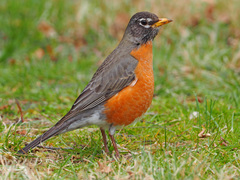
American RobinPossible predator (unconfirmed)
Ground-feeding birds like robins might eat glowworm larvae, but this has not been confirmed.
Danger 1/5 · Very low
Avoid touching or disturbing glowworms in their natural habitat to ensure they can continue their important role in the ecosystem.
Look for hard wing covers meeting in a line down the back, then compare the antennae, body shape, legs and markings. Metallic colors shift a lot with lighting. Beetle Identifier: upload a photo and compare the visible details.
6-65 mm
200-700 days
Glowworm larvae are tiny hunters. As far as scientists know, they hunt millipedes.
Forests and dry areas
6
Glowworm is a name, not one animal. Glowworm beetles of the Americas (Phengodidae) are their own beetle family. The European glow-worm is actually a firefly whose females have no wings. The New Zealand glowworm is a fly larva.
Its rows of glowing spots along the body look like the lit windows of a train at night.
Scientists think the glow warns night-time predators that they taste bad. Males find females by scent, not light, so the glow is probably not a love signal.
The larvae and larva-shaped females hunt millipedes, paralysing them quickly with digestive juice from their hollow jaws. Adult males are short-lived and probably do not feed.
Almost all live in the Americas, from southern Canada to Chile, in places from dry parts of California to tropical forests. A small group lives in Turkey and the Middle East.
Usually not, but males in the group that includes Phrixothrix glow all their adult life, and Stenophrixothrix males give off yellow light.
There is no sign that they are a danger to people: their jaws are made for millipedes. Still, don't pick them up. When handled, a railroad worm larva may release a reddish liquid that may taste bad or irritate. Watch without touching, and wash your hands if you do touch one.
Look on warm, damp nights on soil and leaf litter. Use a dim red light, which disturbed glow-worm mating less than white or blue light in experiments. Watch without touching and leave them where they are.
Take the discovery with you
Snap it with Snappit to identify it, learn what makes it special, and add the discovery to your collection.










