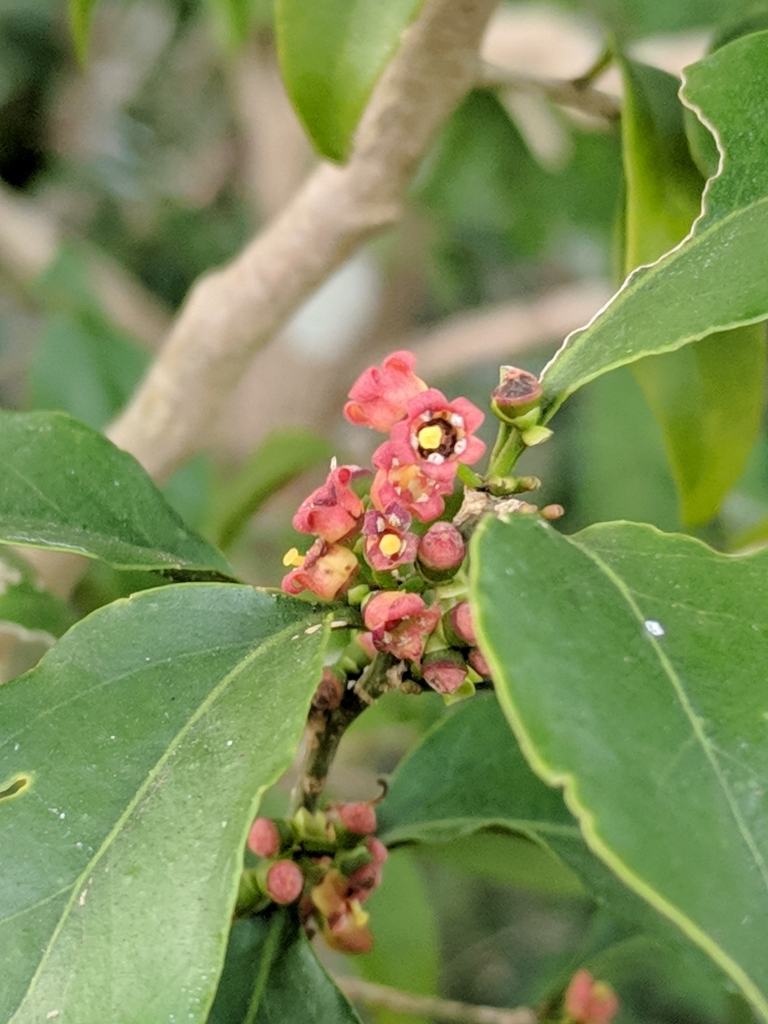





Graytwig
Schoepfia schreberi
Graytwig is a special shrub with thin, gray branches. It grows in forests and can be a fun place for little animals to hide and play.
Habitat: Forests
The Graytwig is a modest shrub with smooth, grayish-brown bark and glossy green leaves. Its tiny, yellowish-green flowers bloom in clusters, later developing into small, round, bright orange fruits that stand out against the foliage.
Category
PlantsRarity
Common
Danger
1/5 · Very low
Snaps
Be the first to snap!
It belongs to an ancient family of plants, with relatives going back millions of years!
Its roots can connect to other plants, secretly sharing their food!
The sweet, orange fruits of the Graytwig are a tasty treat for many animals!
Tiny, unassuming flowers transform into brightly colored, jewel-like fruits!
Graytwig can secretly connect its roots to nearby plants, borrowing water and nutrients to help it grow stronger.
Graytwig grows bright orange fruits that signal to birds and other animals that a tasty snack is ready for dispersal.
Mangifera indica
Graytwig taps into the roots of this tree for water and nutrients.
Pycnonotus jocosus
This bird enjoys eating Graytwig's sweet orange fruits.
Apis cerana
The bee visits Graytwig's small flowers to collect nectar and pollen.
Deciduous plants periodically shed all their leaves, typically during autumn or dry seasons.
Shade tolerant plants are adapted to grow and thrive in areas with low light levels, requiring less direct sunlight.
A shrub is a woody plant smaller than a tree, typically with multiple stems branching from or near the ground.
Fall color refers to the seasonal change in foliage pigmentation, primarily in deciduous plants, displaying vibrant hues.
Forest habitats are terrestrial environments dominated by dense tree cover, supporting a high diversity of plant and animal life.
No aliases listed yet.
Danger
1/5 · Very low
Always stay on paths when exploring nature and don't touch plants without asking an adult.
Start with the whole plant, then compare leaf arrangement, leaf edges, stems and any flowers or fruit. Opposite leaves grow in pairs; alternate leaves come one at a time along the stem. These details tell you far more together than a single green leaf does. Plant Identifier: upload a photo and compare the visible details.
150-400 cm
100-300 cm
0.3-0.5 cm
Late Spring to Early Summer
Yes
None
Perennial
Zoom in to split clusters and explore where this object has been snapped.
Recent snaps will appear here as new observations are added.
Take the discovery with you
Snap it with Snappit to identify it, learn what makes it special, and add the discovery to your collection.