





Greater butterfly-orchid
Platanthera chlorantha
The Greater butterfly-orchid is a beautiful flower that looks like a tiny butterfly! It grows in grassy places and has lovely greenish-white petals that attract many insects.
Habitat: Grasslands
The Greater butterfly-orchid has a tall, slender stem topped with a spike of greenish-white or yellowish-white flowers. Its broad, glossy green basal leaves emerge from the base. Each flower features a distinctive, long, downward-pointing spur, differentiating it from similar orchids.
Category
PlantsRarity
Common
Danger
1/5 · Very low
Snaps
Be the first to snap!
It can live for many years, patiently waiting for the perfect conditions to bloom.
Its scientific name, Platanthera, means 'flat anther,' describing its unique pollen sacs!
Look closely! Its flowers have a long 'tail' called a spur where nectar collects for moths!
This orchid relies on a tiny, hidden fungus to help it grow its first root underground!
Greater butterfly-orchid has a super-long spur to offer nectar, luring long-tongued moths that help it reproduce.
Greater butterfly-orchid releases a sweet fragrance at dusk, attracting nocturnal hawk-moths for pollination.
Greater butterfly-orchid has sticky pollen masses (pollinia) perfectly placed to attach to a moth's head, ensuring pollen transfer.
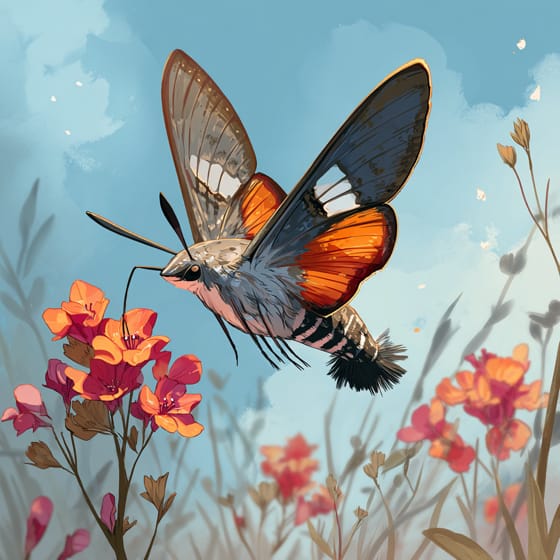
Macroglossum stellatarum
collects nectar and pollen
Deilephila elpenor
attracted to its sweet evening scent
Tulasnella calospora
provides vital nutrients to the orchid seedling
Flowering plants are any plants that produce flowers as part of their reproductive cycle.
Ornamental plants are cultivated primarily for their aesthetic appeal, enhancing landscapes and gardens with their attractive foliage, flowers, or form.
Spring blooming plants produce their flowers during the spring season, often signifying the end of winter and the start of new growth.
Summer blooming plants produce their flowers during the summer season, often providing vibrant color when many other plants have finished.

Fragrant flowers emit a pleasant aroma, often to attract pollinators or for defense.

Grassland habitats are terrestrial biomes dominated by grasses and herbaceous plants, supporting a variety of grazing animals.

Describes plants that are particularly attractive and beneficial to a wide range of pollinating organisms.

Endangered status indicates a species is at a very high risk of extinction in the wild in the near future.
No aliases listed yet.
Danger
1/5 · Very low
Don't pick flowers; they are best enjoyed in nature!
The easiest way to identify Greater butterfly-orchid is to use the Snappit nature identifier app.
30-70 cm
1-2 cm
Late spring to mid-summer
No
None
Perennial
Insect
Zoom in to split clusters and explore where this object has been snapped.
Recent snaps will appear here as new observations are added.
Take the discovery with you
Snap it with Snappit to identify it, learn what makes it special, and add the discovery to your collection.









.jpg&width=800)


_001.jpg&width=800)




