green moray
Gymnothorax funebris
The green moray is a long, snake-like fish that lives in warm ocean waters. It has a bright green color and hides in crevices among the coral reefs, making it a fascinating creature to discover!
Habitat: Coastal areas
The green moray has a thick, snake-like body, often appearing brilliant green due to a yellow mucus coating over its dark skin. It lacks pectoral and pelvic fins, making its smooth, elongated form distinct among reef fish.
Category
FishRarity
Common
Danger
3/5 · Moderate
Snaps
1
Cleaner shrimp often bravely crawl into a moray's mouth to remove parasites, without being eaten!
Moray eels have a special gooey slime that covers their skin, protecting them from germs and scratches!
They often open their mouth wide not to attack, but to breathe, pumping water over gills!
This "green" eel is actually dark gray underneath, its color comes from a yellow mucus!
The green moray has a thick, protective slime coat that helps it glide into tight spaces and deters predators.
The green moray can use a second set of jaws to pull prey deep into its throat for quick swallowing.
The green moray has an excellent sense of smell that helps it find hidden prey in dark reef crevices.
A nocturnal ambush predator, it hunts fish, crustaceans, and octopuses hiding in coral reefs.
Octopus vulgaris
Main prey for morays.
Haemulon plumierii
Common reef fish prey.
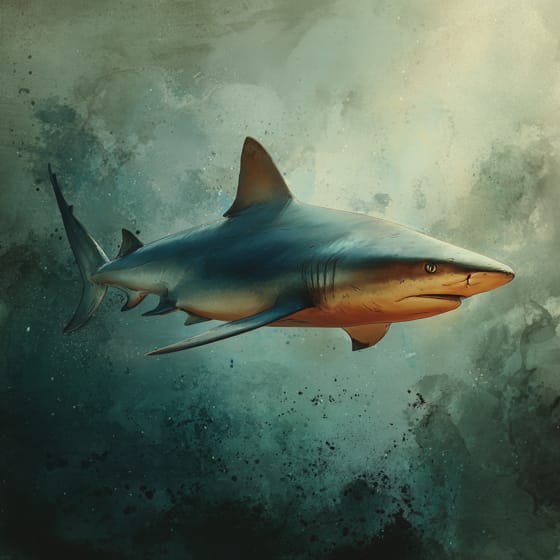
Carcharhinus leucas
Large sharks prey on morays.
Lysmata amboinensis
Removes parasites from moray.
Solitary animals live alone for most of their lives, only interacting with others for mating or parental care.
Camouflaged describes organisms that possess coloring or patterns that allow them to blend into their environment.
Colorful describes organisms or objects displaying a wide range of bright and distinct colors.
An ambush predator hunts by patiently waiting and concealing itself, then launching a sudden attack when unsuspecting prey comes within range.

Coastal habitats are dynamic environments located along the interface between land and sea, influenced by tides, waves, and saltwater.

This trait identifies organisms whose diet consists entirely or primarily of animal tissue.

Marine habitats encompass all saltwater environments of the Earth's oceans, supporting an immense diversity of aquatic life.

Nocturnal animals are primarily active during the nighttime hours, typically resting or sleeping during the day.
No aliases listed yet.
Danger
3/5 · Moderate
Always stay at a safe distance from fish in the ocean and never touch them.
The easiest way to identify green moray is to use the Snappit nature identifier app.
150-250 cm
10-30 kg
10-15 years
A nocturnal ambush predator, it hunts fish, crustaceans, and octopuses hiding in coral reefs.
15 km/h
Coastal areas
Ambush
Zoom in to split clusters and explore where this object has been snapped.

US
You might spot Laughing Gull, Brown Anole, and Green Iguana.
View guide →

US
You might spot Nurse Shark, Sea Turtle, and Cownose Ray.
View guide →

Oklahoma, US
You might spot Bull Shark and Loggerhead Sea Turtle.
View guide →
US
You might spot Loggerhead Sea Turtle and Bald Eagle.
View guide →

Texas, US
You might spot Bottlenose Dolphin and Sea Turtle.
View guide →

Florida, US
You might spot Brown Anole, Laughing Gull, and Green Iguana.
View guide →
Take the discovery with you
Snap it with Snappit to identify it, learn what makes it special, and add the discovery to your collection.