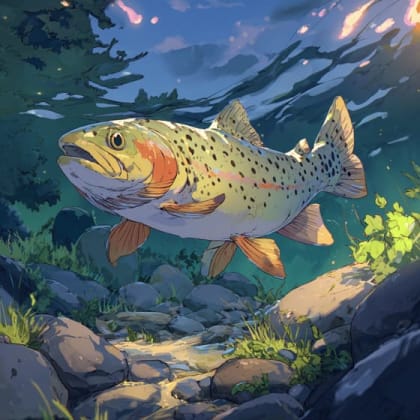
Tambaqui / Cachama
Colossoma macropomum
The Tambaqui, also known as Cachama, is a big, friendly fish that lives in rivers and lakes. It has a round body and loves to eat fruits and seeds that fall into the water.
Habitat: Freshwater rivers and lakes
The Tambaqui / Cachama is a large, deep-bodied fish with a disc-like shape, sporting dark grey to black coloration dorsally that fades to a lighter yellowish belly. It has strong, piranha-like teeth and prominent scales, making it distinct among large Amazonian fish.
Category
FishRarity
Common
Danger
1/5 · Very low
Snaps
Be the first to snap!
Locals often call them 'fruit eaters' because of their love for fallen forest fruits.
Tambaqui are cousins to piranhas but prefer fruits and seeds over meat!
They are one of the largest scaled freshwater fish in South America, weighing up to 44 kg!
Young Tambaqui sometimes hide among piranha schools for protection!
Tambaqui can crush tough seeds and nuts with their powerful, molar-like teeth, helping them exploit a unique food source.
Tambaqui can survive in low-oxygen waters by gulping air and using specialized blood oxygen absorption, enabling survival during dry seasons.
Tambaqui helps spread seeds of fruit-bearing trees throughout the Amazon, acting as an important aquatic seed disperser.
These large omnivorous fish eat a huge variety of foods, mainly fruits, seeds, and zooplankton.
Age differences: Young Tambaqui primarily eat zooplankton, gradually shifting to fruits, seeds, and larger plant matter as they grow.
Astrocaryum vulgare
disperses seeds of its fallen fruits
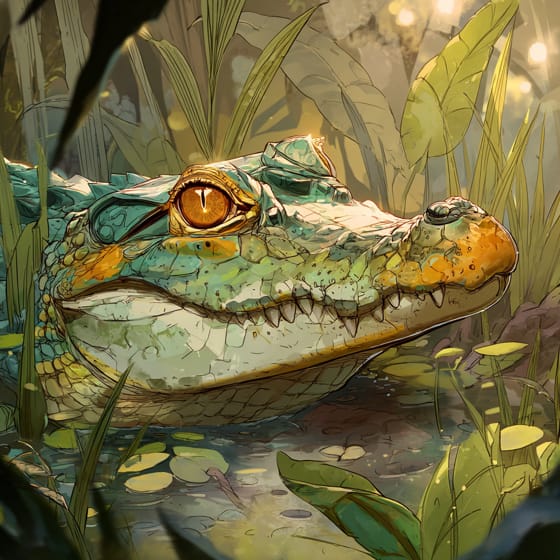
Caiman crocodilus
young Tambaqui are prey for caimans

Homo sapiens
a significant food source for Amazonian people
Social animals live in organized groups, cooperating for survival benefits such as foraging, defense, and raising offspring.
This trait characterizes organisms whose diet consists entirely or primarily of plant material.
Diurnal animals are primarily active during daylight hours, typically resting or sleeping at night.
Freshwater habitats include non-saline aquatic environments such as rivers, lakes, ponds, and wetlands, vital for numerous species.

Describes a species whose presence and role have a disproportionately large effect on its environment.

Giant describes organisms or objects of significantly larger size than average for their species or type.
Danger
1/5 · Very low
Always be careful around water and ask an adult before swimming.
The easiest way to identify Tambaqui / Cachama is to use the Snappit nature identifier app.
50-110 cm
10-44 kg
10-18 years
These large omnivorous fish eat a huge variety of foods, mainly fruits, seeds, and zooplankton.
20 km/h
Freshwater rivers and lakes
Foraging
Zoom in to split clusters and explore where this object has been snapped.
Recent snaps will appear here as new observations are added.
Take the discovery with you
Snap it with Snappit to identify it, learn what makes it special, and add the discovery to your collection.