





Silvery Cinquefoil
Potentilla argentea
The Silvery Cinquefoil is a lovely flower with soft, silvery leaves and bright yellow blooms. It grows in sunny places and is often found in fields and meadows, making them a cheerful sight in nature.
Habitat: Grasslands
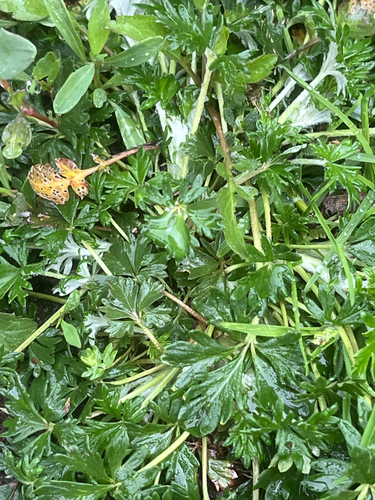
The Silvery Cinquefoil is a low-growing plant with distinctively silvery-white undersides on its leaves, making it stand out from typical green foliage. Its small, five-petaled flowers are bright yellow, often appearing in clusters above the fuzzy, palm-like leaves.
Category
PlantsRarity
Common
Danger
1/5 · Very low
Snaps
3
Even though it looks delicate, Silvery Cinquefoil is a wild cousin to the yummy strawberry plant!
Its leaves often have five leaflets, which led to its name meaning 'five fingers'!
Some people once used Silvery Cinquefoil leaves to brew a special herbal tea for various uses!
This tough little plant can thrive in poor, sandy soil where many other plants struggle to grow!
Silvery Cinquefoil has tiny white hairs on its leaves that reflect sunlight, helping it survive in hot, sunny places by reducing water loss.
Silvery Cinquefoil can grow a deep taproot that helps it find water hidden far underground, making it very drought-tolerant.
Silvery Cinquefoil has stems that creep along the ground, allowing it to spread and create new roots, helping it colonize new areas.
Apis mellifera
Gathers nectar and pollen
Bombus impatiens
Visits flowers for nectar
Phytomyza potentillae
Larvae feed inside leaves
Flowering plants are any plants that produce flowers as part of their reproductive cycle.
Summer blooming plants produce their flowers during the summer season, often providing vibrant color when many other plants have finished.
Everblooming plants produce flowers continuously or in repeated flushes over a long period.
Grassland habitats are terrestrial biomes dominated by grasses and herbaceous plants, supporting a variety of grazing animals.

Describes plants that are particularly attractive and beneficial to a wide range of pollinating organisms.
No aliases listed yet.
Danger
1/5 · Very low
Always look but don't touch flowers without asking an adult first.
The easiest way to identify Silvery Cinquefoil is to use the Snappit nature identifier app.
10-40 cm
30-60 cm
0.8-1.5 cm
Late spring to fall
No
None
Perennial
Zoom in to split clusters and explore where this object has been snapped.
Apr 25, 2026
McDade ParkPhoto attribution
no rights reserved
License: CC0 1.0 ↗
Image may be shown cropped inside the card frame.

Pennsylvania, US
You might spot Spotted Lanternfly and Japanese Knotweed.
View guide →

Minnesota, US
You might spot American White Pelican and Painted Turtle.
View guide →
Wisconsin, US
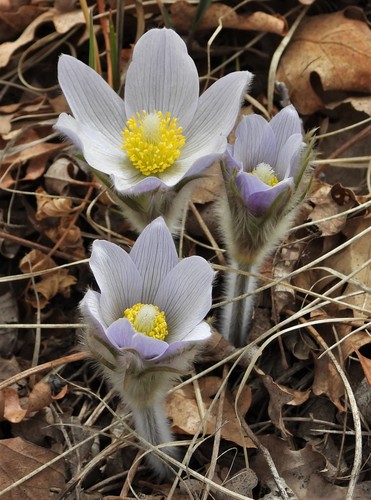
You might spot Prairie Pasqueflower, Prairie Smoke, and Red Columbine.
View guide →
Take the discovery with you
Snap it with Snappit to identify it, learn what makes it special, and add the discovery to your collection.








.jpg&width=800)



_001.jpg&width=800)




