

Hawaiian Garden Spider
argiope appensa
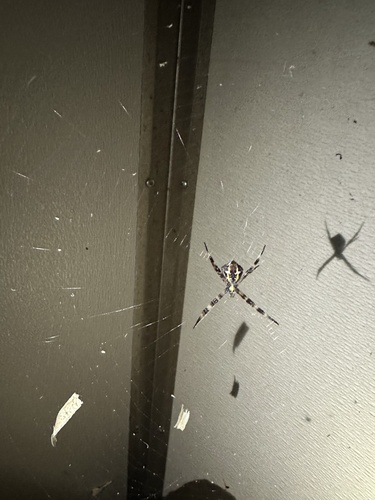
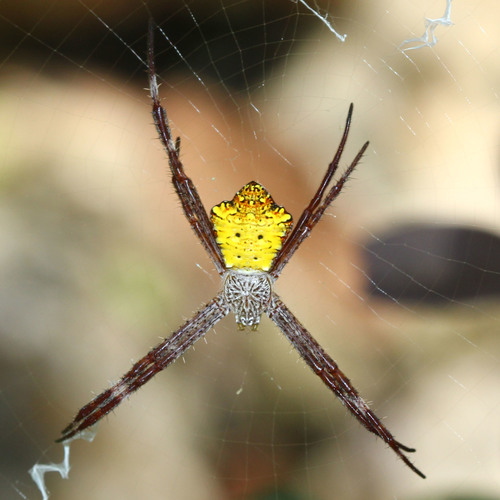
The Hawaiian Garden Spider (Argiope appensa) is a striking orb-weaving spider renowned for its vibrant, geometric appearance and large, impressive webs. Commonly found throughout the Pacific islands, including Hawaii, Taiwan, and Guam, these spiders are a familiar sight in lush gardens and tropical forest edges. Despite their intimidating size and somewhat alien-like, star-shaped bodies, they are highly beneficial arachnids that provide exceptional natural pest control by trapping mosquitoes, flies, and agricultural pests. What truly sets Argiope appensa apart is its intricate web architecture. They weave a prominent, thick zigzag pattern of bright white silk called a stabilimentum directly into the center of their webs. Scientists believe this unique structure may reflect ultraviolet light to attract insect prey or serve as a visual warning to prevent birds from accidentally destroying their hard work. Observing these golden spiders sitting head-down in the center of their sunlit webs is a classic highlight of Pacific island ecology.
Habitat: Found in tropical forest edges and brush, often spinning large orb webs among shrubs and tall grasses.
Female Hawaiian Garden Spiders are highly distinctive, featuring a somewhat star-shaped or pentagonal abdomen that is bright yellow or golden, heavily contrasted with intricate black and white patterns. Their long, spindly legs are visibly banded with dark and pale stripes, and their body size can reach up to 2.5 centimeters. The males, conversely, display extreme sexual dimorphism; they are drastically smaller (often under 0.5 centimeters), mostly plain brown, and lack the striking colors and geometric body shapes of the females. The species is most easily identified in the wild by its large circular web, which typically features a thick, highly visible white zigzag line of silk known as a stabilimentum in the center.
Category
InvertebrateRarity
Common
Danger
1/5 · Very low
Snaps
10
Despite their striking warning colors and somewhat intimidating size, their venom is not dangerous to humans and a bite is generally milder than a bee sting.
In Guam, populations of the Hawaiian Garden Spider exploded after the invasive brown tree snake decimated the island's native bird populations, thereby removing the spiders' main predators.
The Hawaiian Garden Spider exhibits an extreme form of sexual dimorphism; adult females can be up to ten times larger than the tiny adult males.
When threatened, these spiders often begin rapidly vibrating and pumping their web back and forth to blur their outline, confusing potential predators.
Weaves a thick, visible zigzag pattern of silk in the center of its web, which is thought to camouflage the spider, attract UV-sensitive insects, or warn birds away from the web.
Utilizes a fast-acting venom delivered through its fangs to quickly paralyze struggling insect prey, though this venom is entirely harmless to humans.
Relies on highly sensitive microscopic hairs on its legs to detect the exact location, size, and struggle-intensity of prey vibrating the web strands.
They primarily consume a wide variety of flying and jumping insects that become ensnared in their large orb webs.
Age differences: Spiderlings tend to trap and consume tiny insects like aphids and gnats, while fully grown adult females are capable of subduing much larger prey such as large bees and moths.
Apis mellifera
Provides a significant source of prey for the spider's web.
Sceliphron caementarium
Hunts the Hawaiian Garden Spider to provision its mud nests for its larvae.
Zosterops japonicus
Forages in gardens and forest edges, often picking off these spiders from their webs.
No trait badges are assigned for this object yet.
No aliases listed yet.
Collections for this object will appear here as more themes are added.
Danger
1/5 · Very low
No special safety notes yet.
The easiest way to identify Hawaiian Garden Spider is to use the Snappit nature identifier app.
0-3 cm
0.0001-0.002 kg
1 years
They primarily consume a wide variety of flying and jumping insects that become ensnared in their large orb webs.
Found in tropical forest edges and brush, often spinning large orb webs among shrubs and tall grasses.
Ambush
400-1200
Zoom in to split clusters and explore where this object has been snapped.
Jan 11, 2025
Puna-Ka'u Historic DistrictPhoto attribution
(c) L. Miles Horne, some rights reserved (CC BY)
License: CC BY 4.0 ↗
Image may be shown cropped inside the card frame.

Hawaii, US
You might spot Gold Dust Day Gecko, Yellow Tang, and Black Triggerfish.
View guide →

Hawaii, US
You might spot Hawaiian Garden Spider, Beach Naupaka, and Black Noddy.
View guide →
Hawaii, US
You might spot Gold Dust Day Gecko, Sea Turtle, and Brown Anole.
View guide →

Hawaii, US
You might spot ʻōhiʻa Lehua and Stinking Passionflower.
View guide →

Hawaii, US
You might spot Torch Ginger, Red-Crested Cardinal, and African Tulip Tree.
View guide →
Take the discovery with you
Snap it with Snappit to identify it, learn what makes it special, and add the discovery to your collection.