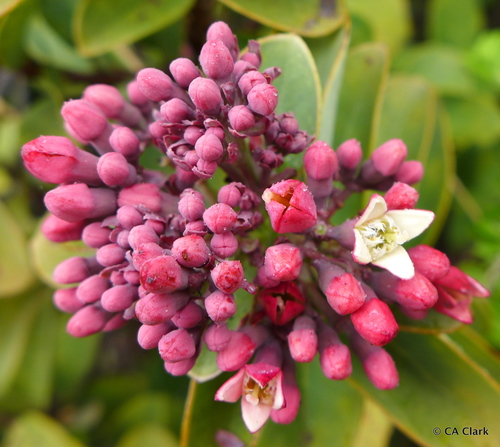

Coconut Palm

Puna-Ka'u Historic District unveils centuries of Hawaiian history etched into a dramatic volcanic landscape.
Puna-Ka'u Historic District unveils centuries of Hawaiian history etched into a dramatic volcanic landscape. This expansive archaeological district, located within Hawaii Volcanoes National Park, offers an unparalleled glimpse into ancient Polynesian life. With over 300 sites dating from the 13th to 19th centuries, it's a testament to the enduring culture and ingenuity of early Hawaiians.
Among its most captivating features are the Pu'u Loa Petroglyphs, the largest concentration of rock carvings in the Hawaiian Islands, showcasing over 23,000 intricate images. Visitors can walk along the Puna-Ka'u coastal trail, an ancient pathway that once connected vibrant villages, and observe the remnants of five significant village sites like Kamoamoa and Keahou Landing. The district also features unique geological formations and native plant life, including resilient 'ōhi'a lehua trees and hapu'u tree ferns, thriving amidst lava flows.
Exploring the Puna-Ka'u Historic District offers a profound cultural immersion, inviting visitors to connect with the past on a deeply personal level. It's a place where history, geology, and a powerful sense of place converge, leaving a lasting impression of Hawaii's rich heritage and the adaptive spirit of its people. The raw beauty of the coastline, combined with the silent stories held within its stones, makes for a truly memorable and reflective experience. Be ready to snap and learn! Get the Snappit app to identify any nature species you find here.
The Puna-Ka'u Historic District was officially added to the National Register of Historic Places on July 1, 1974, recognizing its immense cultural and archaeological value. This vast area, approximately 129,655 acres, was home to Polynesian communities from the 13th to the 19th centuries, who adapted to and thrived on this dynamic volcanic coastline. Archaeological research has focused on eleven particularly significant sites within the district, including ancient villages, a coastal trail, a temple, and petroglyph fields, all contributing to our understanding of native Hawaiian culture. The district's history is intertwined with the active volcanoes Kīlauea and Mauna Loa, whose eruptions have continually shaped the landscape and the lives of its inhabitants. While some sites, like the Wahaulu Heiau temple, have been lost to lava flows, the remaining evidence provides critical insights into the agricultural practices, social structures, and spiritual beliefs of ancient Hawaiians.
Discover ancient village remnants, learn about traditional Hawaiian life, photograph the unique petroglyphs, and appreciate the raw, ever-changing volcanic landscape. Keep an eye out for native plants adapted to the harsh environment.
The Puna-Ka'u coastline is generally drier and warmer than higher elevations of Hawaii Volcanoes National Park. Be prepared for sun exposure year-round. Volcanic activity can alter landscapes and access, so check park alerts.
The Pu'u Loa Petroglyph site features a raised wooden boardwalk, making the primary viewing area accessible. General accessibility information for Hawaii Volcanoes National Park suggests that Kīlauea Visitor Center and Jaggar Museum are wheelchair-accessible, and information on accessible trails can be obtained at the Kīlauea Visitor Center.
Walk the boardwalk over the lava fields to view thousands of ancient rock carvings, including "pukas" (cupule holes) and human figures.
Hike portions of this historic trail to experience the rugged coastline and envision ancient trade routes.
While not directly on the Puna-Ka'u coastline, these ancient human and animal tracks preserved in ash are a powerful historical exhibit within the broader Hawaii Volcanoes National Park, accessible via the Ka'u Desert Trailhead.
A stunning natural arch carved by the ocean, often visited in conjunction with Pu'u Loa Petroglyphs at the end of Chain of Craters Road.
Each card links to a full Explore page with photos, traits, and fun facts.
Start with the big picture, then zoom in to explore individual wildlife observations around this place.
Wear appropriate footwear
Trails can be uneven, rocky, and over lava fields, so sturdy closed-toe shoes are essential.
Bring plenty of water
The coastal environment can be hot and dry, and shade is limited, especially on the hike to Pu'u Loa Petroglyphs.
Protect yourself from the sun
Sunscreen, a hat, and sunglasses are highly recommended due to strong UV exposure.
Stay on marked paths and boardwalks
This protects both the delicate archaeological sites and ensures your safety on potentially unstable terrain. It is illegal to touch or deface archaeological sites.
Allow time for reflection
The sites offer deep historical and cultural significance, so take moments to absorb the atmosphere and imagine ancient life here.
Combine with other park attractions
The district is best explored as part of a larger visit to Hawaii Volcanoes National Park, potentially linking with a drive along Chain of Craters Road to see the Hōlei Sea Arch.
Jan 11, 2025
Photo attribution
(c) L. Miles Horne, some rights reserved (CC BY)
License: CC BY 4.0 ↗
Image may be shown cropped inside the card frame.
Jan 11, 2025
Photo attribution
(c) L. Miles Horne, some rights reserved (CC BY)
License: CC BY 4.0 ↗
Image may be shown cropped inside the card frame.
Jun 16, 2026
Mar 9, 2026
Dec 24, 2025

Maryland, US
You might spot White-Tailed Deer and Eastern Gray Squirrel.
View guide →
.jpg)
District of Columbia, US
You might spot Eastern Gray Squirrel, Duck, and House Sparrow.
View guide →

Illinois, US
You might spot American Robin, Canada Goose, and House Sparrow.
View guide →

Virginia, US
You might spot Spotted Lanternfly and Northern Cardinal.
View guide →
Take the discovery with you
Identify the wildlife you spot, learn as you go, and keep a collection of the adventure.

















_-_Pollen%C3%A7a%2C_Spain_2022-04-15.jpg&width=800)