





Hickory Tussock Moth
Lophocampa caryae
The Hickory Tussock Moth is a fuzzy, white moth with black spots. Its caterpillars are bright and hairy, making them look like little creatures from a fairy tale!
Habitat: Forests
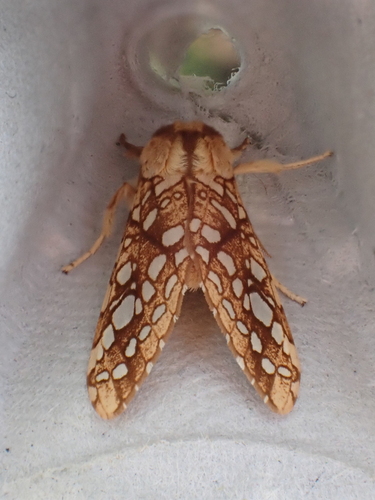
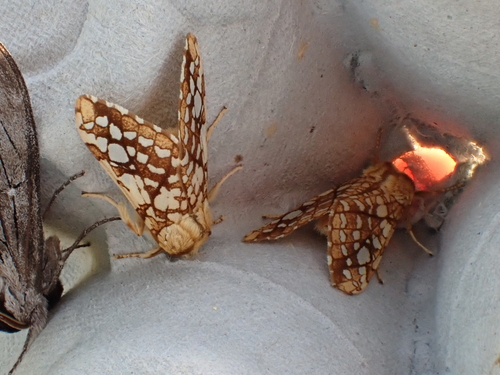
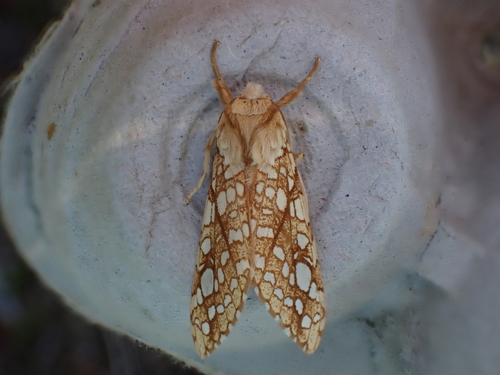
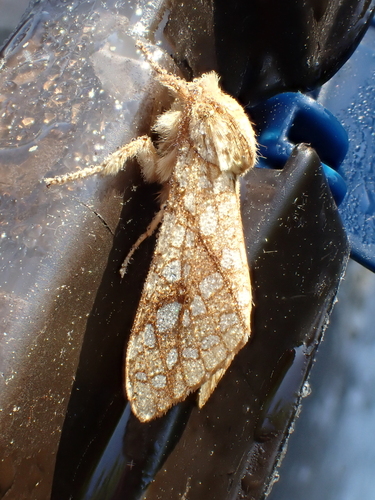
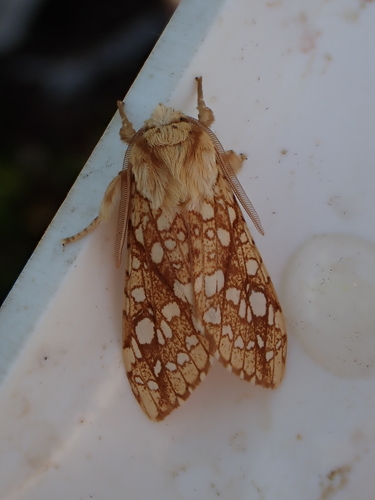
The Hickory Tussock Moth is typically pale yellow to tan with irregular brownish bands and spots on its wings. Its striking caterpillar is fuzzy white with dense black tufts on its back and long black hairs at both ends, making it visually distinct from other caterpillars.
Category
InsectsRarity
Common
Danger
2/5 · Low
Snaps
61
Adult Hickory Tussock Moths do not eat, living only to lay eggs.
Caterpillars have six pairs of orange tufts on their backs, like tiny fuzzy pom-poms!
Caterpillars use spiky hairs to decorate cocoons for extra defense!
If disturbed, the caterpillar curls into a ball, exposing stinging hairs to scare foes.
Hickory Tussock Moth caterpillars can cause skin rashes because their fuzzy hairs contain irritating toxins that help deter predators.
The larva's contrasting white, black, and orange tufts act as a warning signal that helps predators recognize its toxicity.
Hickory Tussock Moth larvae spin a strong silk cocoon because they produce durable silk threads that protect them during pupation.
Young Hickory Tussock Moths munch on tree leaves to grow big and strong, but adults don't eat!
Age differences: Caterpillars are voracious herbivores, while adult moths do not feed, relying on stored energy.

Carya ovata
Caterpillars feed on the leaves of this tree.
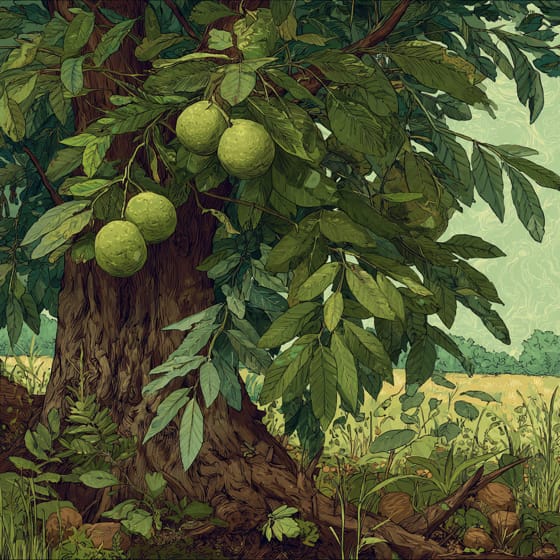
Juglans nigra
A common host plant for the caterpillar larvae.
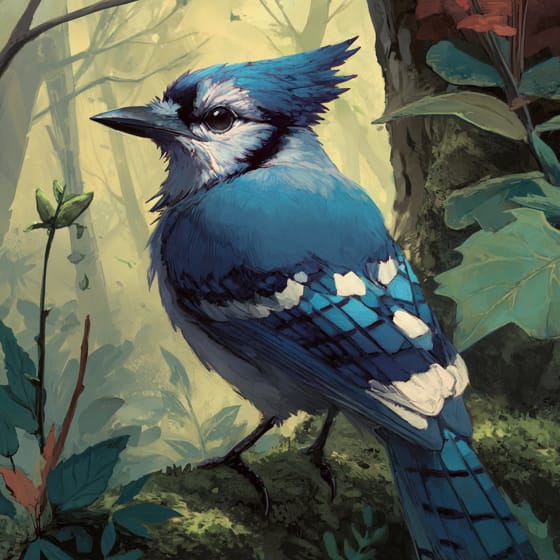
Cyanocitta cristata
Birds sometimes prey on these moths or their larvae.
Cotesia caryae
This tiny wasp lays its eggs inside the moth's caterpillar.
Furry describes animals possessing a dense covering of soft hair or fur.
Marked with spots or patches of a different color.
Colorful describes organisms or objects displaying a wide range of bright and distinct colors.
This trait characterizes organisms whose diet consists entirely or primarily of plant material.

Forest habitats are terrestrial environments dominated by dense tree cover, supporting a high diversity of plant and animal life.

Nocturnal animals are primarily active during the nighttime hours, typically resting or sleeping during the day.
Danger
2/5 · Low
Don't touch the caterpillars, as their hairs can cause skin irritation.
The easiest way to identify Hickory Tussock Moth is to use the Snappit nature identifier app.
40-50 mm
15-25 mm
5-10 days
Young Hickory Tussock Moths munch on tree leaves to grow big and strong, but adults don't eat!
Forests
Foraging
6
Zoom in to split clusters and explore where this object has been snapped.
Jun 5, 2026
Bear's DenPhoto attribution
no rights reserved
License: CC0 1.0 ↗
Image may be shown cropped inside the card frame.
Jun 5, 2026
Bear's DenPhoto attribution
no rights reserved
License: CC0 1.0 ↗
Image may be shown cropped inside the card frame.
Jun 5, 2026
New Salem Common Historic DistrictPhoto attribution
no rights reserved
License: CC0 1.0 ↗
Image may be shown cropped inside the card frame.
Jun 5, 2026
New Salem Common Historic DistrictPhoto attribution
no rights reserved
License: CC0 1.0 ↗
Image may be shown cropped inside the card frame.
Jun 5, 2026
New Salem Common Historic DistrictPhoto attribution
no rights reserved
License: CC0 1.0 ↗
Image may be shown cropped inside the card frame.

New York, US
You might spot American Toad and Intermediate Wood Fern.
View guide →

Connecticut, US
You might spot Striped Wintergreen and Common Eastern Bumble Bee.
View guide →

New Hampshire, US
You might spot Eastern Red-Backed Salamander and Eastern Newt.
View guide →

Massachusetts, US
You might spot Mountain Laurel, Azure Bluet, and Partridgeberry.
View guide →

New York, US
You might spot Allegheny Mountain Dusky Salamander.
View guide →

Connecticut, US
You might spot Hay-Scented Fern, Canada Mayflower, and Wood Frog.
View guide →
Take the discovery with you
Snap it with Snappit to identify it, learn what makes it special, and add the discovery to your collection.







.jpg&width=800)


